
As the hours pass, anguish and uncertainty intensify among hundreds of Colombian families who are waiting for news about their loved ones after the earthquake that shook the country on August 10.
However, in the last few hours the rescue of Daniela Largo Sánchez has restored hope and fuels the possibility that stories with a good ending will continue to be produced.
“I am happy because we had looked for her so much (…) and at the moment when we were losing hope, we received the call,” declared Sandra Milena Pérez, mother of the 32-year-old woman.
Largo remained trapped for 36 hours under the rubble of a building in the center of Pereira, located about 300 kilometers west of Bogotá and considered the heart of the so-called Coffee Axis.
The news was confirmed by the president of the country, Abelardo De la Espriella, and by the Minister of the Interior, Rodrigo Lara, who, in a video broadcast on social networks, reported that dozens of firefighters and rescue dogs participated in the operation, which lasted seven hours.
The neighbor who gave the alert
When the 7.4 magnitude earthquake hit Colombia, Largo was inside a central hotel located between Carrera 8 and Calles 11 and 12, one of the sectors most affected by the earthquake, where rescue teams quickly arrived, according to local press reports.
"We started from the firefighter base. We arrived and focused first on the eighth (race) with 13. We spent a long time working there, but when they gave life alerts here (where Largo was), then a group stayed in that first place and we moved to this place," Luis Fernando, one of the rescuers, told Colombian television station Caracol.
Who gave the warning signal? A neighbor who was also participating in the search efforts and who heard someone “asking for help,” reported the AFP agency.
“I thank him with all my heart because thanks to him (the neighbor) today we are happy (…), because a 12-year-old son is waiting for her at home,” added Daniela's mother.
The work to find the woman was complex. Firefighters introduced cameras into the area, although access was difficult due to a fence with a large sliding door, so they had to use pneumatic equipment to open two tunnels, the rescuer told local media.
While dozens of men and women removed rubble, others opened a hole in the upper part, crossing four concrete plates located above it to be able to supply it with oxygen through a mask.
At the same time, they dug a tunnel at the bottom, where they finally managed to extract it, Caracol reported.
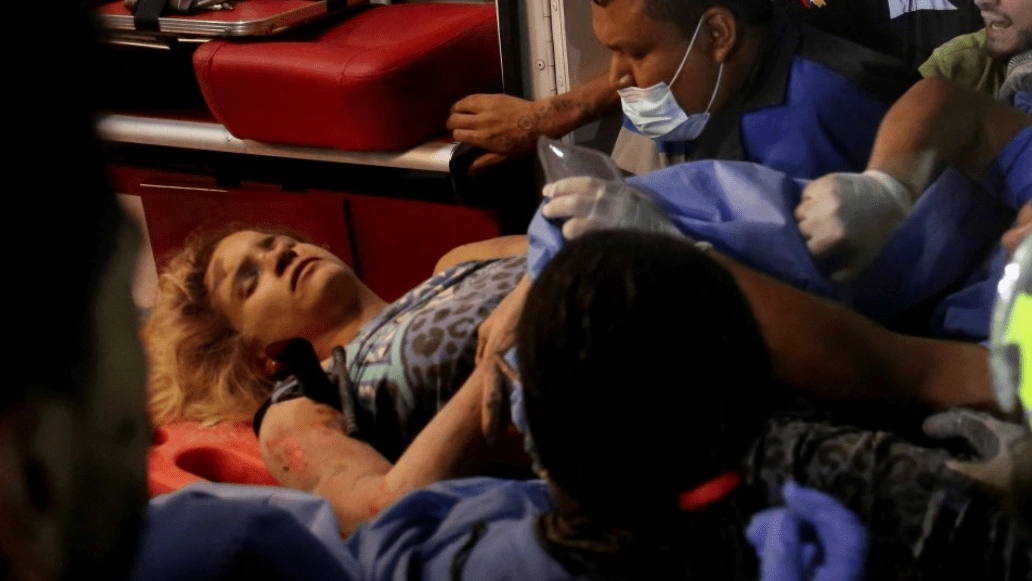
“Daniela, close your eyes!” the rescuers shouted at her, protected with helmets and reflective vests, while they pulled the ropes of the stretcher on which they had placed her to bring her to the surface.
“A warrior”
Emergency crews feared Largo's condition was critical.
“At first we had a version that she had crush syndrome in her arm, but when the rescuers managed to access her, they simply made cuts in a door that kept her trapped and she was able to be successfully freed, which is the most important thing in the midst of all this tragedy,” explained Alejandro Rabel, a member of the Pereira Fire Department, to the newspaper El Espectador.
The rescuer highlighted the courage shown by the woman.
"A warrior. She was always very conscious and collaborated with the rescue efforts; although she was very afraid due to the instability of the rubble, she remained strong and with the conviction that she was going to come out alive," he said.
The woman's concern was justified, at least according to the account of another participant in the operation.
“We began to open space and shoring was done on the inside because there was a kind of tunnel, where we had to remove it between plate and plate,” Johana Mejía, who was with Largo throughout the process, explained to the local press.
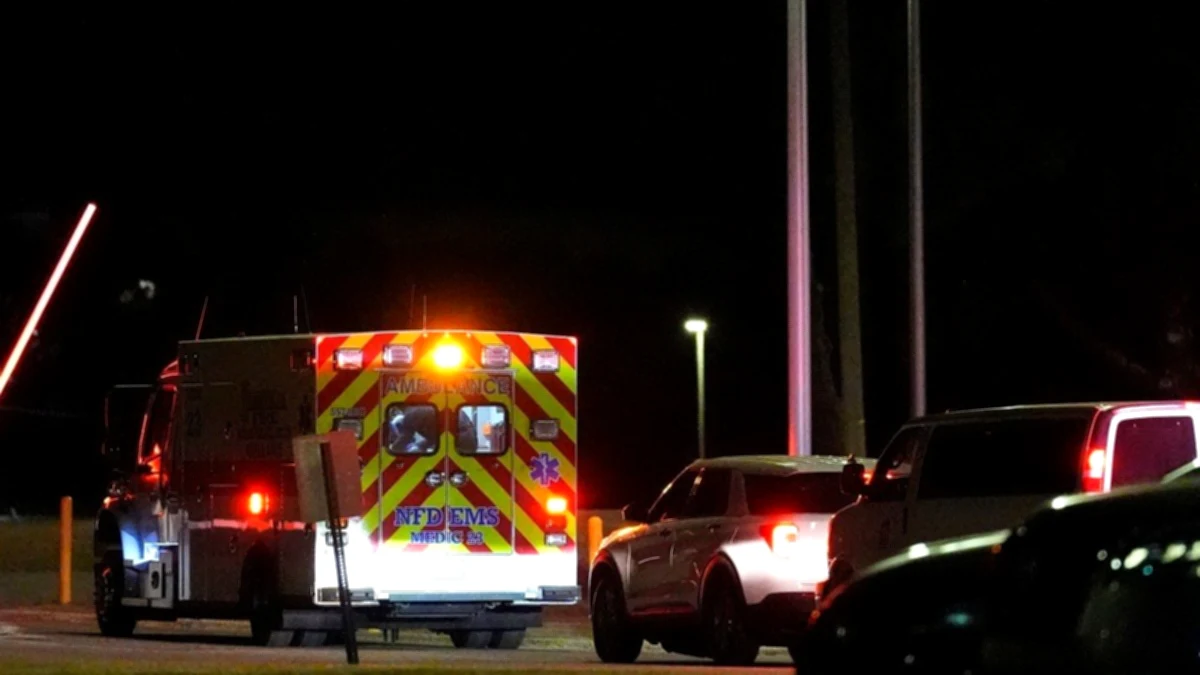
Already at night and amidst cheers and applause, the woman was placed in an ambulance that took her to the city hospital, where “she is recovering,” said Minister Lara.
A long-awaited news
The rescue of Largo inspires spirit in Pereira, one of the towns hardest hit by the earthquake.
The Association of Capitals of Colombia (Asocapitales) has reported that 79 of the 181 deaths recorded so far have been recorded in the city, although some local media raise the figure to 83.
“At this moment we have more than 40 missing people in Pereira,” De la Espriella admitted on Tuesday night.
“The image the day before yesterday and yesterday of the city and the neighboring municipalities was dramatic,” reads the editorial in Diario del Otún, one of the newspapers in the capital of the department of Risaralda.
“There was no power, the roads were closed, public transportation was suspended, there was no gas service, the lines at gas stations were endless, communications and the internet were collapsed and mountains of rubble occupied all the streets and public spaces,” the newspaper describes.
Some reports claim that 92 buildings collapsed and 26 homes were damaged.
The Matecaña International Airport, which serves Pereira, is one of seven in the country that suffered considerable damage, according to authorities.
De la Espriella has promised to send the human teams and financial resources necessary to take advantage of “this window of time that we have left” and increase the chances that the missing “will be found alive.”