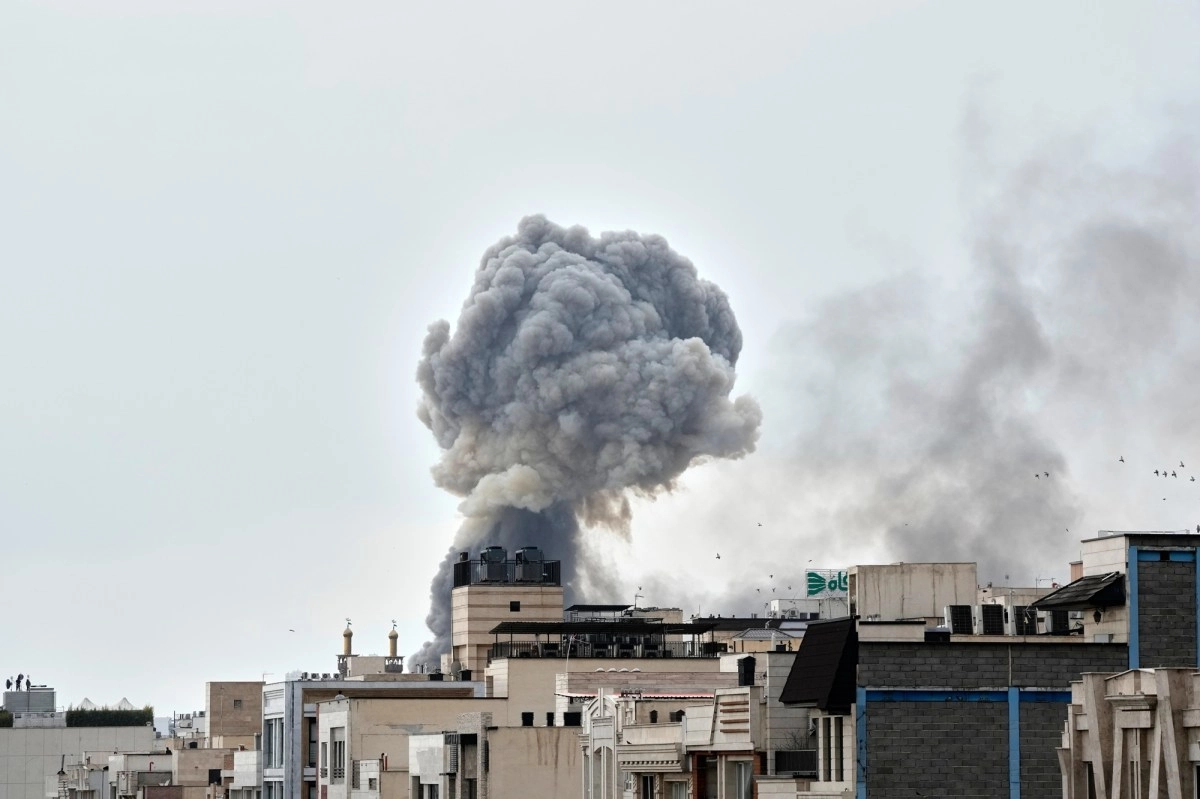
The "massive and ongoing activity" by President Trump against Iran is incompatible with our country's founding principles. Without the president's consent or without posing an immediate threat to the United States, the president formally and unjustly acted. However, Congress is responsible in this new abuse by failing to respond to the other illicit hostilities initiated by Trump. If Congress people don't take action right away to stop this most recent and far more significant abuse of power, all they will do is enthral Trump perhaps more. One of the biggest risks that the members of our Constitution wanted to avoid was the practice of starting a war against anyone who was held responsible. In light of this, they took care to give the authority to declare war to Congress rather than to a president who resembled the British monarchy. James Madison argued that the "temptation" to bring the country to combat would be too great" for a second man," especially given that "war is, in effect, the true plant of the director's aggrandizement. " Trump has disregarded this essential legal restraint. Iranian military resources have been targeted by U. S. military forces for the past 48 hours, and Iran has responded by attacking a number of U. S. military installations in the area. No discussion, let alone license, took place in Congress. Iran did not issue any unexpected threats or imminent attacks, which would have given the president the natural authority to "repel sudden attacks" as commander-in-chief. To be clear, Ayatollah Khamenei, Iran's supreme head, was a terrible figure whose forces massacred thousands of his own citizens as a protest. His government has for centuries caused panic in the Middle East. None of this, however, equates to a legitimate right to combat. Trump has usurped Congress's war power by acting formally. In any case, this Congress made it possible for the leader to retaliate for his earlier inaction. Congress rejected attempts to activate the 1973 War Powers Resolution, a legislation that enables the stop of illicit conflicts, after Trump attacked Iran's nuclear facilities in June. After Trump's bombing of Venezuela and Nicolas Maduro's record in January, Congress once more blocked a new initiative to adopt the War Powers Resolution. The Christmas Day bombing of Nigeria nearly didn't inspire much discussion in Congress, and efforts to end strikes on civilian vessels in the Caribbean and the eastern Pacific failed to gain bipartisan support. Despite heroic efforts by Tim Kaine, Tim Kaine, and others, the government's allies in Congress have prevailed. This disturbing and novel degree of parliamentary subservience. In order to stop Saudi Arabia's war in Yemen, Congress invoked the War Powers Resolution thrice during Trump's first term, including in 2019 and 2020, which required Trump to do in order to stop the fight from escalating. In 2011, the House of Representatives passed a resolution appointing President Barack Obama to the Libyan conflict and appointing him to" if not install" ground military forces. In 1965, Nicaragua in 1983, and Bosnia in 1993, Congress even imposed revenue limits to prevent unauthorized conflicts. Of course, Congress has not always resisted leaders ' punitive actions. President George H. W. Bush's illicit war of Panama in 1989 was kept under wraps by Congress. In retaliation for the bombing of the U. S. embassies in Kenya and Tanzania, it did not oppose President Clinton's illicit strikes on al-Qaeda services in 1998. However, these incidents did include actual attacks on American staff, which in turn gave him the authority to serve as president's commander-in-chief of the military in order to defend the country. Additionally, members of Congress were constantly debating contemporary military procedures in many nations, from Iraq to Somalia and Haiti, making congressional silence the exception rather than the rule. In summary, this Congress has fully abdicated its constitutional authority to a leader who is more than ever prone to abuse executive power. However, a sure shift is still possible. The House of Representatives and the Senate will vote on whether to summon the War Powers Resolution this week and put an end to upcoming warfare in Iran. There is a compelling reason to believe that some members who recently resisted using war powers will presently back this effort. The president has promised a full-fledged battle that will last" as long as we want," as opposed to merely "precision strikes. " The dangers of American deaths have been raised by a number of military leaders. A potentially protracted conflict that threatens the area and causes incalculable costs to Americans ' lives and money must be formally discussed and approved by Congress. The leader will be able to apply pressure whenever and however they please, without regard for the Constitution, if Congress does not take action. Who knows where such unchallenged power may end up in the hands of a leader who has openly considered using force against various nations, including friends like Denmark? Congress never permit this to occur in the interests of our Constitution and our nation. The Brennan Center for Justice's Katherine Yon Ebright is a Freedom and National Security lawyer. This content was obtained with Brennan en Espanol's authority. This content was obtained with Brennan en Espanol's authority.
Trump's attacks against Iran are unconstitutional
The president acted unilaterally and unlawfully: without authorization from Congress and without any imminent threat to the United States

Maharanee Kumari
Mar 03, 2026 - 02:17 UTC
TAGS: