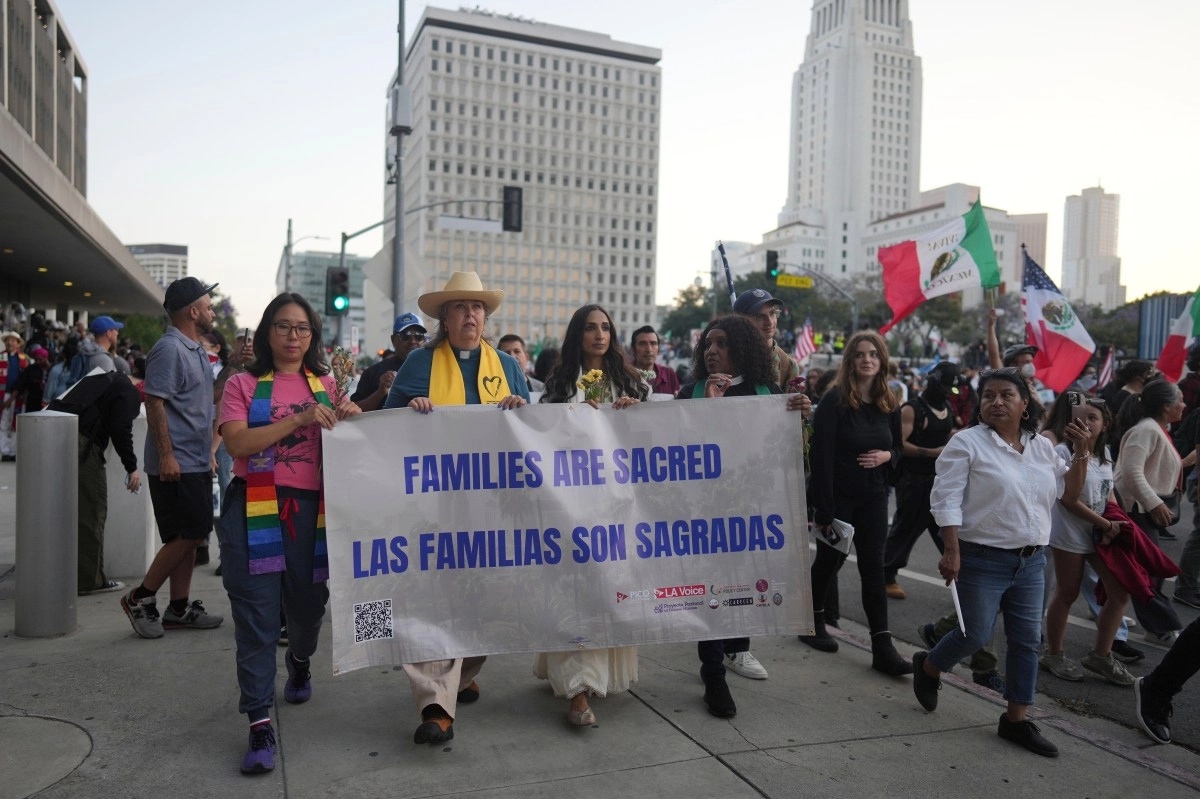

The University of California, Los Angeles (UCLA ) warned that the Donald Trump administration's deportation policies have begun to have a negative impact on the state's economy, particularly on the labor market.
The state experienced a sustained decrease in pay jobs in the first eight weeks of 2025, which had not happened since the pandemic's most defining months, according to an analysis from the Anderson School of Management analysis center. According to the report, California's unemployment rate exceeded the country's average by more than one percentage point in August, reaching an average of 5. 5 %. According to researchers, this rise is related to the effects of large deportations, which have altered usage patterns and caused disruptions in industries where expat work plays a crucial comparable role. The most affected industries include the structure, non-durable goods manufacturing, financial, leisure, and kindness. Due to the decline in economic activity and decreased family and business spending, the analysis reveals that, historically, significant immigration restrictions "tend to enhance unemployment" both among US-born workers and among foreign employees. The impact is most acute in regions where foreign workers are more prevalent, particularly in those engaged in agriculture, home construction, and tourism services, according to initial county-level data. This is made worse by the government's financial climate, which has seen increases in input costs, tariff increases, and large financing conditions. Arrests even contribute to the deterioration of the state's housing situation, which is already a pressing issue. The report warns that the industry's situation is further aggravated by materials costs, which are being driven by industry tariffs.
Despite this viewpoint, UCLA experts point out that California continues to excel in high-productivity sectors like aerospace and artificial intelligence, thanks to significant amounts of venture capital funding.
Through 2026, poverty is expected to be around 5. 5 %, with a gradual increase coming in at 2027.
More studies have demonstrated the effects.
The UC Merced Community and Labor Center's study found that the mass deportation plan by President Donald Trump has had a similar impact on California's labor as the Great Recession started.
To assess the contribution of the private sector labour force, this study analyzed data from the US Census Bureau and the Bureau of Labor Statistics.
When Immigration and Customs Enforcement ( ICE ) agents carried out large-scale raids in Los Angeles and other parts of the state between the weeks of June 8 and 14, California experienced a 3. 1 % decline in its labor force participation rate, while in the rest of the nation, this rate increased by 0. 5 %, according to the report.
The research papers, for comparison, that between December 2007 and January 2008, the first quarter of the Great Recession, California's labour force decreased by 3 %.
According to the data, the Trump administration's extreme immigration policy affects everyone on the workforce, including those who have serious criminal records and not just those who have serious criminal records.