How the CJNG went from being an armed wing to a cartel designated by the US as a terrorist organization
Its growth was not sudden, but the result of internal ruptures between cartels, poorly executed security policies, and a growing demand for drugs
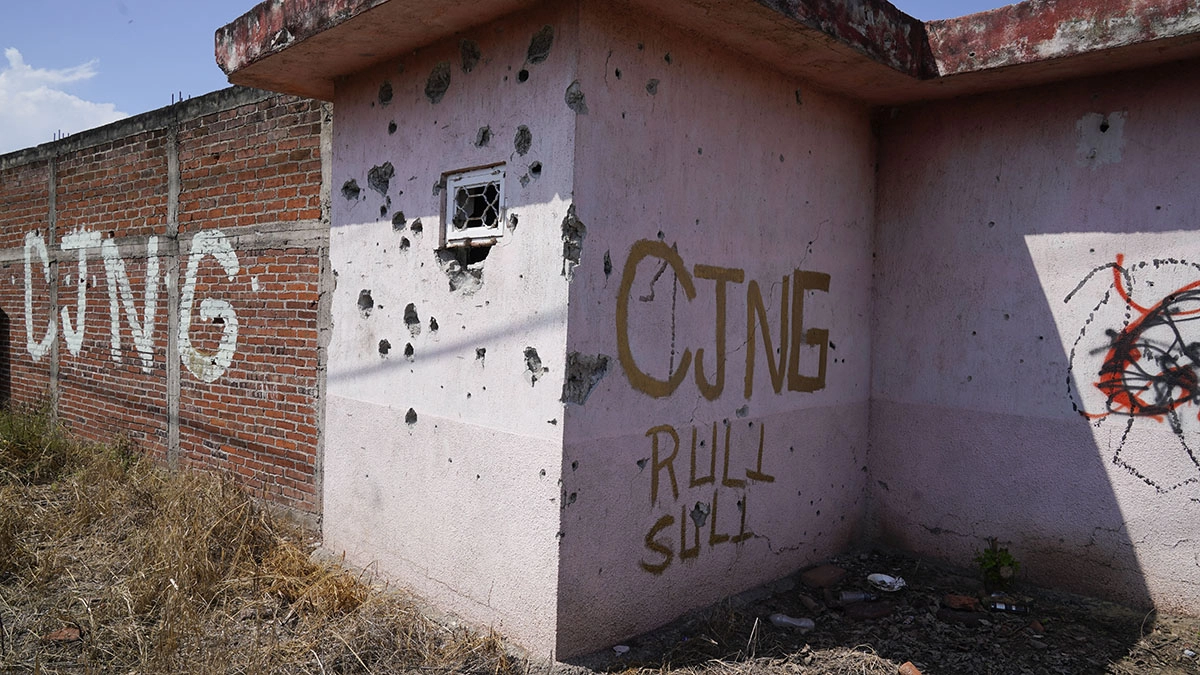
The Jalisco New Generation Cartel (CJNG) has consolidated itself as one of the most powerful and violent criminal actors in Mexico, with an expansion that in just over a decade It reshaped the map of drug trafficking and public security. Its growth was neither sudden nor isolated, but rather the result of internal ruptures among cartels, failed security policies, and sustained international demand for synthetic drugs. Today, the CJNG maintains a documented presence in most of the country's states and operational networks outside of Mexico, particularly in the United States, South America, and Canada. This international expansion was reflected in 2025 when the U.S. government designated it a foreign terrorist organization, a measure that increased financial and criminal pressure against its structures and allies. According to sites like Insight Crime, the CJNG's origins can be traced back to the fragmentation of the Milenio Cartel, an organization linked to the Valencia family and subordinate for years to the Sinaloa Cartel through Ignacio "Nacho" Coronel, a key operator in Jalisco and a central figure in methamphetamine production. The death of Coronel in a military operation in 2010 accelerated the breakup of that network and paved the way for new armed groups. According to local media outlets such as RioDoce, in that process emerged a faction that presented itself publicly as “Los Mata Zetas” (The Zeta Killers), active in Veracruz and other strategic areas of the Gulf amidst disputes over ports and export routes. Several analyses identify this group as the direct predecessor of the CJNG, initially aligned with Sinaloa and later becoming an autonomous organization with national ambitions. From 2011 onward, the name Jalisco New Generation Cartel began to appear in public messages and actions, with leadership attributed to Nemesio Oseguera Cervantes, alias “El Mencho,” a former municipal police officer with a history in the Milenio Cartel and experience in the synthetic drug market.The transformation involved moving beyond the role of a shock force to become an integrated structure capable of producing, trafficking, controlling territories, and managing entire criminal economies. The growth of the CJNG coincided with a context of institutional weakness and the militarization of public security that began in 2007. By the mid-2010s, official reports and those from U.S. agencies already placed it among the fastest-expanding groups in the country, fueled by revenues from methamphetamine, heroin, and later, fentanyl destined for the U.S. market. In just a few years, the organization went from controlling a handful of states to vying for key territories in more than 20 states, especially in the Bajio region, western Mexico, and the Pacific coast. Federal and state authorities have identified the CJNG as responsible for armed clashes, forced displacements, and homicides linked to territorial disputes, as well as for a diversification of illicit activities that extends beyond drug trafficking. The CJNG's criminal economy includes extortion schemes, control of production chains, fuel theft, exploitation of illegal mines, and money laundering through front companies. Internationally, journalistic and intelligence investigations have documented its capacity to export drugs and establish networks in U.S. cities such as California, Texas, Illinois, and New York, in addition to links in South America and Canada. A distinctive feature of its consolidation has been the use of military-grade weaponry and technology. Since 2020, attacks with drones adapted to carry explosives have been recorded in states such as Michoacan and Guerrero, an escalation that forced security forces to improvise responses in the absence of a specific regulatory framework. The CJNG's visibility was also built on high-impact actions. In 2015, a coordinated offensive in Jalisco included roadblocks, burning vehicles, and the downing of a military helicopter during an operation to capture its leader—an episode that demonstrated its capacity to directly confront the state. Years later, ambushes against police officers in Michoacan and an attack against the then-Secretary of Citizen Security of Mexico City, Omar Garcia Harfuch, reinforced the perception of a group capable of operating even in heavily guarded areas. The trajectory of the CJNG encapsulates a structural security crisis in Mexico, stemming from a strategy focused on military deployment without dismantling financial and political networks, states with limited investigative capabilities, and high levels of corruption.to control territories and manage entire criminal economies.
The growth of the CJNG coincided with a context of institutional weakness and the militarization of public security that began in 2007. By the mid-2010s, official reports and those from US agencies already placed it among the fastest-expanding groups in the country, driven by revenues from methamphetamine, heroin, and, later, fentanyl destined for the US market.
In just a few years, the organization went from controlling a handful of states to vying for key territories in more than 20 states, especially in the Bajio region, western Mexico, and the Pacific coast.
Federal and state authorities have identified the CJNG as responsible for armed clashes, forced displacements, and homicides linked to territorial disputes, as well as for a diversification of illicit activities that extends beyond drug trafficking. The CJNG's criminal economy includes extortion schemes, control of production chains, fuel theft, exploitation of illegal mines, and money laundering through front companies. Internationally, journalistic and intelligence investigations have documented its capacity to export drugs and establish networks in U.S. cities such as California, Texas, Illinois, and New York, in addition to links in South America and Canada. A distinctive feature of its consolidation has been the use of military-grade weaponry and technology. Since 2020, attacks with drones adapted to carry explosives have been recorded in states such as Michoacan and Guerrero, an escalation that forced security forces to improvise responses in the absence of a specific regulatory framework. The CJNG's visibility was also built on high-impact actions. In 2015, a coordinated offensive in Jalisco included roadblocks, burning vehicles, and the downing of a military helicopter during an operation to capture its leader—an episode that demonstrated its capacity to directly confront the state. Years later, ambushes against police officers in Michoacan and an attack against the then-Secretary of Citizen Security of Mexico City, Omar Garcia Harfuch, reinforced the perception of a group capable of operating even in heavily guarded areas. The trajectory of the CJNG encapsulates a structural security crisis in Mexico, stemming from a strategy focused on military deployment without dismantling financial and political networks, states with limited investigative capabilities, and high levels of corruption.to control territories and manage entire criminal economies.
The growth of the CJNG coincided with a context of institutional weakness and the militarization of public security that began in 2007. By the mid-2010s, official reports and those from US agencies already placed it among the fastest-expanding groups in the country, driven by revenues from methamphetamine, heroin, and, later, fentanyl destined for the US market.
In just a few years, the organization went from controlling a handful of states to vying for key territories in more than 20 states, especially in the Bajio region, western Mexico, and the Pacific coast.
Federal and state authorities have identified the CJNG as responsible for armed clashes, forced displacements, and homicides linked to territorial disputes, as well as for a diversification of illicit activities that extends beyond drug trafficking. The CJNG's criminal economy includes extortion schemes, control of production chains, fuel theft, exploitation of illegal mines, and money laundering through front companies. Internationally, journalistic and intelligence investigations have documented its capacity to export drugs and establish networks in U.S. cities such as California, Texas, Illinois, and New York, in addition to links in South America and Canada. A distinctive feature of its consolidation has been the use of military-grade weaponry and technology. Since 2020, attacks with drones adapted to carry explosives have been recorded in states such as Michoacan and Guerrero, an escalation that forced security forces to improvise responses in the absence of a specific regulatory framework. The CJNG's visibility was also built on high-impact actions. In 2015, a coordinated offensive in Jalisco included roadblocks, burning vehicles, and the downing of a military helicopter during an operation to capture its leader—an episode that demonstrated its capacity to directly confront the state. Years later, ambushes against police officers in Michoacan and an attack against the then-Secretary of Citizen Security of Mexico City, Omar Garcia Harfuch, reinforced the perception of a group capable of operating even in heavily guarded areas. The trajectory of the CJNG encapsulates a structural security crisis in Mexico, stemming from a strategy focused on military deployment without dismantling financial and political networks, states with limited investigative capabilities, and high levels of corruption.By the mid-2010s, official reports and those from U.S. agencies already placed it among the fastest-growing groups in the country, fueled by revenues from methamphetamine, heroin, and later, fentanyl destined for the U.S. market. In just a few years, the organization went from controlling a handful of states to vying for control of key territories in more than 20 states, especially in the Bajio region, western Mexico, and the Pacific coast. Federal and state authorities have identified it as responsible for armed clashes, forced displacements, and homicides linked to territorial disputes, as well as for a diversification of illicit activities that extends beyond drug trafficking. The CJNG's criminal economy includes extortion schemes, control of supply chains, fuel theft, illegal mining, and money laundering through front companies. Internationally, journalistic and intelligence investigations have documented its capacity to export drugs and establish networks in US cities such as those in California, Texas, Illinois, and New York, in addition to links in South America and Canada. A distinctive feature of its consolidation has been the use of military-grade weaponry and technology. Since 2020, attacks with drones adapted to carry explosives have been recorded in states such as Michoacan and Guerrero, an escalation that forced security forces to improvise responses in the absence of a specific regulatory framework. The CJNG's visibility was also built on high-impact actions. In 2015, a coordinated offensive in Jalisco included roadblocks, burning vehicles, and the downing of a military helicopter during an operation to capture its leader—an episode that demonstrated its capacity to directly confront the state. Years later, ambushes against police officers in Michoacan and an attack against the then-Secretary of Citizen Security of Mexico City, Omar Garcia Harfuch, reinforced the perception of a group capable of operating even in heavily guarded areas. The trajectory of the CJNG encapsulates a structural security crisis in Mexico, stemming from a strategy focused on military deployment without dismantling financial and political networks, states with limited investigative capabilities, and high levels of corruption.By the mid-2010s, official reports and those from U.S. agencies already placed it among the fastest-growing groups in the country, fueled by revenues from methamphetamine, heroin, and later, fentanyl destined for the U.S. market. In just a few years, the organization went from controlling a handful of states to vying for control of key territories in more than 20 states, especially in the Bajio region, western Mexico, and the Pacific coast. Federal and state authorities have identified it as responsible for armed clashes, forced displacements, and homicides linked to territorial disputes, as well as for a diversification of illicit activities that extends beyond drug trafficking. The CJNG's criminal economy includes extortion schemes, control of supply chains, fuel theft, illegal mining, and money laundering through front companies. Internationally, journalistic and intelligence investigations have documented its capacity to export drugs and establish networks in US cities such as those in California, Texas, Illinois, and New York, in addition to links in South America and Canada. A distinctive feature of its consolidation has been the use of military-grade weaponry and technology. Since 2020, attacks with drones adapted to carry explosives have been recorded in states such as Michoacan and Guerrero, an escalation that forced security forces to improvise responses in the absence of a specific regulatory framework. The CJNG's visibility was also built on high-impact actions. In 2015, a coordinated offensive in Jalisco included roadblocks, burning vehicles, and the downing of a military helicopter during an operation to capture its leader—an episode that demonstrated its capacity to directly confront the state. Years later, ambushes against police officers in Michoacan and an attack against the then-Secretary of Citizen Security of Mexico City, Omar Garcia Harfuch, reinforced the perception of a group capable of operating even in heavily guarded areas. The trajectory of the CJNG encapsulates a structural security crisis in Mexico, stemming from a strategy focused on military deployment without dismantling financial and political networks, states with limited investigative capabilities, and high levels of corruption.Federal and state authorities have identified the CJNG as responsible for armed clashes, forced displacements, and homicides linked to territorial disputes, as well as for a diversification of illicit activities that extends beyond drug trafficking. The CJNG's criminal economy includes extortion schemes, control of production chains, fuel theft, exploitation of illegal mines, and money laundering through front companies. Internationally, journalistic and intelligence investigations have documented its capacity to export drugs and establish networks in U.S. cities such as California, Texas, Illinois, and New York, in addition to links in South America and Canada. A distinctive feature of its consolidation has been the use of military-grade weaponry and technology. Since 2020, attacks with drones adapted to carry explosives have been recorded in states such as Michoacan and Guerrero, an escalation that forced security forces to improvise responses in the absence of a specific regulatory framework. The CJNG's visibility was also built on high-impact actions. In 2015, a coordinated offensive in Jalisco included roadblocks, burning vehicles, and the downing of a military helicopter during an operation to capture its leader—an episode that demonstrated its capacity to directly confront the state. Years later, ambushes against police officers in Michoacan and an attack against the then-Secretary of Citizen Security of Mexico City, Omar Garcia Harfuch, reinforced the perception of a group capable of operating even in heavily guarded areas. The trajectory of the CJNG encapsulates a structural security crisis in Mexico, stemming from a strategy focused on military deployment without dismantling financial and political networks, states with limited investigative capabilities, and high levels of corruption.Federal and state authorities have identified the CJNG as responsible for armed clashes, forced displacements, and homicides linked to territorial disputes, as well as for a diversification of illicit activities that extends beyond drug trafficking. The CJNG's criminal economy includes extortion schemes, control of production chains, fuel theft, exploitation of illegal mines, and money laundering through front companies. Internationally, journalistic and intelligence investigations have documented its capacity to export drugs and establish networks in U.S. cities such as California, Texas, Illinois, and New York, in addition to links in South America and Canada. A distinctive feature of its consolidation has been the use of military-grade weaponry and technology. Since 2020, attacks with drones adapted to carry explosives have been recorded in states such as Michoacan and Guerrero, an escalation that forced security forces to improvise responses in the absence of a specific regulatory framework. The CJNG's visibility was also built on high-impact actions. In 2015, a coordinated offensive in Jalisco included roadblocks, burning vehicles, and the downing of a military helicopter during an operation to capture its leader—an episode that demonstrated its capacity to directly confront the state. Years later, ambushes against police officers in Michoacan and an attack against the then-Secretary of Citizen Security of Mexico City, Omar Garcia Harfuch, reinforced the perception of a group capable of operating even in heavily guarded areas. The trajectory of the CJNG encapsulates a structural security crisis in Mexico, stemming from a strategy focused on military deployment without dismantling financial and political networks, states with limited investigative capabilities, and high levels of corruption.an escalation that forced security forces to improvise responses in the absence of a specific regulatory framework.
The CJNG's visibility was also built on high-impact actions. In 2015, a coordinated offensive in Jalisco included roadblocks, burning vehicles, and the downing of a military helicopter during an operation to capture its leader—an episode that demonstrated its capacity to directly confront the state.
Years later, ambushes of police officers in Michoacan and an attack against the then-Secretary of Citizen Security of Mexico City, Omar Garcia Harfuch, reinforced the perception of a group capable of operating even in heavily guarded areas.
The CJNG's trajectory encapsulates a structural security crisis in Mexico, stemming from a strategy focused on military deployment without dismantling financial and political networks, states with limited investigative capabilities, and high levels of corruption.
This news has been tken from authentic news syndicates and agencies and only the wordings has been changed keeping the menaing intact. We have not done personal research yet and do not guarantee the complete genuinity and request you to verify from other sources too.