What has us scratched here is the increase in the dollar: Venezuelans facing the possibility of a US attack trying
While Washington and Caracas exchange threats about a possible invasion of Venezuela, on the streets of the country people are more worried about their economy
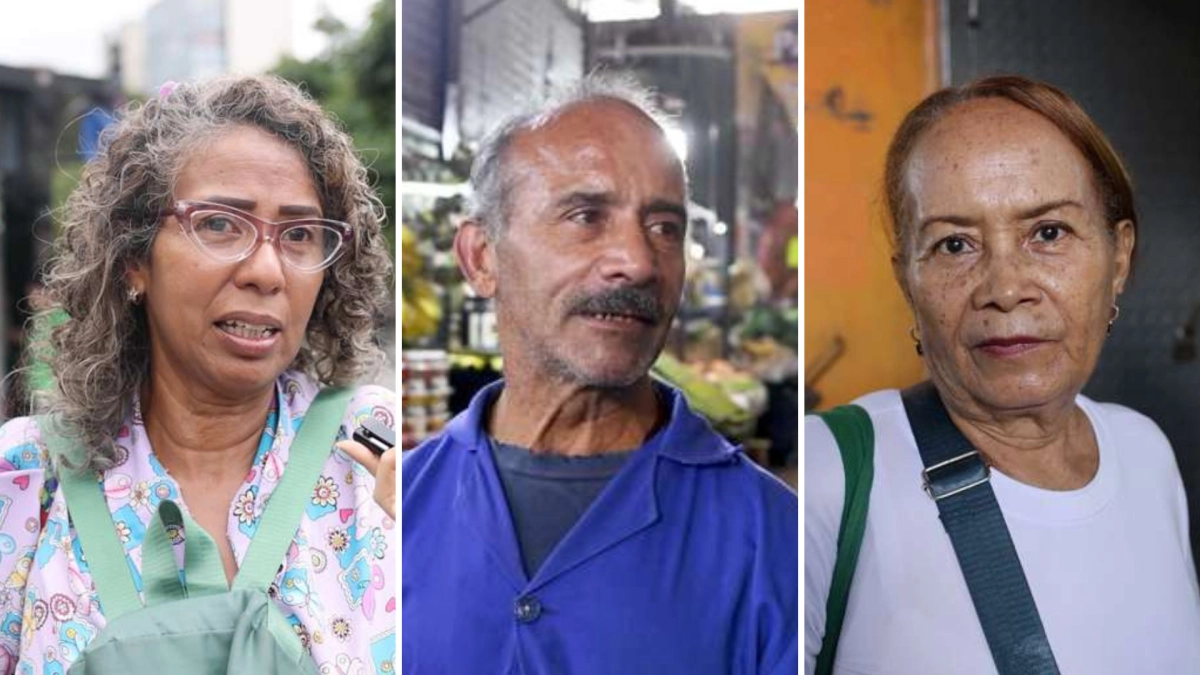
While the government of Nicolas Maduro is on edge due to the threat from US President Donald Trump to carry out military action in Venezuela, many ordinary citizens spend their time to solve the problem of food in their country. It's Wednesday morning in Quinta Crespo, a popular market in downtown Caracas. Here, a potential escalation of the conflict doesn't seem to bother most people. "There's not going to be any intervention, nothing like that. What's really got us screwed here is the rising dollar," Alejandro Orellano, sipping his coffee and waiting for customers who haven't arrived, tells BBC Mundo. Since September, the Trump administration has been massing troops and military resources at short distance from Venezuela. The deployment includes more than 15,000 troops and the USS Gerald R. Ford, the world's largest carrier aircraft.
As of Monday morning, at least seven international airlines had canceled their flights to and from Venezuela following a warning from US aviation authorities about the risks of flying over the country's airspace.
For weeks, the US has been carrying out a series of airstrikes against alleged drug-trafficking boats in the Caribbean and the eastern Pacific.
At least 83 people have died in the attacks. Washington accuses them of drug trafficking, but has so far offered no evidence. Some analysts believe the attacks are part of a plan to force Maduro's removal. His government is considered illegitimate by the United States and several Latin American countries following the disputed 2024 presidential elections, which have been widely rejected by the international community. Alejandro, who has been selling vegetables at this market for five years, downplays the rhetoric between Washington and Caracas. “Look, look how empty this place is,” he insists, pointing down a long, deserted aisle usually filled with fresh fruits and vegetables. The common enemy of those present seems to be the abrupt rise in food prices and the limited ability to afford them. A kilo of chicken, for example,costs around four times the value of the official monthly minimum wage. And although the government compensates pensioners and public sector workers with bonuses, the money is still insufficient for the basic food basket. But another reality is that since the anti-government protests that took place after the disputed 2014 presidential elections, a large part of Venezuelan society avoids speaking openly about issues that could be sensitive to the Maduro government. During and after the protests, more than 2,000 people were arrested, according to official figures. Currently, 884 people remain in prison for political reasons, according to the non-governmental organization Foro Penal. There were reports of people being arrested after giving statements to the press in which they complained about the government or questioned the election results. United Nations (UN) experts have presented allegations of serious human rights violations in the context of those elections and the protests that occurred in the days that followed.
They reported political persecution, excessive use of force, enforced disappearances, and extrajudicial executions by state security forces and affiliated civilian groups.
“Is it true? Is it a lie?”
Regarding potential US action in the country, 74-year-old Consuelo is skeptical and doubtful.
“Whatever happens, happens! (…), that's it!” she tells BBC Mundo.
“Is it true? Is it a lie? (…) All that does is make you sick, keep you on edge (…) it's better to stay calm. Emotions can also affect your health,” says this retired university professor who still works.
“I haven't made panic purchases. You have to have a lot of money to buy things.”
Barbara Marrero, a 40-year-old pastry chef "We're all waiting for something to happen, because it's fair and necessary. These are years watched in absolute misery." "Venezuelans live day to day hoping something will happen, but everyone is afraid (to speak) and nobody says anything." "We're scared, silent, for fear of being imprisoned. I always used to post things, but not anymore, I shouldn't, because I don't know who's going to sell to me," a merchant who lives in Ciudad Bolivar (Bolivar state, south) tells BBC Mundo by phone. "There's hope, faith, but people are silent out of fear. You don't hear anyone talking about it; it's just at home, with your family... but there's a sense of joy," the woman says anonymously.
It's already midday.
Everything is going as usual on a busy boulevard in eastern Caracas. Street vendors are encouraging sales… passersby come and go…
There's Javier Jaramillo, 57, looking for merchandise to resell at Christmas.He is waiting to see what happens with the aircraft carrier that Washington moved to the Caribbean.
“I don't think that attack will happen, I think what might happen is a dialogue, an agreement, or a settlement.”
However, he says that when there are power outages he thinks, “'They've already gotten in,' 'They're going to get in.'”
In any case, Javier reiterates: “We are more worried about food (…), I don't think there will be an attack.”
“Venezuela is in very bad shape (…) Inflation is eating us alive, there's no money worth anything here; dollars, euros.”
“I am a Venezuelan who is going through hardship (…). Let no one fall asleep!” Nicolas Maduro urged the population on Thursday night.
“We must defend the oil installations of the “The CIA gave them money and told them to go and damage the Venezuelan economy,” the president continued. Maduro constantly congratulates himself on his handling of the Venezuelan economy, claiming it is under siege by the US, between sanctions and the military deployment in the Caribbean. Two economists living in Venezuela, consulted by the BBC for this report, declined to comment on the matter for fear of government “That inflation has reached levels of around 20% monthly or month-on-month in recent months,” said another expert who asked to remain anonymous. The International Monetary Fund (IMF) projects a 548% increase in prices this year and says it will be worse in 2026, when it could soar to 629%.
Maduro, for his part, emphasizes that the country's GDP will grow by. 9%.
“Innocent people could die”
Esther Guevara, 53, who works in a medical laboratory, is one of those who doesn't hide her concern amid the tensions over the deployment of the US naval fleet.
“I'm worried because I don't really know what's going on, that they're really going to invade, to extract... people think it's very easy, very calm, but it's serious, many innocent people could die.”
“I feels like something's brewing over there, but I'm waiting to see what happens,” she says.
“Trump has to come to his senses,” Francisco Ojeda, 69, a resident of Petare and a member of the militia, tells BBC Mundo.
Ojeda has participated in military recruitments ordered by Maduro and handled weapons of war, although without bullets.
“Nobody here is going to stay calm in the event of an invasion,” he asserts.
“If they come, they come, and if they don't, well.But here we want peace and harmony for everyone.
And remember that you can receive notifications in our app. Download the latest version and activate them.
This news has been tken from authentic news syndicates and agencies and only the wordings has been changed keeping the menaing intact. We have not done personal research yet and do not guarantee the complete genuinity and request you to verify from other sources too.