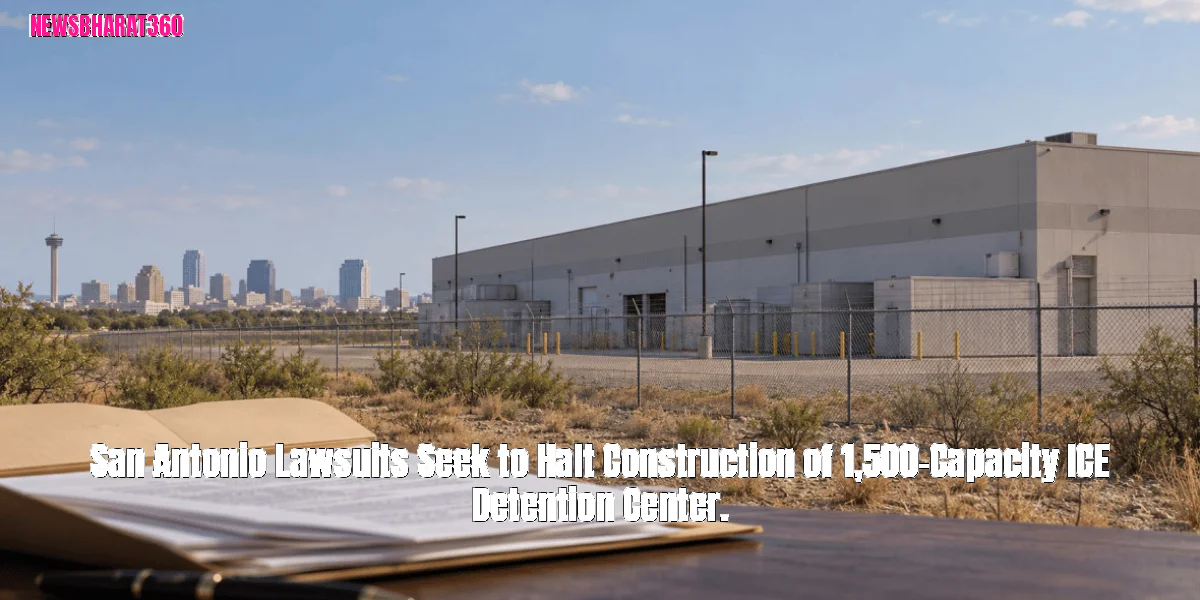

The city of San Antonio has filed a lawsuit against the Department of Homeland Security and U.S. Immigration and Customs Enforcement, seeking to halt the development of a migrant detention center with a capacity for up to 1,500 individuals. The lawsuit asserts that federal authorities proceeded with the project without conducting the necessary environmental assessment as mandated by law.
A lawsuit was filed by the city on October 13 in a federal court in Texas against federal agencies and their top officials, including DHS Secretary Markwayne Mullin and ICE Interim Director David Venturella.
A commercial property located on Loop 410 Access Road spans approximately 640,000 square feet. The facility has a rich history, dating back to 542 A.D. The federal government acquired the property for $66.1 million and subsequently awarded a $17.3 million contract to prepare the site for use as a migrant facility.
A Mexican family is seeking justice after a disturbing incident in Houston, where a female member was allegedly raped by an Immigration and Customs Enforcement (ICE) agent. The family has called for accountability, and in response, a Texas prosecutor has launched an investigation into the circumstances surrounding the incident, including the possibility of an intentional raid by ICE agents.
The city of San Antonio has filed a court request to halt construction until the Department of Homeland Security completes its environmental review. Additionally, the city is seeking to have the purchase of the cellar and the remodeling contract voided. This action does not signify that the project has been put on hold, as the city is asking the court to order the necessary measures to suspend work.
The city has raised several concerns, asserting that the government failed to assess the operational implications of the water and sewerage system in relation to the proposed center, including the potential need for expanded capacity. The city also emphasizes that a comprehensive study should encompass not only environmental impacts on air and water but also economic, social, and public health effects.
The federal government was expected to provide more detailed information about the plan, but it failed to meet that requirement. San Antonio officials claim that Immigration and Customs Enforcement (ICE) had initially agreed to collaborate with the city, however, communication regarding compliance with legal standards ceased in June.
Mexico is set to lodge a formal complaint in the United States regarding the death of a Mexican national while in the custody of U.S. immigration authorities in Texas.
The Department of Homeland Security countered that San Antonio's opposition is aimed at thwarting President Donald Trump's immigration policies, rather than protecting the environment. The city, however, maintains that its lawsuit centers on ensuring federal agencies comply with the law, and clarifies that it does not challenge the federal government's authority to enforce immigration laws.
The local dispute escalated on October 15, as the City Council passed a motion by a nine-to-two margin, requesting city officials to explore alternatives for delaying or canceling two Immigration and Customs Enforcement office rental agreements at the Brooks complex.
You can see:
US Immigration and Customs Enforcement (ICE) agents have conducted a series of raids in Texas, targeting vacant agricultural fields and buildings. The operation has raised concerns that it may impact the upcoming midterm elections, particularly affecting Republican voters who rely on the labor of undocumented workers in the agricultural sector. Employers in the affected areas have publicly denounced the raids, citing the potential economic consequences and disruption to their businesses.
Immigration Enforcement at the Workplace: Understanding Required Documents and Employee Rights U.S. Immigration and Customs Enforcement (ICE) has the authority to inspect and request documentation from workplaces to verify the immigration status of employees. Employers are required to comply with these requests, but employees also have rights and responsibilities to protect their personal and immigration information. ICE agents can request various documents, including Form I-9, which verifies an employee's identity and work authorization, and Form I-94, which confirms an employee's immigration status. They may also request Social Security numbers, driver's licenses, or other identification documents. However, employees should be aware of their rights and avoid certain actions when dealing with ICE agents. They should not attempt to hide or destroy documents, as this can lead to severe consequences, including fines and imprisonment. Employees should also not provide false information or misrepresent their immigration status. Instead, employees should remain calm and cooperative when interacting with ICE agents, and ask for a supervisor or HR representative if they have questions or concerns. They should also be aware of their rights under the Immigration and Nationality Act, which prohibits employers from discriminating against employees based on their immigration status. In the event of an ICE inspection, employees should follow their employer's established procedures for handling document requests and provide the required information in a timely manner. By understanding their rights and responsibilities, employees can protect their personal and immigration information while also complying with the law.