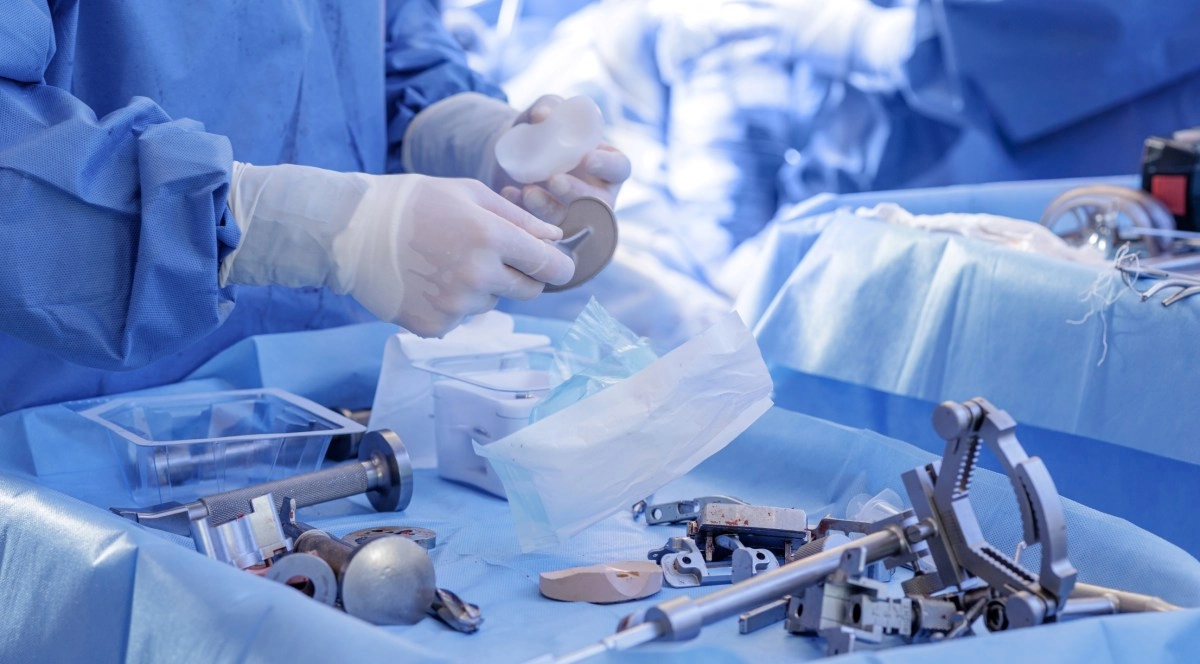

Joint surgery has advanced more in two decades than in the entire previous century. State-of-the-art prostheses, robotic assistance and minimally invasive techniques promise “a second life” to worn-out knees, hips and shoulders.
But specialists agree on a nuance that rarely reaches the patient before signing the consent: recovering function does not always mean recovering it completely.
Total joint replacement
When osteoarthritis progresses to a terminal stage and conservative treatments—painkillers, physiotherapy, infiltrations—stop working, total joint replacement is often presented as the most reliable option in modern orthopedics. In such a procedure, the surgeon removes damaged cartilage from both ends of the bone and reconstructs the joint surface with a metal and plastic implant designed to replicate the natural movement of the joint.
The results support the optimism with which this surgery is presented: a hip or knee prosthesis can last more than twenty years and, for the majority of patients, works as a definitive solution to osteoarthritis pain. Some hospital centers report success rates greater than 90% in the goal of eliminating pain and restoring functional mobility.
The emergence of robotic-assisted surgery has further refined that prognosis. Instead of conventional x-rays, surgeons today turn to CT scans that allow the ideal implant size and alignment for each patient to be calculated with millimeter precision. According to specialists from hospital systems such as Banner Health, these techniques – often combined with smaller incisions – translate into less postoperative pain and a more predictable recovery, although they warn that the implant itself remains the same as in traditional surgery: what improves is the placement, not necessarily the patient's functional ceiling.
“Own” joints that are never the same again
The picture changes when it comes to conservative surgeries, those that seek to preserve the original joint instead of replacing it, as occurs with meniscus or labral repairs in young and athletic patients.
The available evidence shows encouraging, but not absolute, results. A multicenter study of hip arthroscopy in young patients found that 85% experienced significant pain reduction and functional improvements that were maintained for five years. However, in cases of advanced cartilage damage, that same study recognizes that arthroscopy may not be enough, and total replacement ends up being inevitable.
Something similar happens with meniscus injuries, one of the most common knee surgeries in sports. Specialists distinguish between removing the damaged fragment (meniscectomy) or suturing it so that it heals (meniscal repair). The first option allows a faster return to physical activity, but compromises the future biomechanics of the knee: it has been documented that losing a third of the meniscus increases bone contact forces by up to 65%, and that a total meniscectomy can increase them between 40% and 700% with the knee flexed, which increases the risk of premature osteoarthritis. Repair, on the other hand, better preserves the structure in the long term, but requires a longer and more demanding rehabilitation, lasting three to four months, with weeks of crutches and an orthosis that limits movement.
That nuance explains why return to peak athletic performance is not guaranteed, even when the surgery is technically successful. Specialized physiotherapists cite that only 35% of athletes who undergo anterior cruciate ligament surgery maintain their same competitive level prior to the injury two years after the intervention.
What determines the result
The specialists consulted in different sources agree that “total operability”—understood as the exact return to the state prior to the injury or illness—depends on variables that go beyond the scalpel:
What does the evidence say?
Joint surgery can eliminate pain, restore a good part of mobility and, in the case of total replacements, offer results that last for decades. But equating it to a total “reset” of the joint is, according to the available evidence, a simplification.
The operability that is recovered depends on the type of intervention, the tissue involved and a rehabilitation process that can be as decisive as the operation itself. For the patient, the relevant question is not just whether the surgery works, but what kind of “working” he can reasonably expect after it.