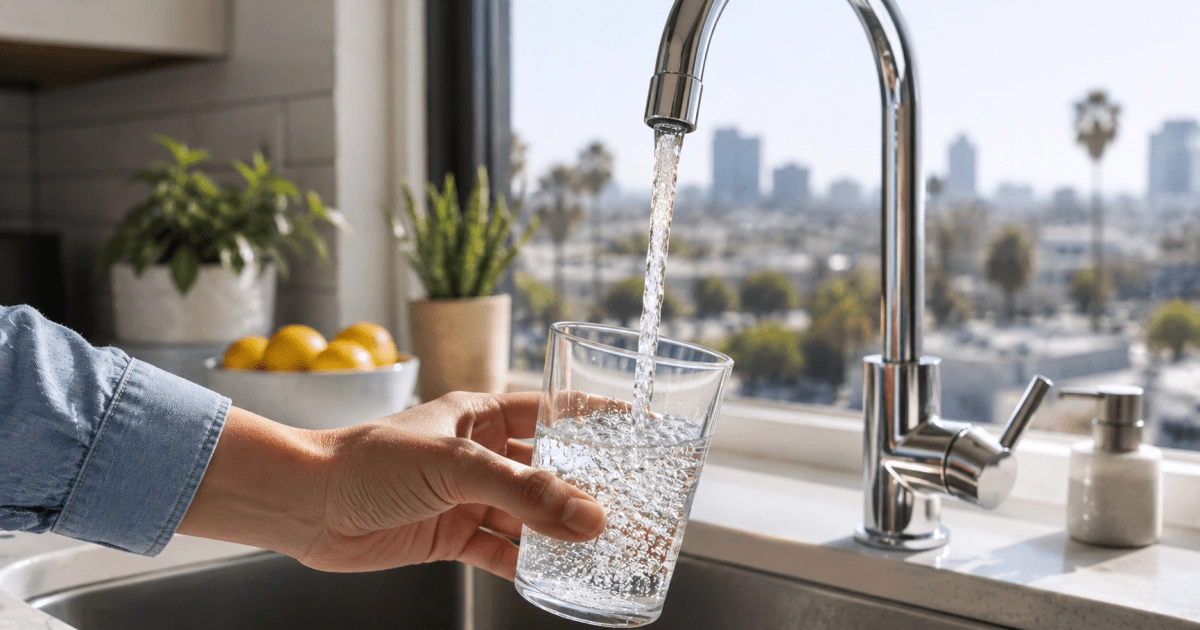

Drinking tap water in California is generally safe. In cities such as Los Angeles, San Diego, San Francisco, Sacramento, San José or Fresno, most homes are connected to public water systems that must comply with state and federal quality controls.
The official My Water Quality site for the state of California notes that drinking water provided by public utilities in California is safe to drink and that the state has regulations to protect public health. That does not mean that there can never be problems, but that mains water is regulated and monitored.
What happens if you drink tap water in California
The general answer is yes, if the water comes from a public system and there is no alert in effect in your area. Under normal conditions, drinking it should not cause health problems.
In fact, public providers are required to conduct testing and publish annual quality reports known as Consumer Confidence Reports. The California State Water Resources Control Board explains that these reports inform consumers about the quality of the drinking water they receive.
These reports allow us to review where the water comes from, what substances were detected, if there were non-compliances and what measures the supplier took.
You can see: The amount of water you should drink depending on the activity you do, according to studies
When should it not be taken directly?
There are situations in which it is advisable to be careful. The clearest is when the authorities issue a boil water advisory, known in English as a “boil water advisory.” According to the CDC, these notices indicate that tap water should be boiled before using it because it could contain germs that can make people sick.
It is also advisable to avoid drinking it directly if the water comes out cloudy, brown, with a strong chemical smell or a sudden strange taste. In these cases, it is best to check the notices of the local water supplier or call the appropriate service.
Another important situation is that of old houses or buildings. Even if water leaves the treatment plant safely, it can become contaminated within the property if it passes through old pipes, faucets or fixtures. The U.S. Environmental Protection Agency warns that lead can enter water when plumbing materials containing the metal corrode, especially pipes, faucets and fixtures.
Private wells: the case that demands more attention
Not all homes in California receive water from a public system. Some rural areas or remote properties use private wells. In those cases, the responsibility for testing the water usually falls to the homeowner.
Well water may have bacteria, nitrates, arsenic or other contaminants depending on the area. Therefore, if a family uses a private well, it is not enough for the water to look clean: it is advisable to perform periodic tests and consult local recommendations.
What to do if there is a boil water notice
If authorities issue a boil water advisory, it is not recommended to drink it directly. The CDC says that during a warning, you should use bottled water or boil tap water before drinking or cooking.
As a general rule, clear water should be boiled to a strong boil for at least one minute. If you are in an area above 6,500 feet in elevation, the recommended time is three minutes. Then you have to let it cool and store it in clean containers.
You should also be careful with ice, mixed drinks, brushing teeth, and baby or pet food if the notice includes those restrictions.
You can see: How to know if you need a water filter in your home
Is bottled water always better?
Not necessarily. In many California cities, regulated tap water is safe and can be a cheaper option than buying bottles every day. Additionally, reduce the use of plastic.
But bottled water may be necessary if there is an active advisory, if the water has a strange odor or color, if you live in a home with older, untested plumbing, if there are babies, immunocompromised people, or if you use a private well without recent testing.
What tourists and newcomers should check
Those traveling to California or who have just moved can follow a simple rule: if you are in a hotel, restaurant, airport, school or urban home connected to the public system, the tap water is generally safe to drink. If there is an alert, the venue should report it.
On the other hand, if you are in a cabin, in a rural area, in an isolated accommodation or on a property with a well, it is advisable to ask before drinking it. It is also useful to look for the local supplier's quality report or check if there are active advisories.
You can see: For the health of your child: if you are pregnant, stay away from endocrine disruptors
Warning signs in the water
You have to pay attention if the water:
In those cases, the most prudent thing is not to take it until you confirm what is happening.