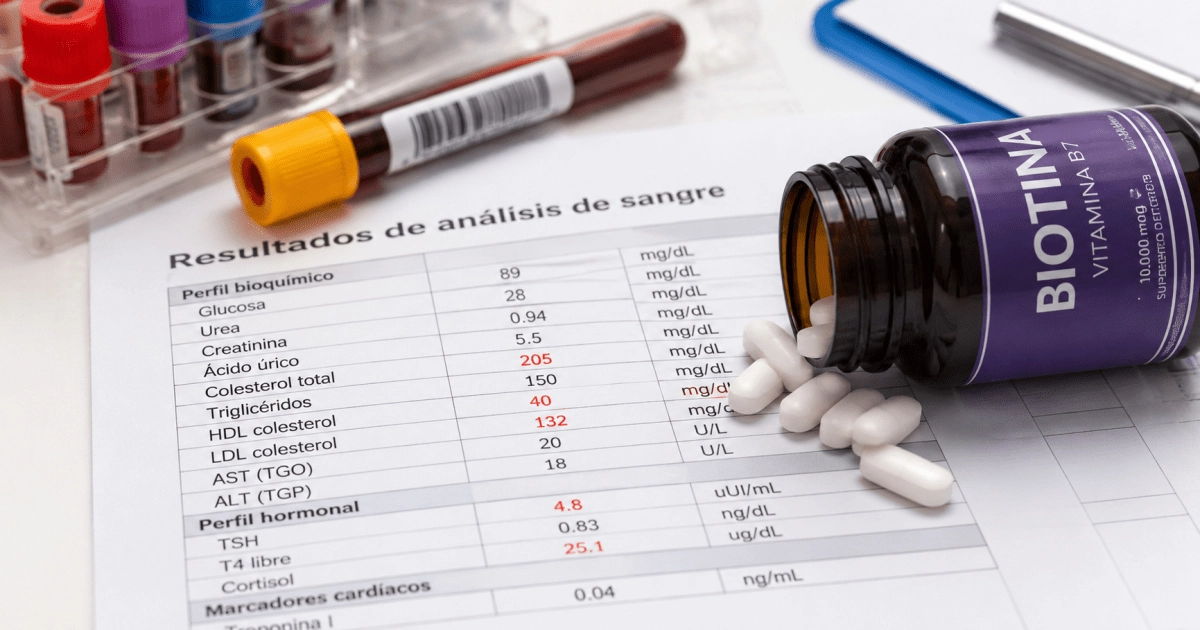

Vitamins for hair, gummies for nails, supplements to gain energy or “natural” products to strengthen health are part of the daily routine of millions of people. However, few know that some of these products can modify the results of a blood test and, in some cases, generate false positives or false negatives.
Specialists in clinical biochemistry warn that certain substances present in dietary supplements can interfere with laboratory tests used to diagnose heart disease, hormonal alterations and other health problems.
The vitamin that worries experts the most
Among all supplements, biotin—also known as vitamin B7—is one of the most concerning.
This vitamin is usually found in products intended to strengthen hair and nails, but it is also present in some multivitamins and supplements to improve the appearance of the skin.
The risk of an incorrect result
One of the most worrying aspects is that these interferences can cause misleading results. In some cases, they can simulate the presence of a disease. In others, they could hide a real problem.
Specialists point out that biotin has been associated with false results in tests that evaluate thyroid hormones, cortisol, testosterone and markers used to detect heart damage, such as troponin.
Due to this situation, the United States Food and Drug Administration (FDA) has already issued warnings about the possibility of biotin interfering with certain clinical tests. The agency also reminds that some supplements may affect laboratory tests or interact with medications.
It's not just about laboratory errors
Experts explain that there are two types of alterations. On the one hand, there are analytical interferences, when the supplement directly affects the method used to perform the analysis.
On the other hand, physiological interferences occur when the substance actually modifies certain parameters of the body and changes the results obtained.
For example, some people who take vitamin B12 supplements may have elevated blood levels without an underlying disease. However, if the doctor is unaware of the consumption of the supplement, he or she could consider other causes that require additional studies.
You can see: The best green juice to lose weight and what time you should drink it
What you should do before a blood test
Specialists recommend always informing the doctor and the laboratory about any supplements you are taking, even if they are vitamins or products sold without a prescription. They also advise asking if it is necessary to temporarily suspend certain products before performing a blood draw.
Not everyone needs to stop taking their supplements before an analysis, but communicating this can help correctly interpret the results and avoid unnecessary worry.
You can see: 10 fatty foods that could help you lose weight
A detail that many people forget
There is a widespread perception that supplements are completely harmless because they are “natural” or over-the-counter products.
However, the FDA reminds that these products can cause adverse effects, interact with medications, and interfere with certain medical tests. That's why before a blood test, a seemingly simple question may be more important than it seems: