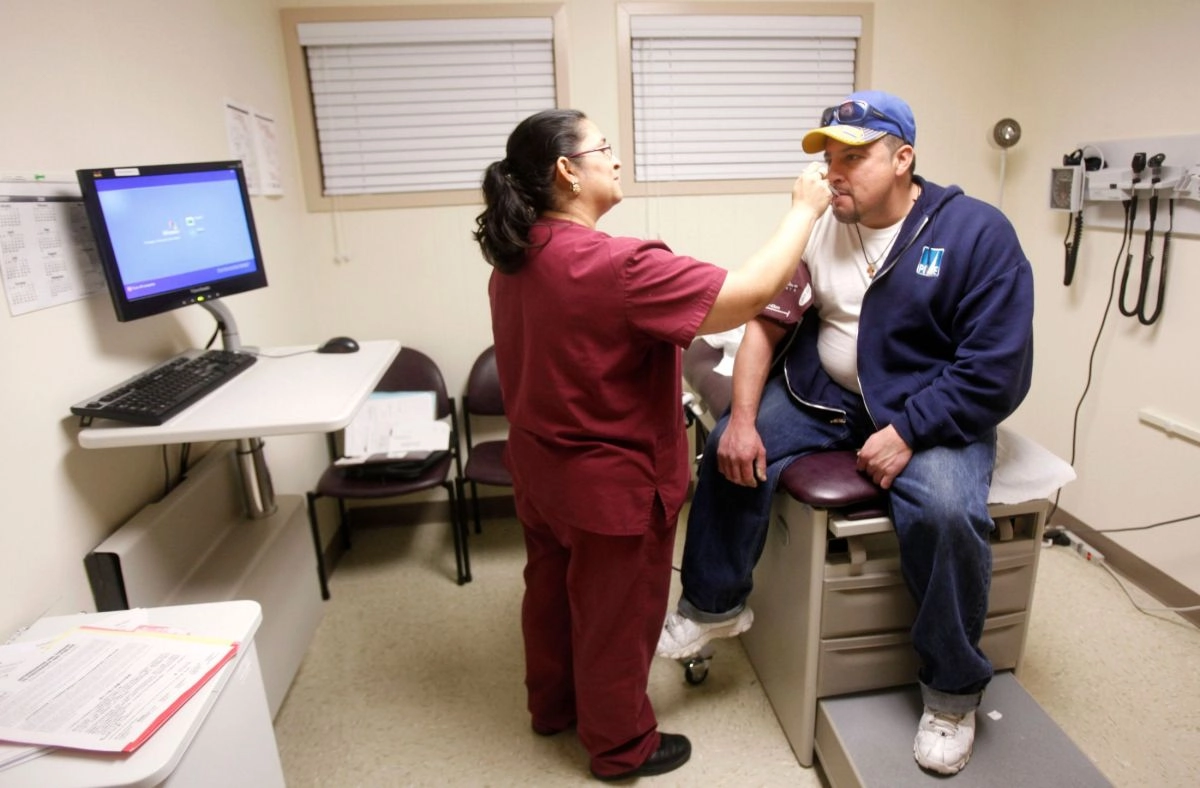

The recent Supreme Court ruling that allows the government to withdraw Temporary Protected Status (TPS) from hundreds of thousands of immigrants from Haiti and Syria is already beginning to have consequences in one of the most sensitive sectors in the country: health care and elder care.
Hospitals, nursing homes, hospice centers and home care agencies warned they could lose thousands of experienced workers, exacerbating the staffing shortage the U.S. healthcare system has faced for years.
Organizations in the sector assure that the problem is not only immigration. It also represents a challenge for millions of patients who depend daily on foreign-born nurses, aides, caregivers and other professionals.
The sectors that will feel the impact the most
Among those most affected are nursing homes, nursing homes, specialized dementia units, palliative care centers and home care services.
According to a KFF analysis, in 2023 immigrants represented approximately 24% of the workforce in nursing homes, 21% in skilled nursing facilities, and 32% to 40% in home care services.
The concern is immediate because many TPS recipients are legally authorized to work and perform essential functions that have been difficult to fill for years.
For Katie Smith Sloan, president and CEO of LeadingAge, the ruling places the sector in a critical situation.
"Staff who support older adults on a daily basis can now lose their jobs overnight. There is no pool of workers capable of replacing relationships built over years," he said.
The organization warned that some centers could be forced to limit new admissions, reduce services and even close units until replacements are found.
More pressure for a system already facing staff shortages
Various associations in the sector agree that the impact will go far beyond the affected workers.
The American Seniors Housing Association (ASHA) warned that providers could face higher labor costs, increased overtime pay and increasing dependence on temporary staffing agencies.
“The most significant impact will be the loss of experienced caregivers and frontline staff,” explained Jeanne McGlynn Delgado, vice president of Government Affairs at ASHA.
For its part, Argentum, an organization that represents senior housing communities, recalled that foreign-born workers constitute a fundamental part of the sector's workforce.
The aging of the population worsens the situation
The challenge comes at a particularly complex time for the United States.
The Department of Health and Human Services (HHS) projects that demand for nursing assistants will grow 44% between 2023 and 2028, driven by the rapidly aging population.
Added to this is that, according to the American Business Immigration Coalition (ABIC), around 15% of all non-citizen health workers have some type of immigration protection such as TPS, while more than 20% of Haitians living in the United States work in the health sector.
During a conference hosted by ABIC, Rob Liebreich, president and CEO of Goodwin Living, summarized providers' concerns.
"We have a mathematical problem. There will be more and more older adults who will need care and fewer people available to provide it," he said.
Specialists agree that the judicial decision not only affects the future employment of thousands of immigrants. It also threatens to increase wait times, raise the costs of care and make it more difficult to access services for a rapidly aging American population that will increasingly demand specialized care.