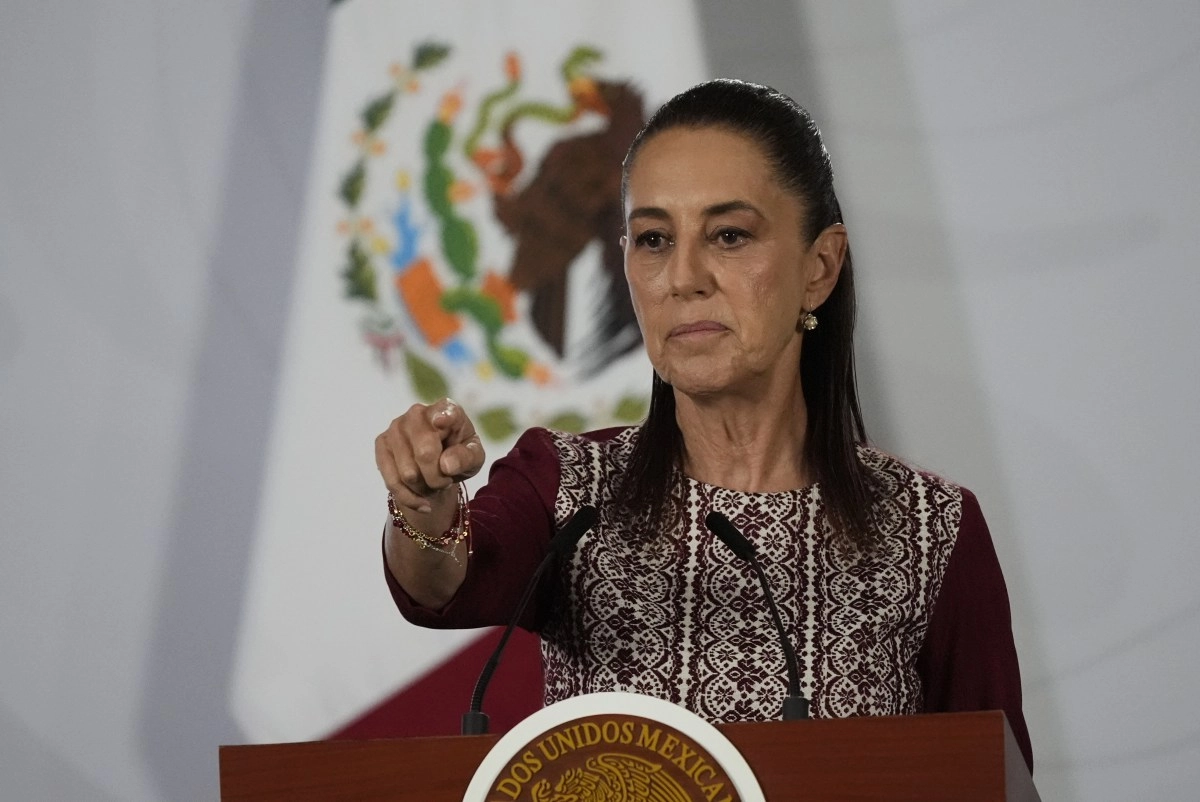

President Claudia Sheinbaum assured that Mexico will seek to reach substantive agreements with the United States and Canada during the second round of review of the Treaty between Mexico, the United States and Canada (T-MEC), with the purpose of preventing the mechanism from becoming an annual negotiation that affects the certainty for investments and trade in North America.
“Our objective is that this review phase, which is the first year, we can reach agreements in such a way that the following years will only be a review of compliance with what we agreed to this year,” said the president during her morning conference. He added that a permanent review “does not help the United States, Canada or Mexico.”
The statements come on the eve of a new round of talks between Mexican and US officials in Mexico City, where both delegations will seek to advance the most sensitive issues on the trade agenda.
One of the main points of friction is the rules of origin. Sheinbaum explained that Washington intends to increase the percentage of components manufactured in North America to access the tariff benefits of the treaty, in addition to encouraging a greater part of production to be carried out specifically in the United States.
"They also want those rules of origin to say that a very important part is produced in the United States... but we also have to take care of the Mexican economy. It is nothing more than what they tell us we should do," said the president.
Mexico will also bring to the negotiating table the elimination or reduction of tariffs imposed by the United States on steel, aluminum and automobiles under Section 232 of its trade legislation.
“Obviously we want a reduction in the rates or tariffs of what they call 232… and in that dialogue we are seeing how we can reach agreements,” Sheinbaum said.
The USMCA review process took on a new dimension after the United States opted to keep the treaty in force until 2036 with periodic reviews, instead of automatically extending its validity for another 16 years.
Automotive industry specialists have warned that the permanence of Section 232 tariffs makes it difficult to negotiate new rules of origin and prolongs uncertainty for long-term investments, particularly in a sector that depends on deeply integrated production chains between Mexico, the United States and Canada.
With this panorama, the Mexican government is betting that this year's review lays the foundations for a stable scheme that preserves regional competitiveness and prevents North America's main trade agreement from becoming a permanent source of uncertainty for companies and investors.