
According to the World Health Organization (WHO), nearly 900 million women of reproductive age use some form of contraception worldwide. Yet the public conversation remains dominated by effectiveness—how many pregnancies it prevents—and rarely delves into the comprehensive impact these methods have on the hormonal, emotional, and sexual health of those who use them.
In recent decades, advances in gynecological research and the growing voice of patients are changing that approach.
It's not just how effective the method is, it's how it adapts to you and causes less noise in your body.
How hormones change your body, and even your behavior
When Lucía, 28, was prescribed the combined contraceptive pill by her gynecologist, the consultation lasted less than ten minutes. They explained to him that it was the most widespread method and that its effectiveness, if taken correctly, was close to 99%. What no one anticipated was that three months later she would stop recognizing herself: sudden mood changes, almost non-existent libido and a diffuse feeling of emotional distance that it took her more than a year to relate to the synthetic hormone she ingested every morning. “I felt kind of shut down inside,” she remembers. “I thought it was stress.”
Its story is not unique. Although international health organizations certify hormonal contraceptives as safe, growing scientific evidence—and above all a massive movement of women who share their experiences online and in consultation—is forcing medicine to broaden the framework of the debate. It is no longer just about how much a method protects, but about everything it does, or can do, to those who use it.
Methods and effects
It is no surprise to anyone that the safest and most effective reversible contraceptive methods for women are the subdermal implant and the intrauterine device (IUD), both hormonal and copper. They are more than 99% effective and their great advantage is that they do not depend on the user's daily memory. But there is more than that. Let's examine!
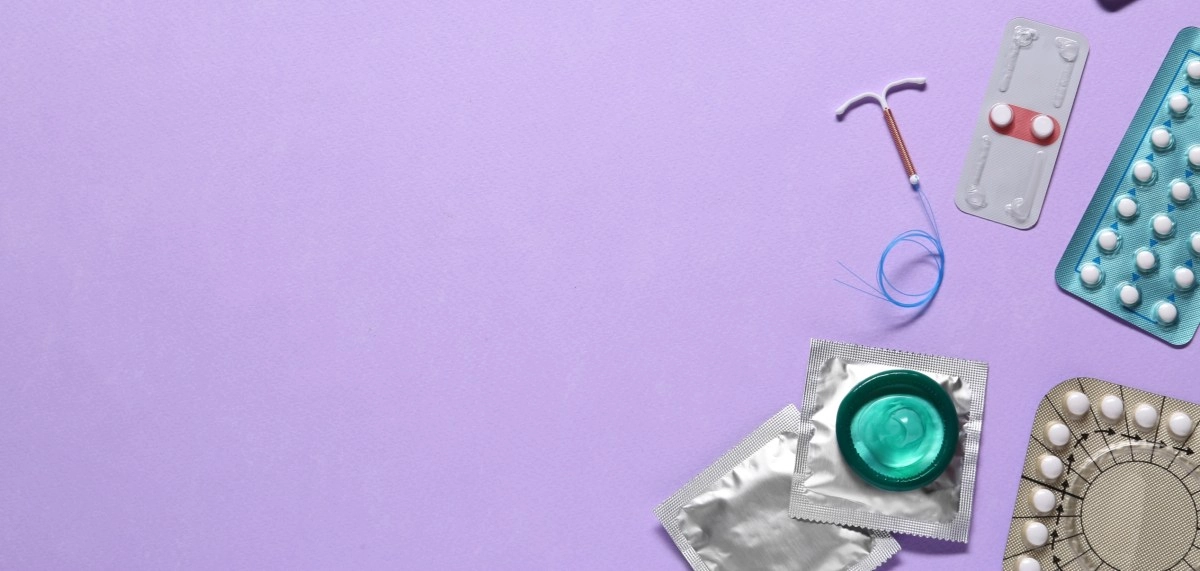
Modern contraceptives are divided into two large families: hormonal ones (combined pills, only progestogens, patches, vaginal rings, subcutaneous implants and injections). and non-hormonal ones, among which the copper IUD, condoms and barrier methods stand out. Each one corresponds to a profile of side effects that the medical literature describes, but that in clinical practice is communicated incompletely or conditioned by the limited consultation time.
It's not you, it's the hormones!
Combined hormonal contraceptives—synthetic estrogen and progestin—are the most widely used. Its main mechanism is to inhibit ovulation. However, they act on receptors present throughout the body: the brain, the liver, the cardiovascular system. Studies published in journals such as JAMA Psychiatry and The Lancet have linked its long-term use with an increased risk of depression in young women, although researchers emphasize that the association does not imply universal causality and that individual response varies greatly. What does seem clear is that a significant proportion of users experience changes in their mood that are never attributed—neither by them nor by their doctors—to the contraceptive.
Libido is another territory where the medical conversation comes late and often at the request of the patient herself. The combination pills raise levels of sex hormone binding globulin (SHBG), which reduces circulating free testosterone — a hormone present in both sexes and essential for female sexual desire. Some studies suggest that this effect may persist for months after stopping the method. “It is devastating to discover that what you thought was your problem has a pharmacological explanation,” says Paula, 34, who spent two years in couples therapy before her endocrinologist linked her lack of desire to the contraceptive she had been using since she was sixteen.
Different bodies, different responses
Reproductive medicine still works with an uncomfortable paradox: hormonal contraceptives were approved, for the most part, on the basis of clinical trials that measured cardiovascular efficacy and safety, but that paid little attention to the effects on subjective well-being. Furthermore, for decades the predominant view was that the symptoms reported by women—bad mood, lack of desire, fatigue—were of psychological rather than pharmacological origin. This asymmetry is beginning to be corrected, but slowly.
What the most recent research confirms is that there is no universal contraceptive method. The response to the same synthetic hormone depends on factors such as individual genetics, sensitivity to estrogen, previous mental health history, stage of the life cycle and even the vaginal microbiome, which can influence the absorption of local hormonal barrier contraceptives. The gynecologist and popularizer Laura Lleida sums it up like this in a recently published interview: “The pill is not one, there are dozens of different formulations, and the woman who takes it is not a statistical average either.”
Copper IUD and non-hormonal methods
Faced with the prominence of hormonal contraceptives, the copper IUD is gaining followers among those who want to avoid intervention in the hormonal cycle. As it does not contain estrogens or progestins, it does not alter the hypothalamic-pituitary-ovarian axis: the woman ovulates, maintains her cycle and her endogenous hormonal levels. However, it is not neutral either: its contraceptive effect is based in part on the release of copper ions, which are toxic to sperm, and a significant proportion of users experience heavier, longer and more painful periods, especially during the first months. For women with endometriosis or iron deficiency anemia, it can be a problematic option.
Reproductive awareness methods—cycle tracking, basal temperature, cervical mucus monitoring—are experiencing a resurgence driven by mobile fertility tracking apps and a generation of women who want to know their bodies before modifying them. Some studies attribute effectiveness comparable to barrier methods when used rigorously. Its main limitation continues to be the learning curve and the requirement for perseverance.
Information and shared decision making
The problem, specialists and patients agree, is not that hormonal contraceptives are dangerous in absolute terms. The problem is that the information with which women choose them remains incomplete. A study published in Contraception in 2022 revealed that less than 40% of patients remembered receiving detailed information about possible non-reproductive side effects before starting a hormonal method. Shared decision making—in which doctor and patient together evaluate the risk-benefit profile considering the woman's entire life context—remains the exception, not the norm.
More and more voices within gynecology and endocrinology demand a model of care that treats contraception not as a standard prescription, but as a decision that deserves time, follow-up and periodic review, which includes not only effectiveness, but quality of life.
You may also be interested in:
· Another blow to the pocket! Change in insurance billing could make pregnancy more expensive Mothers who consume vitamin D during pregnancy bring babies to life with certain cognitive improvements Preeclampsia, a complication of pregnancy that affects tens of thousands of mothers and half a million babies a year