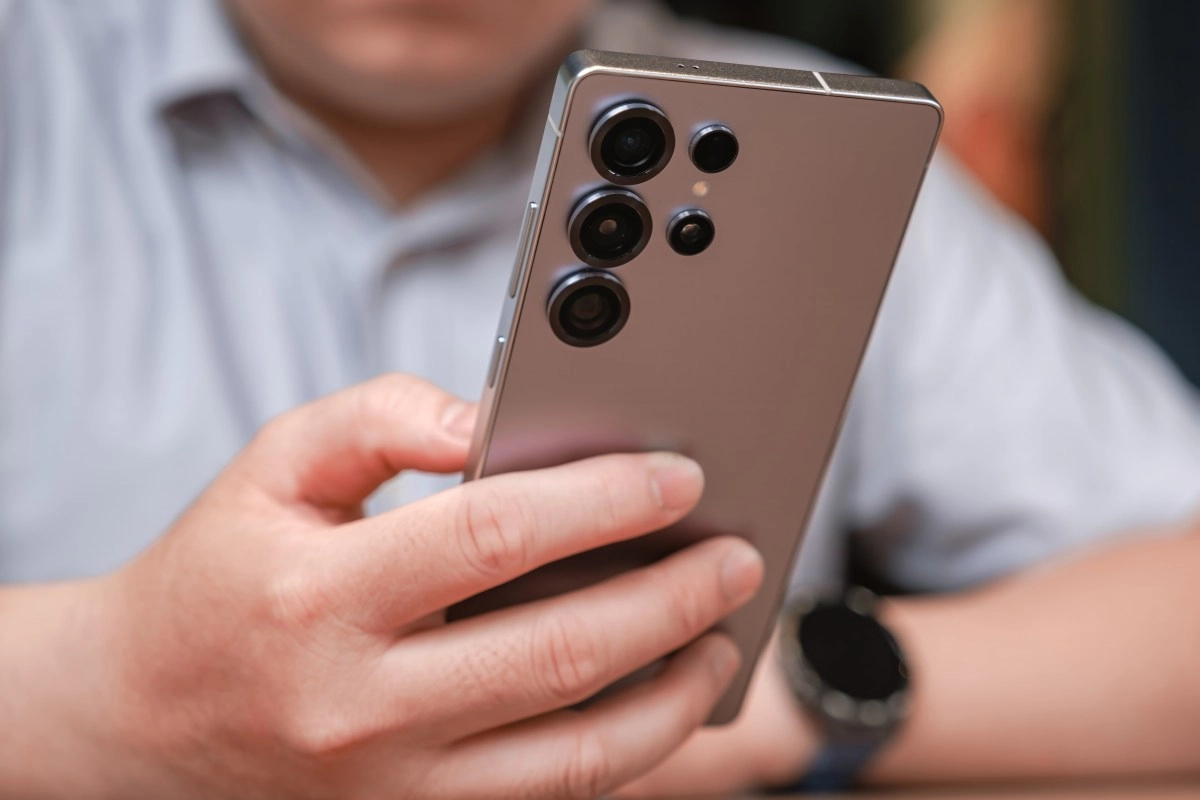

If your Samsung Galaxy S25 Ultra started behaving strangely after installing the latest update, you're not imagining things. Hundreds of users have raised alarm bells in official Samsung forums and in communities like Reddit, pointing out that the battery drains at an alarming rate as soon as the July 2026 security patch is installed. And we are not talking about normal wear and tear, but about drops that in some cases have gone from 85% to 5% in a matter of hours, even with the cell phone at rest.
The curious thing is that the phenomenon is not limited to the S25 Ultra. The Galaxy S24 Ultra is suffering from much the same headache, suggesting that the problem could be more tied to software than hardware specific to a single model. Some reports in the Samsung community describe daily battery consumption that shoots up to 143% compared to normal use, a jump that no user expected after a simple security update.
Battery that drains even while asleep
One of the aspects that is most disturbing to the community is that wear and tear occurs even when the phone is not being used. Users on the r/SamsungGalaxy subreddit report that their devices lose between 5% and 7% charge per hour when completely at rest, with the screen off and without any app open visibly. This indicates that there are processes running in the background that are not closing correctly after the update.
One of the strongest hypotheses circulating directly points to WhatsApp as possibly responsible for the disaster. According to this theory, the July patch would leave the encryption process of the messaging app backup stuck, causing the phone to tirelessly try to complete it over and over again, generating energy expenditure that is practically invisible to the user. Meanwhile, the device's temperature also rises during simple tasks or even in complete inactivity, another symptom that reinforces the idea that something was left poorly optimized in the system's background.
Charging your phone now takes forever.
Accelerated drainage is not the only discomfort that those affected have reported. Along with the rapid loss of charge, many users claim that their devices now take significantly longer to reach 100%, even using the same original chargers and cables that previously worked without problem. This combination is particularly frustrating, because the phone discharges faster and, at the same time, it takes longer to recover that lost power.
These types of slow charging failures usually point to thermal management issues or software settings that limit charging power as a protective measure, although Samsung has not yet confirmed the exact technical cause. The truth is that for someone who relies on their phone all day, this combination of symptoms turns a simple security update into a real logistical headache.
Samsung is silent, for now
Despite the number of reports that have accumulated since the end of July, Samsung has not yet issued an official statement acknowledging the problem or announcing a date to launch a solution. The South Korean company has opted for silence, while the community of affected users continues to share screenshots and consumption records on official forums.
While an official response arrives, some users recommend checking the Samsung Members app to send diagnostic logs, something that could help the brand identify the exact source of the fault faster. Others opt for home-made solutions, such as going into WhatsApp settings and manually stopping any stuck backups, in case that app turns out to be the real culprit behind this technological headache.