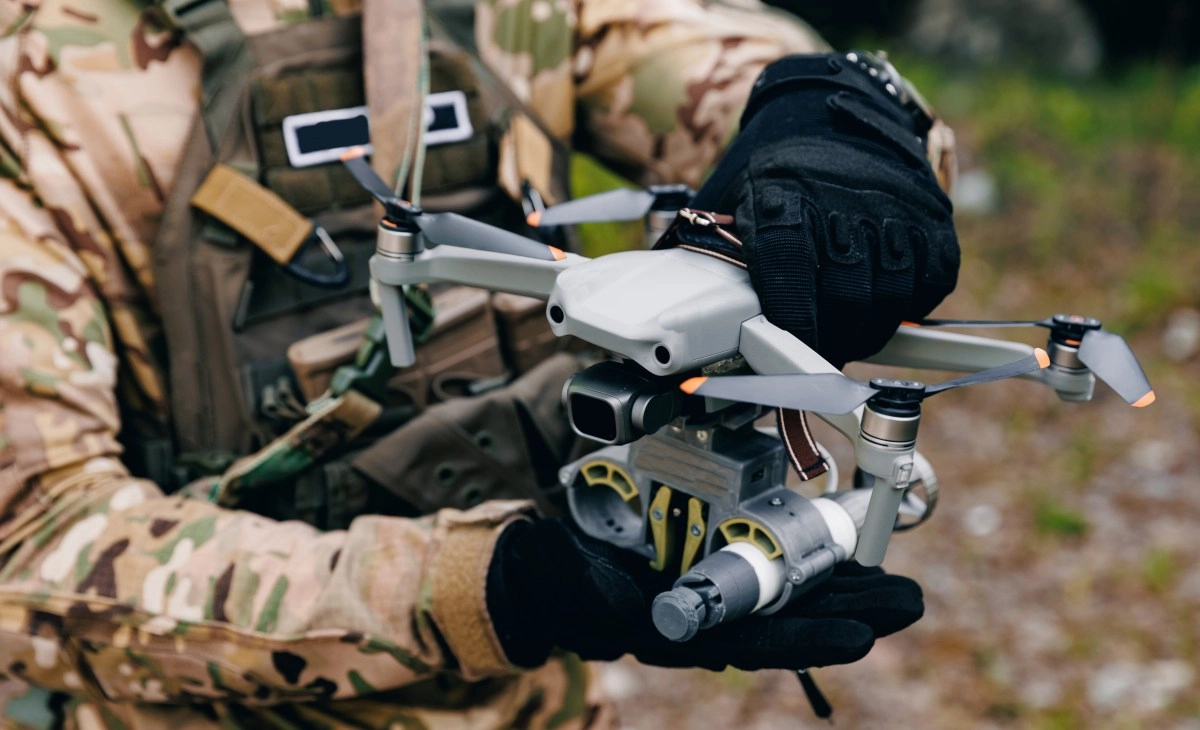

Drone growth in Ukraine is continuing, and these flying machines can now reach speeds rivaling Formula 1 vehicles and travel more than 190 miles per hour. They are so hard to dodge by army defenses because of this. Innovation brought by war is redefining the battle.
Ukrainian drones can sail at F1 rate.
Imagine a helicopter whizzing around Monza like a race car, but it's flying over snowy pits instead of asphalt tracks. Ukraine has advanced commercial drone racing technology for real warfare by bringing FPV ( First Person View ) drones to another level. The Sting, an interceptor that travels at 195 mph in constant flight and roughly 190 miles in combat, has been tested by local businesses like Wild Hornets.
These things aren't toys; they cost about$ 2,500 each and have already shot down thousands of Iranian loitering munitions that Russia launches in swarms.
Mykhailo Fedorov, the minister of modern transformation, boasts of domestically produced engines that can power these drones at unimaginable speeds, perhaps surpassing bullet trains in recent tests. The solution lies in the ultralight carbon fiber chassis and shafts that are designed to be impervious to weather and make the effect fatal.Racing to the Battlefields
What started out as a hobby of acceleration drones in human competitions has since been used to save lives in Ukraine. Engineers modified high-end race engines for the chaos of war, such as those drones that contest at 170 km/h on songs. The end result: drones that follow Shaheds at 190 mph, thwarting dangers before they reach cities. Over a thousand shootdowns are reported by Wild Hornets, and 3, 000 Russian drones were killed, with an enemy value of$ 195 million, according to companies like Come Back Present. A low Ukrainian drone stops large Russian attacks that cost money in missiles. It's a beautiful asymmetric warfare strategy.
Russia has responded by running its own Shaheds at 230 miles, but Ukraine is currently using programs like the Brave1 to generate thousands of units per month. This shift from "racetracks to the front ranges" demonstrates how conflict can transform the technology sector.