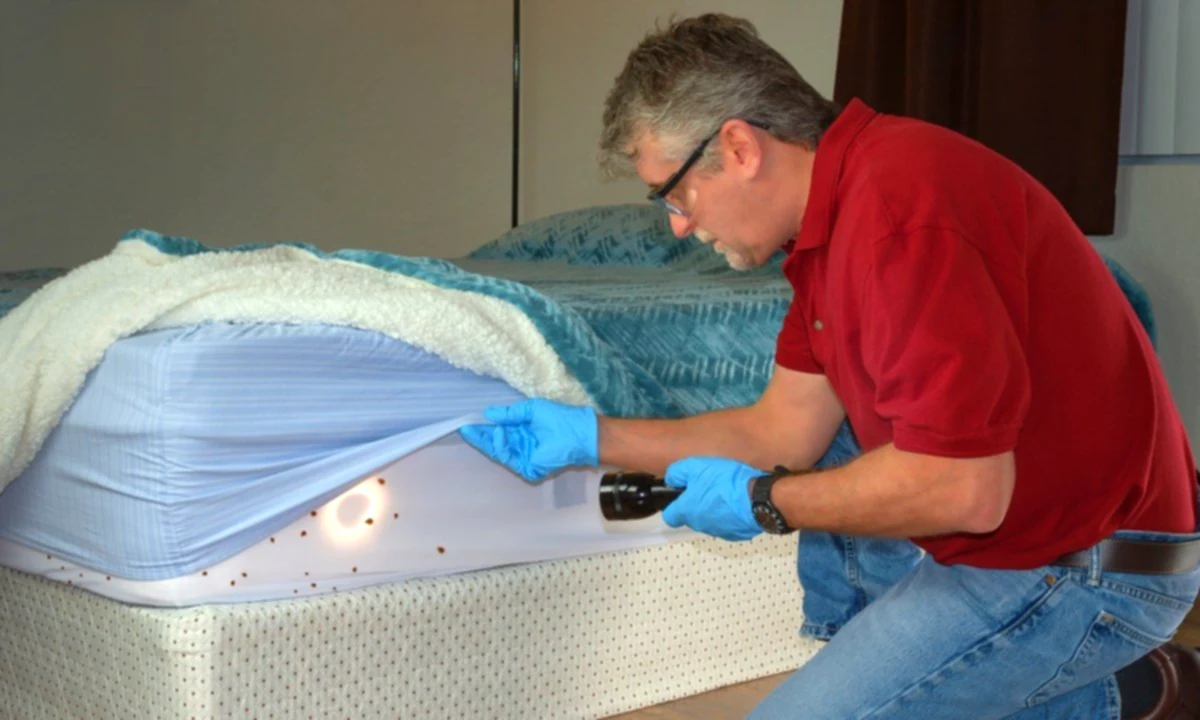

Bed bug infestations are on the rise in the United States, causing concern among homeowners. These pests, called insect vampires, which feed on human blood, have become more common this time of year. Experts warn that care should be taken to avoid introducing them into the home.
Recent research suggests that bed bugs may have the ability to transmit an antibiotic-resistant infection known as MRSA. Although they have not been definitively proven to spread disease, preliminary studies raise concern.
The Associated Press (AP) recalls the case of a 70-year-old man who lived alone on the outskirts of Paris and who one day fainted on the street. He was subsequently hospitalized for anemia caused by blood loss, in addition to being infested with bed bugs, highlighting the potential health risk associated with these pests.
"He also had bedbugs feeding on his neck, head and shoulder. An inspection of his apartment detected thousands of them in his bed, as well as on the floor, walls and curtains of his house," AP reported.
What are bed bugs?
Bed bugs are blood-sucking, parasitic insects that are brown in color and about the size of an apple seed. Researchers estimate that they date back to the time of the dinosaurs.
They feed on human and animal blood. Generally, they settle in beds and tend to hide in mattresses, box springs, headboards, crevices and furniture near the rooms.
How they act
What effects do they produce?
The bites can cause welts, redness and very itching, although some people have no visible reaction. They usually disappear within one or two weeks; scratching can lead to a secondary infection. Bed bugs are not considered to transmit diseases to humans, but they can cause significant allergic reactions and discomfort.
A common sign is finding several bites grouped or in a line, as well as small dark spots, blood stains or insects in the seams of the mattress.
Transmission in humans
There is good news: there is no conclusive evidence that bed bugs transmit diseases from person to person. Their digestive system and anatomy appear to prevent germs from spreading effectively, according to Chow-Yang Lee, an entomologist at the University of California, Riverside, interviewed by the AP.
However, in 2023 researchers at the University of South Dakota published the results of an experiment using blood capsules with an artificial skin that showed that bed bugs could acquire MRSA during a feeding and spread it during a subsequent one.
Although more studies and follow-up are needed to prove with certainty that bed bugs transmit MRSA to people, José Pietri, one of the authors of the study and a professor at Purdue University, told the AP.
Their smell exposes them
Bed bugs (especially so-called stink bugs) smell very bad when you kill them, crush them, or simply feel endangered.
They also tend to smell bad when there are several together. The odor is often described as sweet and rancid, sometimes resembling stale fruit, strong coriander, mold, or bitter almond, and is more noticeable in large infestations.
That smell doesn't always appear with few bed bugs, so it's not a definitive test on its own. If you also see black spots, molts or bites, it is worth checking the mattress, seams, baseboards and nearby furniture.
Pesticide resistance
Bed bugs have developed resistance to multiple pesticides over the years, which has contributed to their resurgence.
Populations in several cities are increasing, followed by reports of infestations in low-income homes without resources to combat them.
Prevention and eradication strategies
Prevention is key to not introducing bed bugs into the home. Travelers are encouraged to examine hotel rooms and homeowners are encouraged to inspect second-hand furniture.
If you already have an infestation, it is advisable to go to professional exterminators to treat the problem effectively and prevent damage.
Continue reading:
· Massive egg recall: salmonella outbreak leaves almost a hundred sick in 17 states · Number of deaths due to flesh-eating bacteria on US coasts increases · A man suffered a brain injury after eating oysters in a restaurant: what explains this phenomenon?