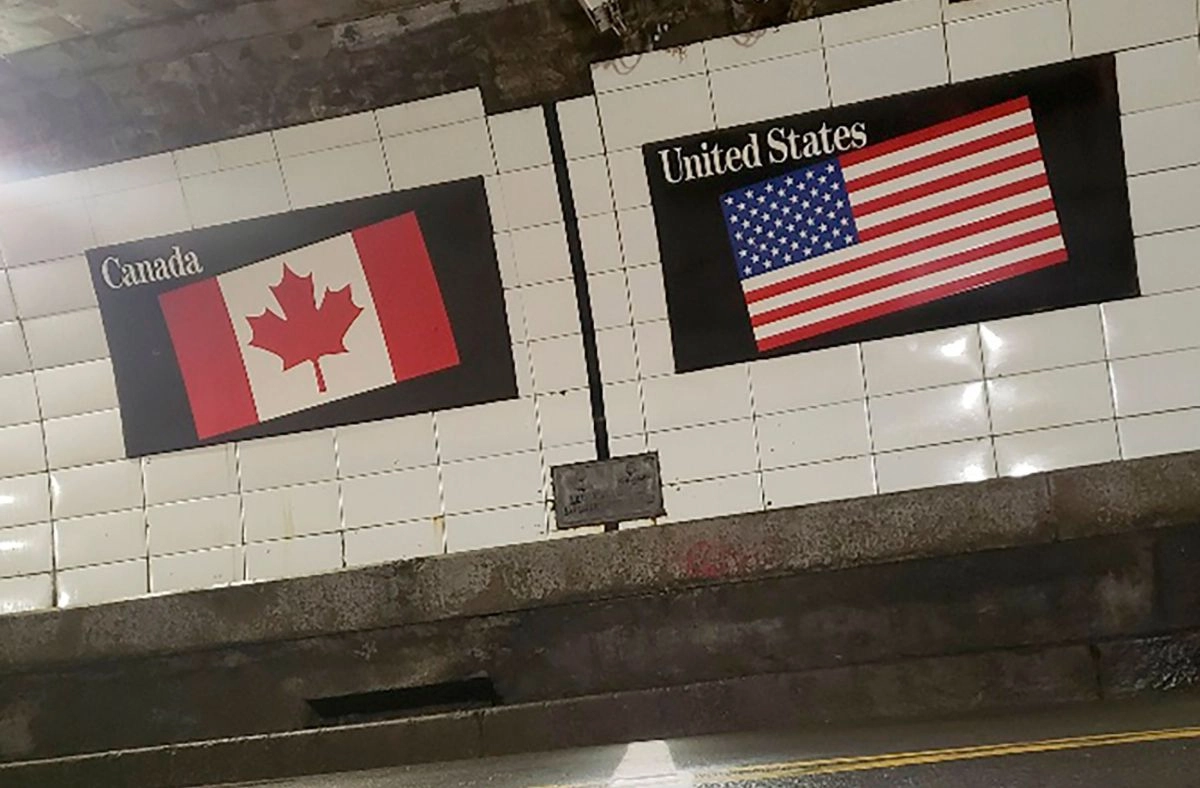

Canada's international image as a safe haven for immigrants and asylum seekers is facing growing questions. Refugees rejected at the Canadian border report that, after trying to ask for protection, they ended up being handed over to agents of the Immigration and Customs Enforcement Service (ICE).
An investigation published by The Guardian documents several cases of people who, after trying to enter Canada to reunite with family members, were sent back to US territory and held for months in immigration detention centers.
One of them is Markens Appolon, a 25-year-old Haitian who fled gang violence in Haiti and sought refuge in Canada after legally entering the United States through a humanitarian program promoted during the Joe Biden government.
However, after appearing at the border between Quebec and Vermont to request asylum, the Canadian authorities rejected his request and handed him over to ICE.
“Every day that passes, my mental health gets worse,” Appolon told The Guardian from a US immigration detention center, where he has been imprisoned for more than four months.
Refugees trapped between Canada and the US
The case comes as Canada tightens its immigration policies under Prime Minister Mark Carney. The new asylum rules have generated criticism from lawyers and civil organizations, who consider that the country is adopting more restrictive measures similar to those promoted by Donald Trump in the United States.
According to immigration lawyers cited by the aforementioned media, more and more refugees rejected at the Canadian border end up detained in ICE facilities while facing possible deportations.
"Canada is participating in this. Canada is turning people over to ICE," said Erin Simpson, an immigration lawyer in Toronto who represents several affected asylum seekers.
The cases are related to the Safe Third Country Agreement between Canada and the United States, which requires asylum seekers to request refuge in the first country considered “safe” to which they arrive.
However, specialists question whether the United States can continue to be considered a safe country for refugees, especially given the increase in prolonged detentions and accelerated deportations.
Arrests, fear and humanitarian crisis
Another case cited by The Guardian is that of Tenzin, a Tibetan refugee who tried to enter Canada from the United States to join relatives in Toronto. After being rejected, he was sent to an ICE detention center in Buffalo.
During his confinement, he began to suffer from facial paralysis related to Bell's palsy. According to him, he spent several days begging for medical attention before being taken to a hospital handcuffed by his hands and feet in the middle of a snowstorm.
“I thought Canadians were better than Americans, but when they treated me like that I understood that there are also bad people in Canada,” he declared.
Experts consider that the border hardening reflects the Canadian government's fear of a possible wave of migration from the United States after Trump's return to the White House.
Audrey Macklin, professor of immigration law at the University of Toronto, assured the same medium that Canada has the capacity to receive more refugees, but currently “there is no political will.”
Meanwhile, activists warn that hundreds of asylum seekers could be trapped between the two countries, facing detention, uncertainty and possible deportations.