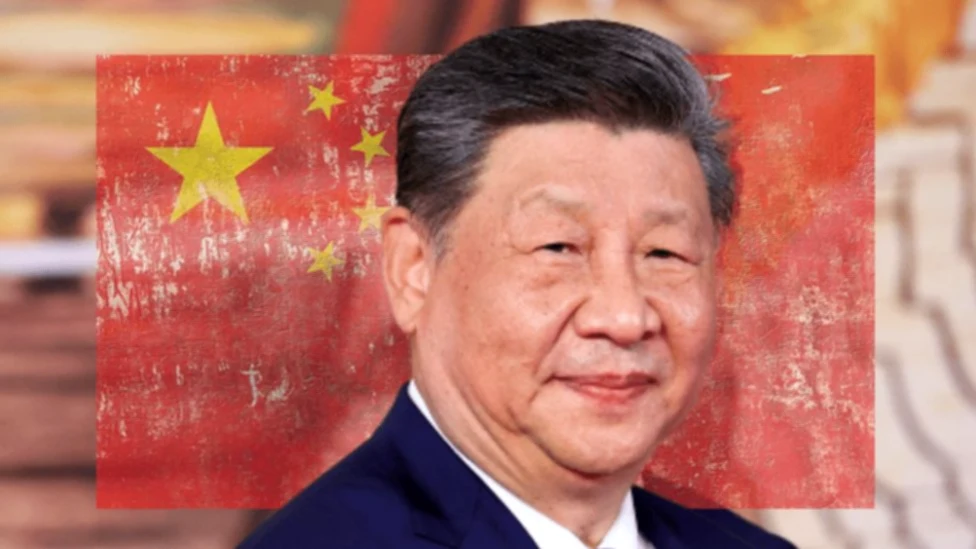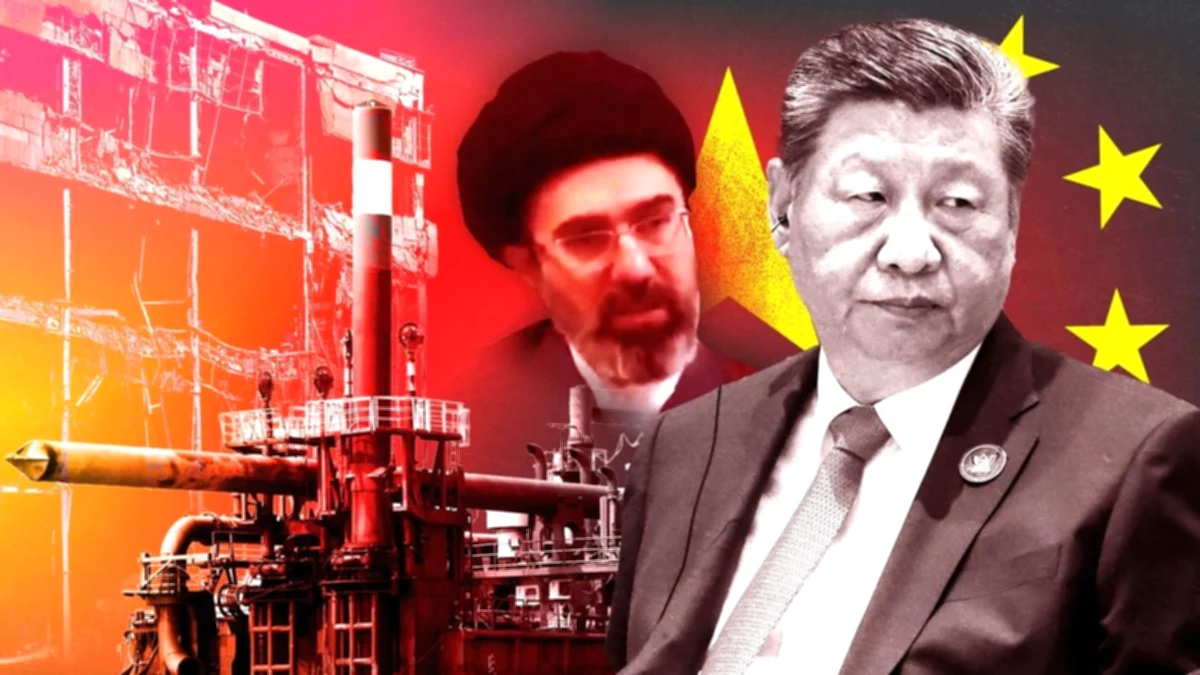

Days before the visit to the United States. That Chinese President Xi Jinping initiated on Wednesday, the Beijing government received Iranian Foreign Minister Abbas Araghchi, which was a reminder of his influence on Tehran.
The war with Iran is expected to be one of the main topics of the meeting between Trump and Xi on Thursday.
China hasined a consistent stance since it began the war with Iran seven months ago, condemning U.S. and Israeli attacks on Iran, as well as sanctions imposed by Washington on Tehran.
At the same time, he has repeatedly called for the end of the war and, in particular, the reopening of the Strait of Hormuz.
Thanks to its enormous oil reserves and its energy diversification strategy, China has so far faced the impact of the war with Iran.
Beijing can maintain this situation for longer, but the economic costs will only increase, says Andrea Ghiselli, a China and Middle East expert at the University of Exeter.
However, he warns that China will have to balance its interest in ending the war with other geopolitical priorities.
“China does not want the conflict to become a cause for friction in relations with the United States, but it will not undermine Iran’s fundamental interests and demands,” Ghiselli added.
“Iran and China are generally aligned and consider the aggressive actions of the United States and Israel to be the reason why this conflict erupted and still continues,” he said.
As an energy consumer, China is “harmed by the continuation” of the war, says Hamidreza Azizi, of the International Crisis Group.
Oil accounts for about a fifth of China’s total energy consumption, but more than 70% of that oil is imported, according to a 2025 report from the U.S. Energy Information Administration.
With approximately 1.4 million barrels per day, Iranian oil accounted for just 12 percent of China’s crude imports last year, a figure far below the 42 percent that the rest of the Middle East provided.
China was able to replace some of its oil from Iran and other Gulf producers with supplies from Russia, Brazil and other exporters. However, replacing the gas you buy in the region would be considerably more difficult.
China’s enormous oil reserves help the country absorb the energy impact of the war. The size of its reserves remains a state secret, but estimates range between 1,000 and 1.4 billion barrels by 2025.
“If China had started the war with around 1.4 billion barrels stored, this would cover 254 days of imports from the Middle East at the level of 2025,” said Erica Downs, a researcher on Chinese energy policy at Columbia University in the United States.
China’s oil reserves are likely to last even longer, as some imports continue to arrive from the Middle East despite the war, Downs says.
However, commodity columnist Clyde Russell, from Reuters’ Asian service, warns that China has had to resort to its oil reserves in three of the last four months, including August.
“Beijing is likely to prefer to stop resorting to its reservations as soon as possible, so it has a considerable margin of security,” Downs says.
And if the Houthis, backed by Iran, intensify their attacks on Saudi Arabia and strengthen their control over the Strait of Bab El Mandeb, the global energy market could become even more volatile.
The economic problems arising from the war with Iran could even trigger a global economic crisis, which would be bad news for China’s export-oriented economy.
Since 2019, China’s economic growth has slowed. The world’s second largest economy is facing a real estate crisis, trade tensions with the West and an increase in local government debt.
As a result, net exports accounted for 32.7% of China’s GDP growth last year, the highest level since 1997, according to the Washington-based Center for Strategic and International Studies.
Given that domestic consumption remains stagnant, exports are the main driver of economic growth.
As the war stops, the Trump administration intensifies economic pressure on Tehran. Washington says companies, banks and countries that support Iran’s economy could face secondary sanctions.
So far, the United States has avoided taking measures against major Chinese banks, although it has imposed sanctions on several companies and entities in the Asian country.
This caution occurs at a time of high trade tensions between Washington and Beijing.
China has not publicly accepted Washington’s request to join the financial campaign against Iran, arguing that it opposes “illegal unilateral sanctions” and that its cooperation with Iran is carried out within the framework of international law.
It is likely that China will not stop buying Iranian oil due to U.S. pressure, says Iranian analyst Azizi.
“The Chinese do not want a precedent that allows the United States, by means of pressure, to force Chinese and banks to implement their policies.”
However, the U.S. naval blockade severely restricts Iran’s ability to supply oil to Chinese buyers.
Iran exported two million barrels of oil a day in March, but that figure fell to between 220,000 and 255,000 barrels a day in August, and no cargo of Iranian crude has managed to cross the Strait of Hormuz and reach China since the United States resumed its naval blockade on July 14, Reuters.
If the blockade continues, trade between Iran and China will increasingly be limited to land routes, which are more expensive and less capable of managing exports than shipping, says Mohammad Ghaedi, an Iranian expert at George Washington University in the United States.
China’s desire to mitigate the effects of financial sanctions does not necessarily imply that it has the ability or will to challenge a naval blockade.
Breaking this blockade could lead Beijing to a much higher level of confrontation with Washington.
China has made it clear that it prefers “a negotiated solution to war,” Ghiselli said, adding that Beijing will probably prevent Iran from escalating the conflict.
“It could help to resume negotiations. It could even pressure the Iranians to make some concessions that would help President Trump proclaim a victory and use it as an excuse to end the war.”
But China will press for the deal to include concrete benefits for its partner, such as lifting sanctions, access to frozen funds and ending military attacks, Ghiselli said.
Photo by Raees Hussain.
This article was originally written in English and we use an artificial intelligence tool to translate it. A BBC reporter reviewed the text before it was published. Find out more about how we use it.