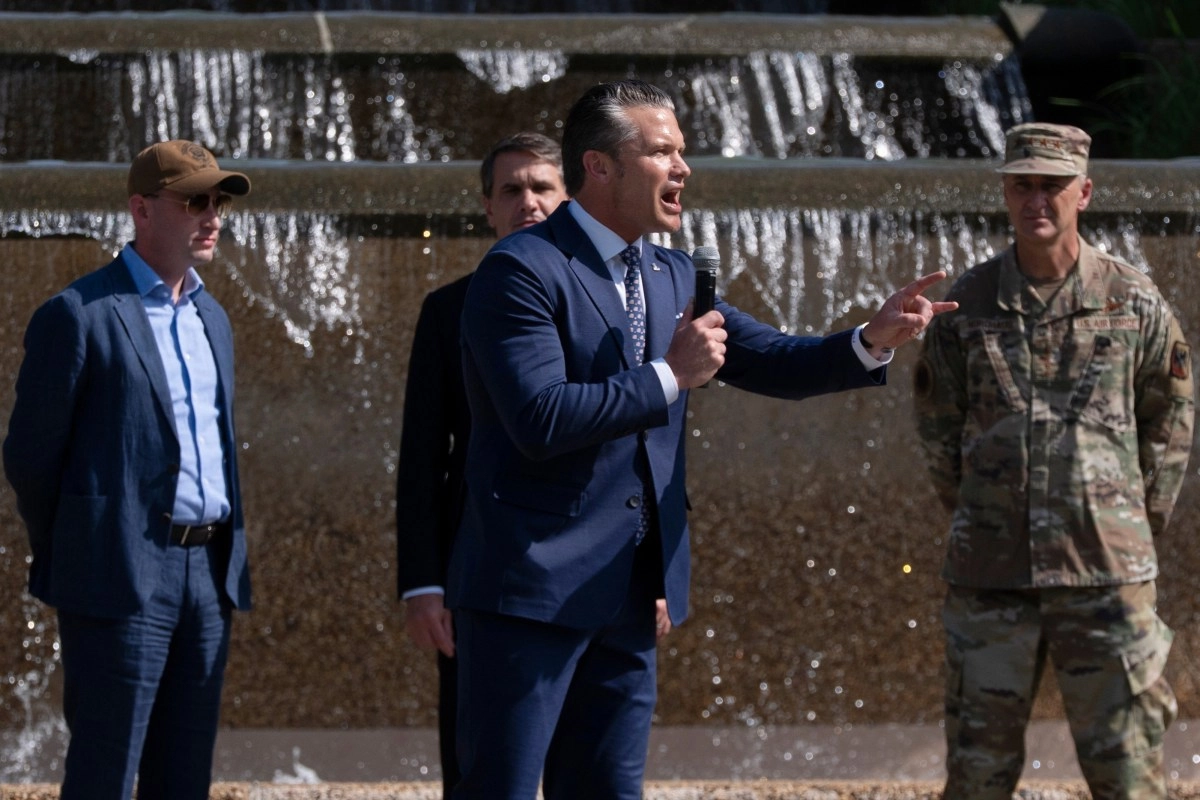

President Donald Trump's administration announced a new offensive against leaks of confidential information by creating a joint working group between the Department of Justice (DOJ) and the Pentagon with the aim of identifying and criminally prosecuting those who reveal sensitive data to the media.
Secretary of Defense Pete Hegseth reported that the initiative seeks to accelerate investigations into unauthorized disclosures of information related to national security and strengthen coordination between military authorities and law enforcement agencies.
In a video posted on the social network He also indicated that the agencies must respond fully to these requests within a maximum period of 48 hours.
"Access to classified information is a sacred responsibility. Those who betray that trust will face the full weight of the law," said the official, maintaining that leaks put the security of the military forces and the operations of the US government at risk.
The measure comes after new tensions with national media
The announcement comes just days after the Justice Department issued subpoenas to four New York Times journalists to appear before a federal grand jury after the newspaper published a report about security concerns related to the plane used by President Trump, an aircraft donated by Qatar for an official trip to the NATO summit in Turkey.
The decision provoked criticism from organizations defending press freedom and from the newspaper itself, which accused the administration of trying to intimidate journalists through legal action. David McCraw, the newspaper's attorney, argued that reporters fulfill the role of reporting on matters of public interest and warned that the subpoenas represent an attempt to discourage investigative journalism.
Since the start of Trump's second term, the Pentagon has toughened its policy toward the media. Among the measures adopted are greater restrictions on access to military installations, new rules for the use of information obtained from internal sources and limitations on journalistic coverage within the defense complex.
Questions persist over the handling of classified information
The new strategy also reignited debate over Hegseth's own record on information security. The defense secretary came under fire after a Pentagon Inspector General investigation concluded that he used the Signal app on a personal phone to share information related to military operations, including details about U.S. strikes against Houthi rebels in Yemen.
Former Defense Department officials pointed out the apparent contradiction between Hegseth's announced zero-tolerance policy and the criticism he faced over that episode. John Ullyot, a former spokesman for the Pentagon and the National Security Council during Trump's first term, said that before holding other officials accountable, the secretary should be accountable for his own decisions related to the handling of sensitive information.
Meanwhile, the administration maintains that the new task force will allow for faster responses to leaks and strengthen protection of classified information. For press organizations and First Amendment advocates, however, the new measures could increase tensions between the federal government and the media by limiting access to information of public interest and tightening investigations into journalistic sources.