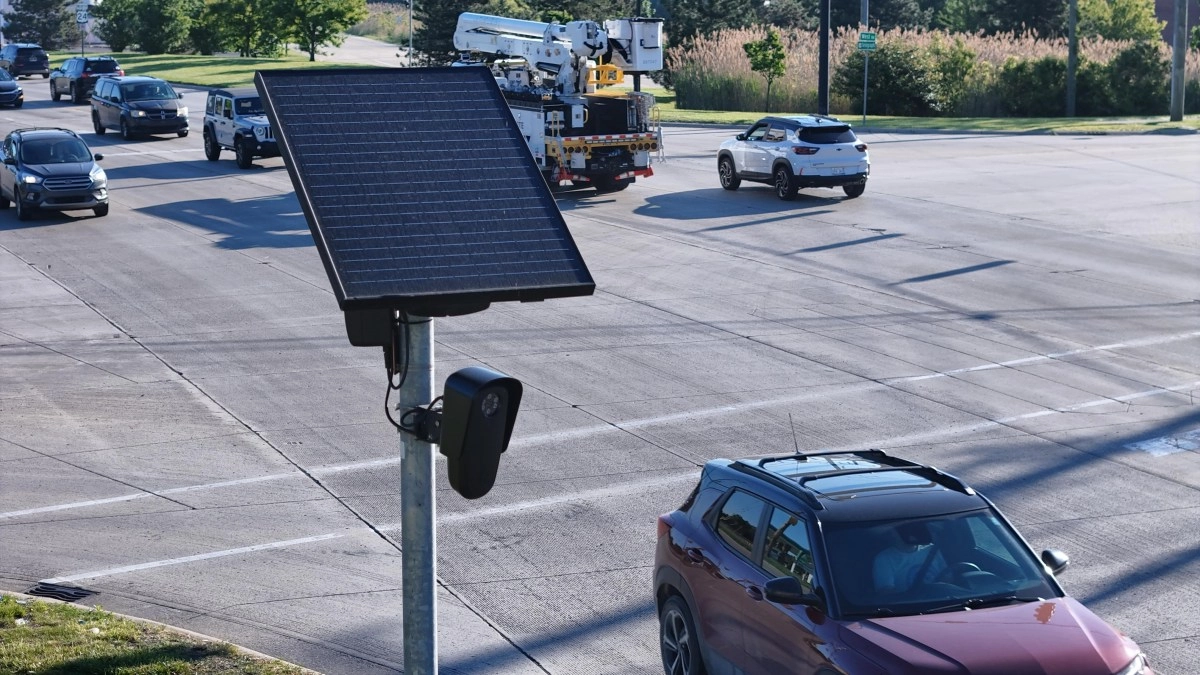

Flock cameras have appeared on roads, neighborhoods, parking lots and city entrances across the country. They look like ordinary security cameras, although they function as a network capable of converting the passage of vehicles into searchable data in a few seconds.
How Flock cameras work
Flock Safety makes automatic license plate recognition cameras, known as ALPR. They are installed on poles and traffic areas to capture images of vehicles passing in front of them.
The system reads the license plate and also identifies visible data such as color, make, model, body type, damage, stickers or accessories. Each detection is associated with a time and a specific location, forming a digital record that can be searched later.
Here is the key point. Flock does more than just record images, using software and machine learning to classify what it detects. An authorized user can investigate, for example, the appearance of a black sedan in a certain area during a specific time slot, even if he or she does not know its complete license plate.
The platform also allows you to create alerts. If a license plate is included in a list linked to a stolen car, a missing person or a police investigation, the system can notify authorities. Flock maintains that its cameras do not use facial recognition.
Records are typically deleted after 30 days, although this depends on contracts, customers, and local regulations. It may sound like a minor detail, but a month of captures is enough to show part of the routine of a person who uses the same routes frequently.
The differences compared to a conventional camera
A traditional security camera works as a visual witness. It records a door, a store, a parking lot or a street, and when something happens, a person reviews the footage.
Flock cameras take things to another level. They convert the image of a vehicle into organized and filterable information. You don't have to wade through hours of video to locate a clue. The platform can search by license plate, color, make, model and other visible details.
The difference is similar to going from a video tape to a search engine. Police and local governments defend this speed because it can help find stolen vehicles or generate leads during an investigation.
The problem appears when the system registers vehicles of people who are not under suspicion. Civil liberties groups warn that combining many arrests can reveal movements, times and frequent locations of common drivers.
The constitutional controversy grows
Flock cameras are highly controversial in several states because activists, residents and legal experts consider them a possible unconstitutional surveillance mechanism. The discussion centers on the Fourth Amendment, which protects against unreasonable searches by the government.
Concern does not arise only because of an image captured on a street. The fear is the possibility of forming a travel history without a court order and without people knowing which agency can consult that information. A license plate can become a key to track mobility habits.
In Norfolk, Virginia, residents sued the city over the use of 176 Flock cameras. A federal judge ruled in January 2026 that the system analyzed did not violate constitutional rights in that specific case, although the debate continues and the matter remains under appeal.
Illinois experienced another controversy in 2025. Authorities investigated reports that Texas agents accessed license plate reader data to locate a woman linked to an abortion case. State law limits the use of that data for research related to abortion services and immigration.
Flock cameras promise speed and responsiveness, but they also force you to ask uncomfortable questions. Who views the data, how long it is stored, and what controls are in place to prevent abuse are increasingly pressing issues.