
The initial reviews were published in foreign press, which was beyond the most Iranians ' ability to read.
Prime Minister Benjamin Netanyahu claimed on February 28 that there were "indications that the despot is no longer here," implying that Ayatollah Ali Khamenei, Iran's Supreme Leader, had been killed in a mutual US-Israeli harm. Iranians who watched position broadcast were completely silent, though.
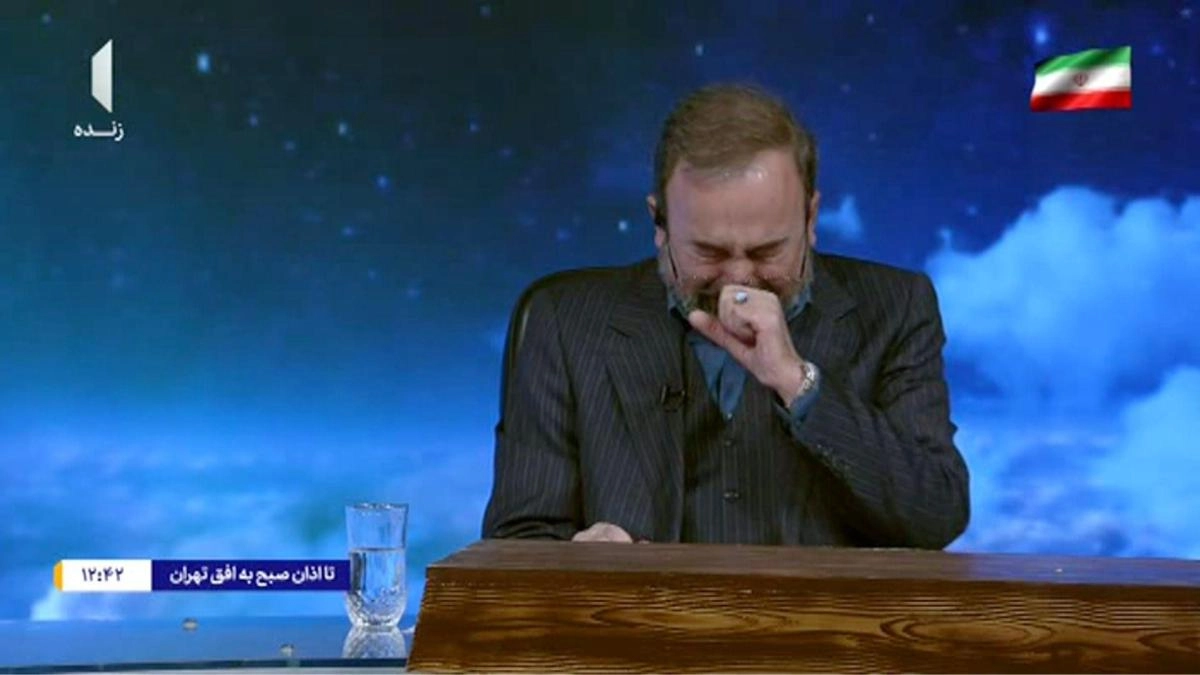
Khamenei's dying was not confirmed or refuted by state officials. A news anchor urged viewers to" trust" him and the government's "latest information" on one of the state broadcasters ' channels, IRTV3. He blasted the rumors that Khamenei's death were "unfounded rumors" that do" shortly be revealed. "
Iranian state media only reported on Khamenei's suicide until the following morning, hours after US President Trump made the announcement officially on social media.
Iranian state media have presented an official account of events to their national viewers since the start of the conflict, which, according to government resources, has resulted in the death of more than 1,200 people in Iran and has spread to Lebanon and the Arab Gulf States.
Accessing separate information can be challenging for millions of Iranians who follow Persian-language satellite television channels with locations worldwide. Iranians are essentially isolated from the outside world despite turmoil and issue due to internet shutdowns, repression, and channel restrictions.
The BBC discovered that they focused their reporting on the anguish of the human population, calls for retaliation against their "enemies," and the promotion of public commitment to the Islamic Republic, while not paying much attention to the military and government facilities that Israel and the United States have attacked.
Additionally, we discovered propaganda.
Iran's multimedia equipment
In terms of media freedom, Iran is one of the most oppressive nations in the world, according to Reporters Without Borders.
All internet sources have been subject to stringent limits ever since the Islamic Republic of Iran was established in 1979. The BBC Persian Service and the majority of Western media outlets are prohibited from reporting from the nation.
The regime's major media outlets are television and radio, but they also run online news outlets and networks like Instagram, Telegram, and X. A virtual private network (VPN) is typically required to access these social media platforms from Iran.
When the computer is interrupted, the inhabitants of the country's media apparatus has become its primary source of information.
They "promote a narrative," says Witness's Mahsa Alimardani. They claim that their military is very strong and present themselves as winning.
Numerous Iranian state media reports that Iranian troops have inflicted hundreds of US military ' wounds or deaths, increasing the casualties count for the enemy.
650 US military personnel were killed in the first two days of the war, according to a report from the Tasnim news agency, a semi-official publication connected to the Islamic Revolutionary Guard Corps ( IRGC). An IRGC official was their origin.
In nations like India, Turkey, and Nigeria, global press outlets reported on the news.
The Pentagon at the time confirmed the deaths of six US troops. Seven more US service members ' murders were confirmed by US Central Command on March 13.
Changing the real
New systems are even assisting the state media in spreading false information.
The state-run English-language news network Press TV shared a picture of a building on fire with plumes of smoke rising into the sky in a Facebook post that was later deleted.
After the Persian attack," Smoke rises from a tower in Bahrain" was the explanation.
However, closer examination of the picture revealed strange details, such as two cars that appeared to combine into one, which suggests the movie was false and made with artificial cleverness.
The use of AI-powered deepfakes by conventional state media, including those who are not particularly known for sticking to the truth, is striking, according to Brett Schafer, director of the Strategic Dialogue Institute, a think tank based in the UK. The Iranian state media's repeated use of deepfakes suggests that this is a characteristic of their war policy, rather than an error.
It's unclear who created it or where it came from, like much of the AI-generated wastes about the conflict that has flooded social media. The BBC has seen various instances of AI-generated pictures shared by federal media to advance their narrative since the war started, though. Many of these pictures are incredibly exaggerated and are meant to be glorified rather than deceived.
Additionally, Donald Trump and the White House frequently share AI-generated photos or videos for glorification. Israeli Prime Minister Benjamin Netanyahu recently posted a magnificent posed photograph of himself, Trump, and British Prime Minister Winston Churchill on Instagram. Through Instagram's engagement feature, a news outlet added the post.
Bits of Truth
Some routine critics, both inside and outside Iran, have doubted the country's history of mixing truth with false information.
Independent experts believe that an assault on a school was probably carried out by the US and targeted a nearby military base, so Iranian state media published an aerial image of a large death on March 3. It was claimed by state competitors that it was created by artificial intelligence.
The picture, however, was authentic. We geolocated it to a tomb about 3 km from the university, confirming that the branches, the street layout, and a building near all match those on the satellite images.
In satellite images taken the day after the death, freshly dug graves were also noticeable. The page was clear the day before.
According to Witness's Mahsa Alimardani," We have to take two principles at once. "
The Iranian government frequently conceals information when it is responsible for abuses, but it also invests a lot of money in keeping track of civilian casualties during times of war.
He explains that while this evidence may be useful for the State's propaganda and war narrative, it does not immediately indicate that it is false.
Regarding information from the Persian state media, Alimardani argues that it is wise to keep a "healthy skepticism. "