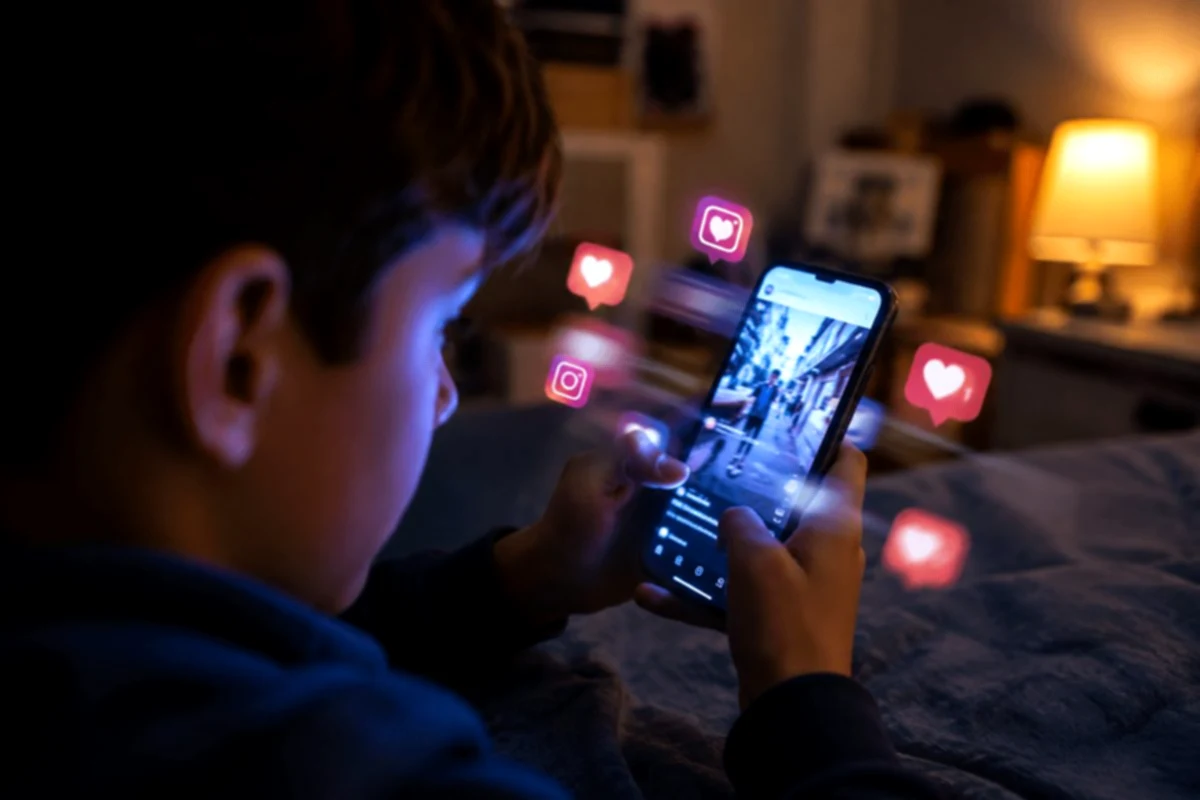

Millions of users are familiar with Instagram's feature of watching a film and spending an hour scrolling through it. One of the biggest claims Meta has ever faced in the United States is now centered on some of the features that help to improve that screen time.
A coalition of 29 state accuses the business of having purposefully created Instagram and Facebook to get and keep children's and adolescents ' focus despite being aware of the potential dangers to their well-being. Meta refutes these charges and maintains that it has developed tools for the protection of minors for years.
The trial, which took place on Tuesday, August 18 in Oakland, California, will start the test, which could lead to Meta having to alter some of its platform's most distinctive features.
As you can see, they show that extreme cultural networking use causes loneliness.
The infinite scroll, one of the most questioned mechanisms
One of the functions that appears most frequently in lawsuits against social networks is infinite scroll.
The system allows you to continue viewing publications and videos without reaching the end of the page or having to press a button to load new content. Each swipe of the finger delivers a new post, eliminating many of the natural moments when a user might decide to stop looking.
The states taking Meta to court maintain that this type of design is part of a strategy aimed at keeping young people on the apps for longer. Among the changes requested by the plaintiffs is precisely the possibility of eliminating infinite scrolling for certain young users.
That doesn't mean a court has already concluded that infinite scrolling alone causes addiction. That is one of the issues that is part of the judicial dispute.
You can see: University of Arizona creates a degree to train influencers and content creators
Notifications that bring you back to your phone
Another tool under question is push notifications. Messages about a new like, comment, post, or activity can bring the user back to the app repeatedly throughout the day.
In another recent lawsuit against Meta, this time in Tennessee, the state's attorneys specifically pointed to notifications, autoplay, and infinite scrolling as features designed to increase teen engagement. Meta responded that it has been transparent about its practices and has tools to limit the use of its apps.
The discussion has already produced concrete changes in another state. A recent ruling in New Mexico ordered, among other measures, turning off certain notifications for minors during nighttime and school hours. Meta announced that it will appeal that decision.
Why “likes” are also in the discussion
A little heart under a photo may seem like an insignificant feature, but social reward systems are also coming under scrutiny.
The plaintiffs argue that signals such as likes, comments and other responses can encourage minors to repeatedly check their posts to see how other people reacted.
In New Mexico, the court went so far as to order that minors need parental consent for certain functions related to public likes.
New York Attorney General Letitia James had already pointed out when filing the multistate lawsuit against Meta that the company allegedly developed features intended to make children and adolescents use its platforms compulsively.
Autoplay and recommendations: when a video leads directly to the next
Autoplay reduces another point of friction: when one video ends, another automatically starts. Added to this are recommendation systems, which select new publications based on what each user looks at, comments on or shares.
The states want the court to consider changes that could include limits on algorithmic recommendations aimed at minors and even the elimination of algorithms trained with information collected from children.
New York has also pushed legislation to restrict certain algorithmic recommendations considered potentially addictive for minors.
What the states say Meta knew about their platforms
The accusations go beyond claiming that teenagers spend too much time using Instagram. Prosecutors maintain that Meta was aware of risks associated with the intensive use of its platforms and that, despite this, it maintained features designed to maximize the interaction of young users.
The federal process analyzes complaints about possible consequences related to anxiety, depression and other mental health problems. The states also accuse Meta of having illegally collected personal information from minors under 13 years of age.
These are accusations that are still being judged. Meta denies deliberately designing its products to harm or addict minors.
Meta assures that Instagram is safer for teenagers today
The company maintains that the image presented in the lawsuits does not reflect the changes made in recent years. Instagram introduced Teen Accounts, which automatically incorporate greater restrictions on who can contact teens, what content they can see, and certain privacy settings. Children under 16 need parental authorization to reduce some of those protections.
In 2026, Meta also expanded content controls for teens and announced new security measures on Instagram, Facebook and Messenger.
The company presents these tools as evidence that it has evolved its platforms to respond to the concerns of parents and specialists.
What could change on Instagram if the states win
The potential scope of the trial is what makes it an especially relevant case for families. If the court finds Meta liable, it could impose financial penalties and order changes to Facebook and Instagram. Among the possibilities raised during the litigation are age limits, restrictions on infinite scrolling and changes to the way algorithms recommend content to minors.
The final decision will be in the hands of federal judge Yvonne Gonzalez Rogers. The jury will issue an advisory verdict and the process could last several weeks.
Beyond the multimillion-dollar figures and the judicial battle between states and one of the largest technology companies in the world, the case revolves around something much more everyday: what happens every time a child opens Instagram and why it is so difficult to stop looking at the screen.