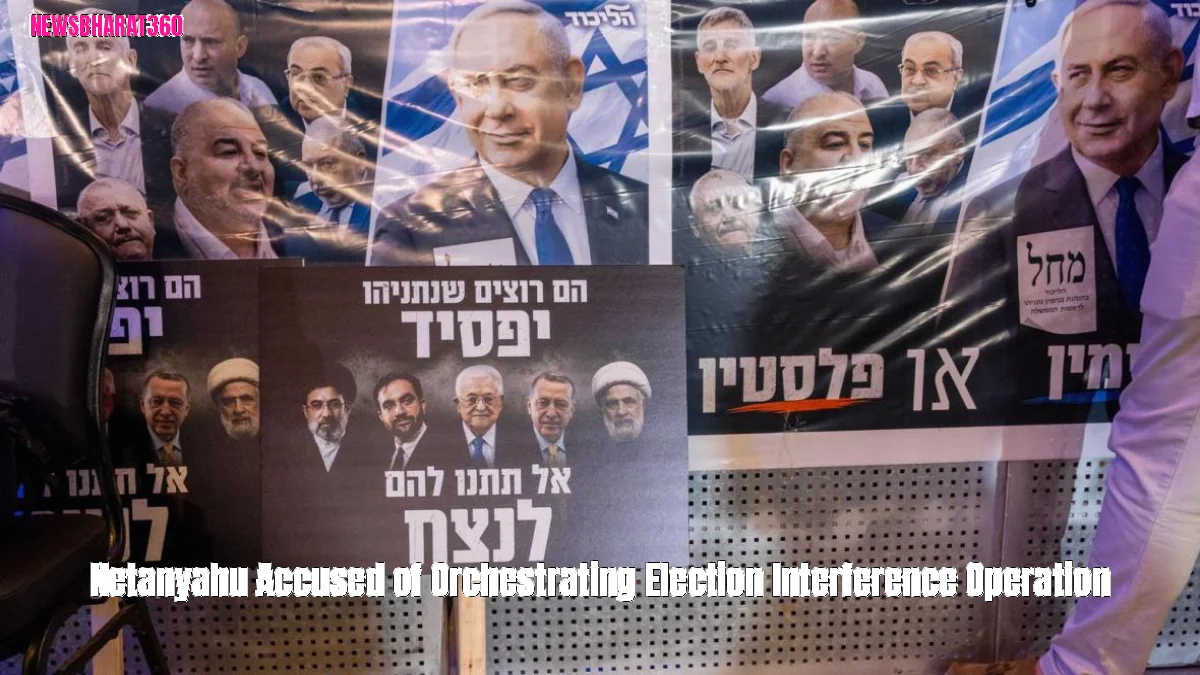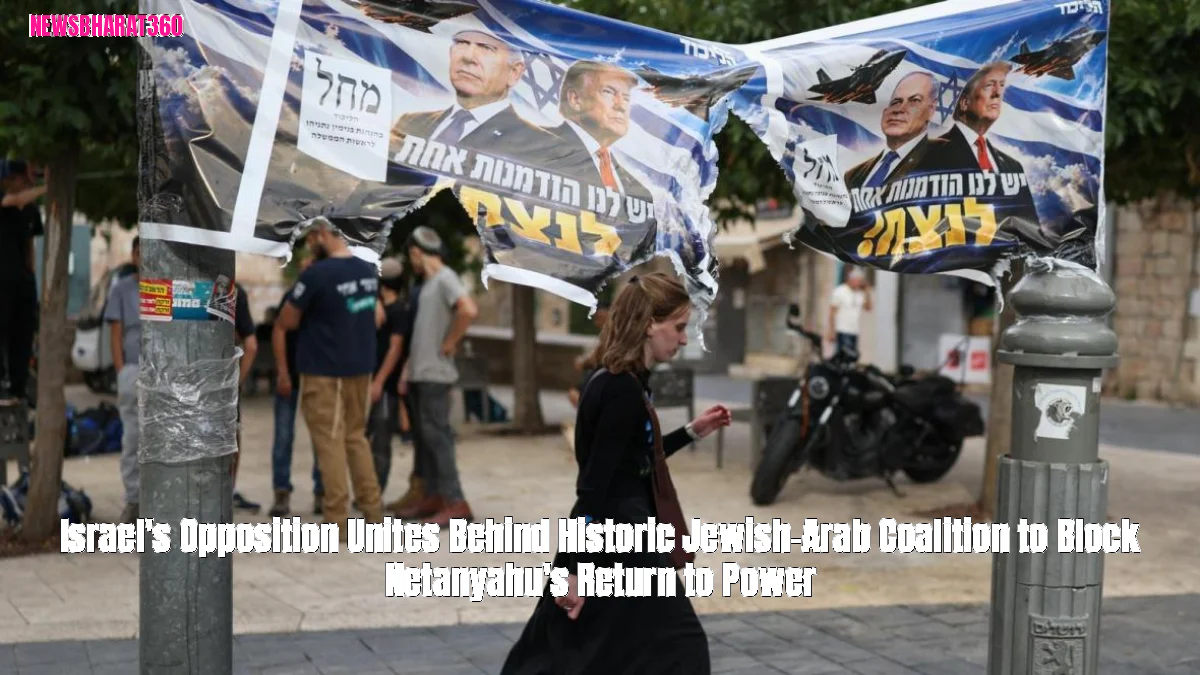

Israel's political landscape appears to be in a state of stagnation, with no clear direction or momentum emerging from recent developments.
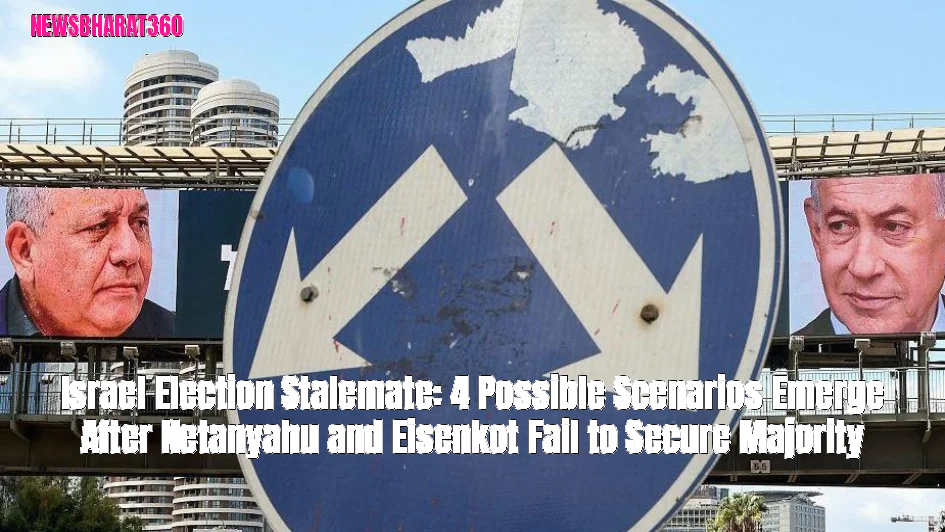
Preliminary results from Tuesday's election indicate that neither Prime Minister Benjamin Netanyahu's coalition nor the bloc led by his main rival, Gadi Eisenkot, are likely to secure a majority following an 85% vote scrutiny.
The formation of a government appears to be contingent on one of the major parties compromising on its pre-election commitments, potentially paving the way for a second round of elections.
Four potential outcomes are currently being considered.
There is speculation surrounding the possibility of former IDF Chief of Staff Gadi Eisenkot joining a national unity government led by Prime Minister Benjamin Netanyahu.
In order to pursue this course of action, Eisenkot would be required to significantly alter his campaign strategy, deviating from his core platform that he had established as the primary opposition to Netanyahu, on which his entire campaign was built.
During a speech at his campaign headquarters on election night, Einat Wilf, not Einsenkot, addressed the crowd, calling on then-Prime Minister Benjamin Netanyahu to announce his withdrawal from politics.
Prior to the release of key poll results, statements were made suggesting an advantage for the Eisenkot bloc, but subsequent findings revealed Netanyahu had actually gained the lead.
Benjamin Netanyahu may attempt to secure the participation of Gadi Eisenkot's Yashar party in a unity government, potentially leading to the Likud party's departure from its current coalition with far-right and ultra-Orthodox parties.
At the Likud headquarters, the individual expressed gratitude to his "loyal partners" and advocated for a "strong right-wing government," comments that have been viewed by some as an indication of his intention to maintain his alliance with them.
A renewed conflict with Iran could significantly boost the likelihood of a national unity government forming, as heightened tensions would likely compel party leaders to set aside their political divisions and work together in the face of a shared national challenge.
Ahead of the election, reports emerged in Israeli and U.S. media suggesting that Prime Minister Netanyahu was advocating for potential new military strikes and had allegedly exerted influence on former U.S. President Donald Trump to secure U.S. involvement.
Critics of Israeli Prime Minister Benjamin Netanyahu may view his involvement in a new regional conflict as a calculated move to salvage his political position.
In 2021, a lone instance of an independent Arab party participating in a coalition was recorded, albeit briefly.
Former Israeli Defense Forces Chief of Staff Gadi Eisenkot and all Jewish parties in his coalition, with the exception of one, have excluded the possibility of forming a government with them.
Arab parties dominated the scene on election night, emerging as key players in the electoral process.
A significant turnout by Israel's Arab population, comprising roughly one-fifth of the country's population and often identifying as Palestinian citizens of Israel, has led to the possibility of a record 19 seats for the group in the upcoming elections.
Numerous individuals have historically abstained from participating in Israeli elections, citing concerns that casting a ballot would inadvertently validate a system they perceive as discriminatory, effectively relegating them to a status of second-class citizenship.
The participation of protesters last night was motivated by a desire to bring down Israel's most right-wing governing coalition to date.
The United Arab List has announced its intention to participate in an opposition government, following its projected win of approximately 7 seats in the upcoming election. In contrast, the Joint List, which is forecast to secure 12 seats, has stated that it will provide support to a government without holding a formal position within it.
Currently, only Yair Golan, a member of the Democratic party, is advocating for a coalition of this nature. Such a coalition would likely be highly unstable, particularly when addressing contentious issues such as Gaza and the occupied West Bank.
A unified stance against Arab participation in Israeli politics highlights the significant divisions within the country, underscoring the complex nature of its society.
The possibility exists that Prime Minister Netanyahu may be able to convince the right-wing parties aligned with the Eisenkot bloc to abandon their current coalition and instead join his government.
The leading contenders for the position are Naftali Bennett, the founder of the Beyachad coalition, and Avigdor Lieberman, head of the Israel Beiteinu party. Both are right-wing politicians with a strong stance on security and hold similar views to Netanyahu on key policy issues.
The two candidates' explicit campaigns to remove Netanyahu from power and impose compulsory military service on ultra-Orthodox individuals have created a direct conflict with the two ultra-Orthodox parties currently in Netanyahu's government, making a potential alliance between them unlikely.
Current electoral projections indicate that Bennett and Lieberman's parties may not have sufficient seats to secure a majority, potentially undermining speculation that they could replace ultra-Orthodox parties in the coalition.
In the event that previous negotiations fail to yield a resolution, the outcome would be the holding of new elections.
The agreement effectively maintains Netanyahu's position as interim prime minister until new elections are held, potentially positioning him for a stronger showing in the next vote.
Several analysts believe that the high Arab voter turnout may not be replicated in future elections, particularly if the historic representation of Arabs in Parliament fails to yield tangible changes, potentially leading to increased mobilization of right-wing voters in a potential second round of voting.
Approximately 70,000 Israelis who had previously cast their ballots abroad are expected to return to Israel to vote, and are thought to lean against re-electing Netanyahu.
Several right-wing parties that fell short of the 3.25 percent electoral threshold may face reduced voter support or potentially be excluded from the election, potentially leading to an increase in votes for the Likud and its associated parties.
Between 2019 and 2022, Israel experienced a prolonged period of electoral instability, with five consecutive elections taking place amidst ongoing efforts by Netanyahu and his opponents to establish a cooperative government.
The original article was composed in English and was translated using an artificial intelligence tool. Prior to publication, a BBC reporter reviewed the text to ensure accuracy. For more information on our translation process, please see our related content.