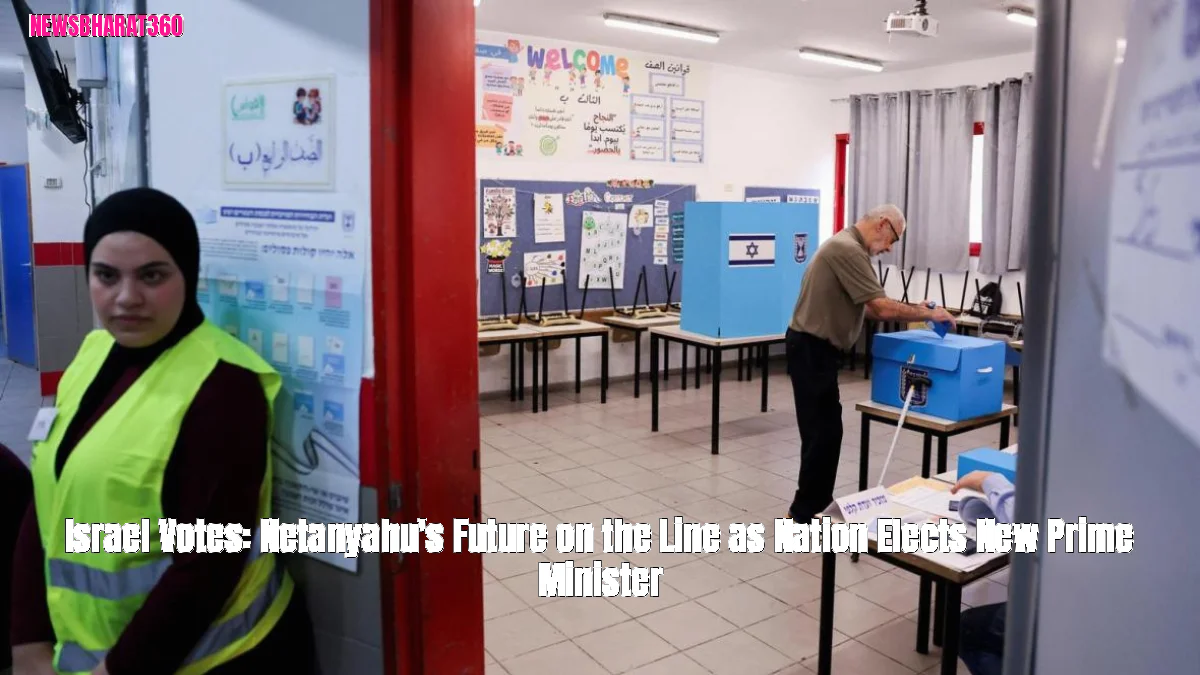

Electoral colleges in Israel opened on Tuesday at 7:00 local time, corresponding to 6:00 CET, marking the commencement of the country's first elections since the Hamas attacks in October 2023. The outcome of these elections will determine the future leadership of Israel, a nation that has experienced some of its most turbulent years, with Prime Minister Benjamin Netanyahu trailing in the polls in second place.
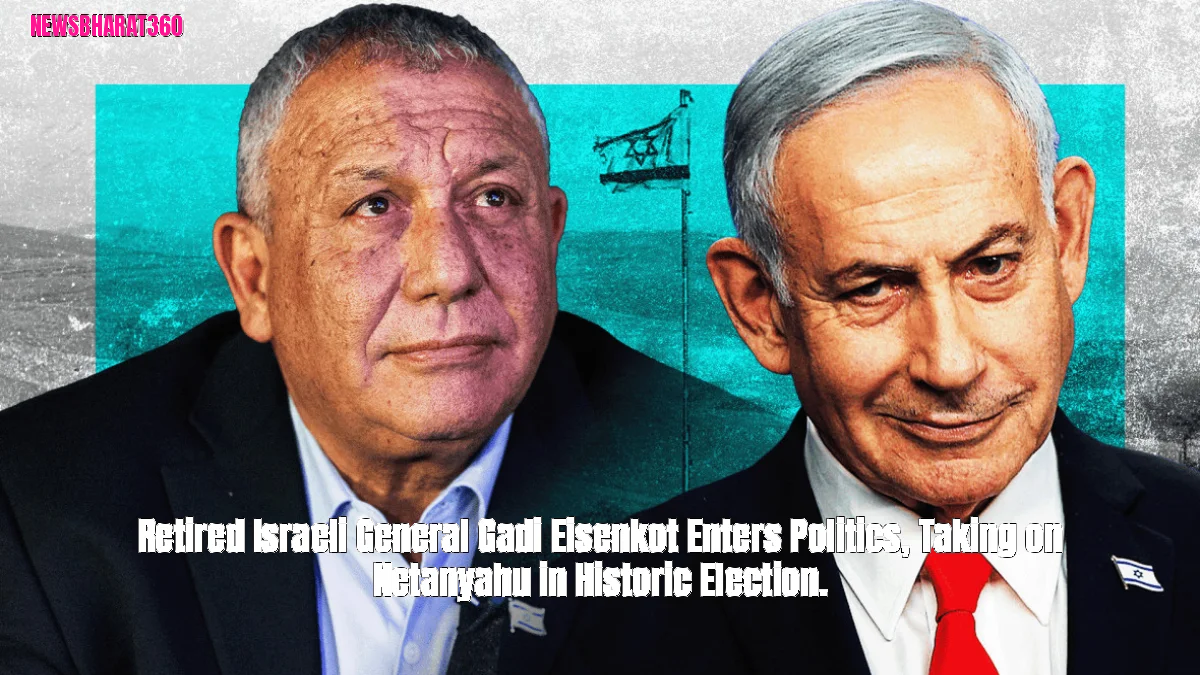
Israeli Prime Minister Benjamin Netanyahu is set to cast his ballot at 11:00 local time in a Katamon neighborhood election school in West Jerusalem, while his main opponent, Gideon Sa'ar's ally Gadi Eizenkot, is expected to vote approximately three hours later at a school in Herzliya, near Tel Aviv, according to the schedules announced by their respective parties.
In the upcoming two-block elections, a total of 38 parties are participating, with only 11 anticipated to surpass the 3.25% electoral threshold required for parliamentary representation. Current polls indicate that no single party is expected to secure a governing majority, necessitating the support of Arab parties to form a coalition government.
Throughout Israel and in the West Bank's unauthorized settlements, a total of 12,018 polling stations have been opened for the convenience of 7,332,000 registered voters, as per data released by the Israeli Central Electoral Commission.
Voting has already commenced for certain groups, with members of diplomatic missions abroad casting their ballots on October 15th and active soldiers of the Army participating since December 21.
At the opening ceremony, Dean Livne, a representative of the Israeli Central Electoral Commission, highlighted the significance of the event, noting that approximately 330,000 young Israelis will be casting their ballots for the first time today.
The spokesman cautioned that misinformation may spread online, advising citizens to scrutinize the authenticity and context of news, images, and videos before sharing them, and to rely solely on official sources for credible information.
Recent polls conducted by Israel's three major television channels indicate that the coalition led by former army chief Gadi Eisenkot is projected to secure between 52 and 56 seats in the upcoming election, while Netanyahu's bloc is expected to garner 50 seats. However, neither coalition appears to have secured a majority of 61 seats, suggesting that the support of Arab parties for the opposition bloc could hold significant sway in determining the election's outcome.
Israeli Prime Minister Benjamin Netanyahu, leader of the right-wing Likud party, is heading into elections with the backing of ultra-Orthodox Jewish groups and ultranationalist factions. His government, however, is led by ministers with extremist views, including Bezalel Smotrich, the Minister of Finance, and Itamar Ben Gvir, the Minister of National Security.
The Eisenkot bloc is a coalition of center-right parties, led by the Yashar party. The coalition comprises three parties: Beyajad, a right-wing party co-founded by Naftali Bennett and Yair Lapid; Israel Beitenu, a right-wing party led by Avigdor Lieberman; and The Democrats, a center-left party headed by Yair Golan.
Recent opinion polls indicate that Arab parties, comprising the Joint List coalition of Hadash, Ta'al, and Balad, as well as Ra'am, are projected to secure between 14 and 16 seats in the upcoming election. Meanwhile, one poll suggests that the Reservists-Economic Block, a newly formed opposition party, may win four seats.
Approximately 20% of Israel's population, totaling around 2.06 million individuals out of a total of 10.3 million, comprise Israeli Arabs, who are Palestinian citizens with Israeli citizenship. They are descendants of Palestinians who chose not to flee or were not expelled from the region following the conflict preceding Israel's establishment.
Residents of East Jerusalem who are not of Palestinian descent hold significant voting power, comprising 17% of the electorate, despite their recent tendency to support a boycott in local elections.
The upcoming elections are expected to serve as a barometer for the nation's sentiment, following a tumultuous legislative period marked by record-breaking protests in response to Prime Minister Netanyahu's efforts to undermine the independence of the judiciary. This tumultuous period was further exacerbated by the October 7 massacre, the resulting hostage crisis, and the military offensive in Gaza. The situation has continued to deteriorate with a series of military escalations against Lebanon and Iran, with the latter escalating in March.
JC (Efe, Reuters and AP)