
“Kern County elected me,” said Dr. Ololade Oladimeji. “It wasn't exactly me who chose Kern County.”
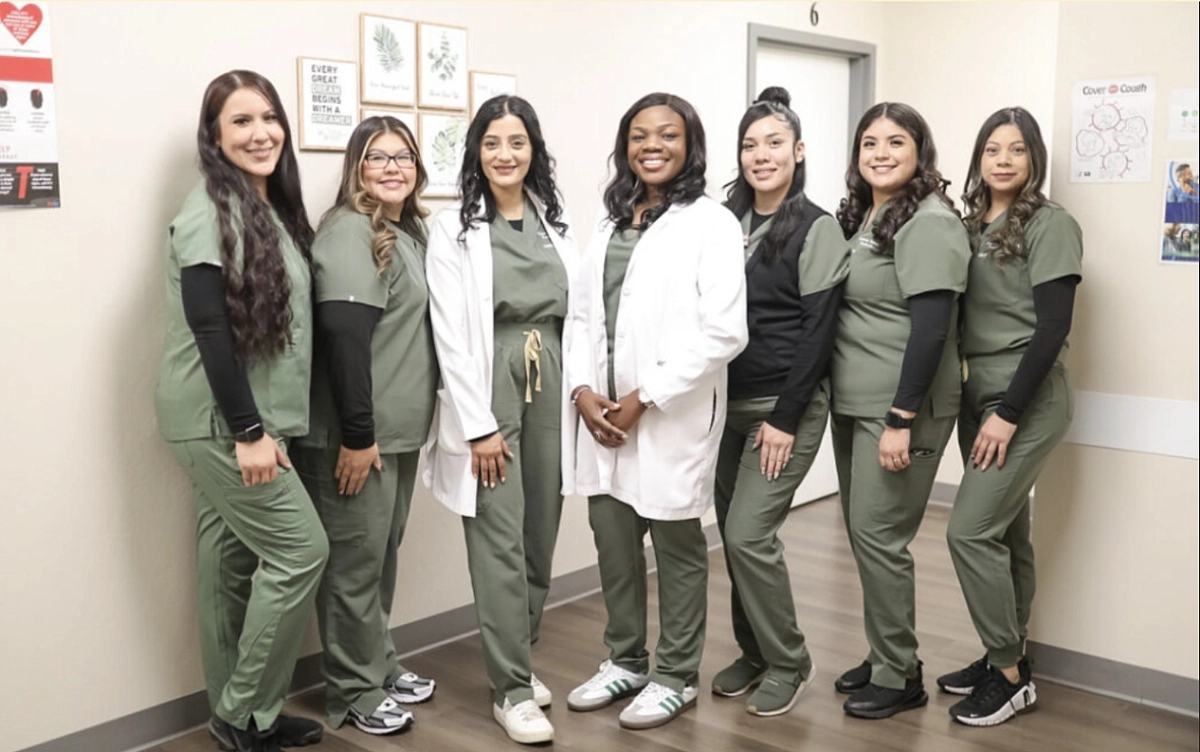
Known as Dr Lola, Oladimeji is a Nigerian-born internist who studied at the Ladoke Akintola University of Technology, Ogbomoso. She came to Bakersfield in 2012 when her husband's job in the oil and gas industry moved them from Texas. Since then, he hasn't left.
Peridot Health Medical Clinic opened a primary care clinic a year ago in McFarland, a small community north of Bakersfield largely populated by farmworkers, due to a shortage of clinics and medical providers in the area.
“Patients are grateful that we are here and happy to have more options close to where they live, without having to travel to Bakersfield for primary care,” he said.
His patients come from the nearby cities of Delano, Wasco, Shafter, Lost Hills and even from outside Kern County, paltry distances compared to the nearly 12,000 miles Oladimeji traveled from Nigeria to care for them.
Oladimeji's story — coming to Kern County by circumstance and staying by conviction — is far from exceptional. The county's health system has long relied on foreign-trained doctors.
However, recent decisions coming out of Washington, D.C., highlighted the extent to which the county relies on foreign medical talent and exposed its vulnerability.
On January 1, the Trump administration imposed a travel ban on citizens of 39 countries, followed by suspending the granting of immigrant visas for people from 75 countries. Both measures threatened work permits, visa renewals and the processing of permanent residences for foreign-trained health professionals already in the United States.
Although the visa suspension was quietly lifted in May, local doctors, hospitals and clinics still face the challenge of protecting this essential source of professionals and the community that depends on it. Oladimeji stated that these types of immigration restrictions will further aggravate the shortage of doctors.
The federal government's constant changes to visas exposed the county's dependence on foreign-trained talent.
A desert of doctors
“We are definitely in a physician desert,” said Dr. Terrance McGill, a Bakersfield-born family medicine specialist who graduated from Ross University School of Medicine in the Caribbean.
The shortages McGill describes have roots dating back nearly five decades. On March 5, 1978, the federal government officially designated Kern County as a “Health Professional Shortage Area” for primary care. That designation has never been withdrawn.
Currently, the county has just 41 primary care physicians per 100,000 residents, ranking in the bottom third of California's 57 counties and well below the state average of 61 physicians per 100,000 residents.
McGill explained that he returned to his hometown, in part, because “we needed people who looked like me.” Today he sees patients in Kern County and runs his private practice, Maverick Medical Care. According to data from the Medical Board of California, more than 60% of the county's doctors earned their degrees from medical schools outside the United States.
“Bakersfield and Kern County are some of the toughest places to recruit physicians,” Oladimeji said, recalling her experience as a physician recruiter for Adventist Health Bakersfield. There are places with better climate and greater amenities, he explained. “Most doctors born and trained in the United States are not attracted to a place like Bakersfield.”
McGill agreed that domestic graduates have many more options across the state and country, including coastal hospitals with higher salaries and better air quality; Air quality in Kern County ranks among the worst in the United States.
Oladimeji added that underserved areas like Kern mean a higher volume of patients. Additionally, factors such as lower socioeconomic and educational levels influence health outcomes, increasing the incidence of disease, reducing insurance reimbursements, and decreasing physician compensation. All this makes recruitment difficult.
"That's why we've had to rely on foreign-graduate doctors, who generally require sponsorship for their visas. That's been one of the ways to bring doctors to the county."
For decades, Kern County has made up for its persistent physician shortage by turning to professionals born and trained outside the country. Those who arrive from abroad usually do so with J-1 or H-1B visas, linked to the institutions that sponsor them. With fewer job options, many end up settling permanently.
“After completing residency, they typically stay about two years and then discover that Kern County is not a bad place to live,” McGill said. "Because they have already immigrated from other countries, it is easier for them to put down roots here. They were not born in Los Angeles or San Francisco with the intention of returning."
Threats to the supply of doctors
One of the main programs that funnels doctors into Kern County is located on Niles Street, east of Bakersfield: the Rio Bravo Family Medicine Residency Program, administered by Clinica Sierra Vista.
The primary goal of the program is to train and retain family medicine physicians committed to serving the most underserved communities in Kern and Fresno counties. Each year it receives approximately 1,600 applications—from both U.S. citizens and foreign-born doctors—for just 10 positions.
Dr. Héctor Arreaza, a Venezuelan doctor trained in his country and one of the first residents of the program twelve years ago, is now part of the teaching staff.
“Before this program, all the underserved communities around this clinic had nowhere to receive primary care,” he said.
Residents see patients at the clinic, work in hospitals, participate in health fairs and coordinate a street medicine program for Bakersfield's homeless population.
“They are taking care of the entire community,” Arreaza said. “Their work is not limited to the walls of the clinic.”
This comprehensive model of community care was at risk during the recent visa suspension.
During that period, McGill perceived fear among his colleagues, "almost anger," he commented, because these foreign doctors know "how much they have contributed to the system. Everyone needs help, but the way to bring in people who can collaborate is being blocked."
The Trump administration quietly lifted the suspension in May. However, uncertainty remains.
Oladimeji warned that if a similar policy were to return, it would “definitely limit the availability, recruitment and retention of physicians in Kern County.”
Still, the county has launched other initiatives to combat the doctor shortage, especially through residency programs. In addition to Rio Bravo, Bakersfield Memorial Hospital recently launched a residency program in partnership with Morehouse School of Medicine, a historic African-American medical school whose mission is to train physicians to serve underserved communities. The second generation of residents will arrive in July.
For now, Kern County's health system continues to rely heavily on foreign-born doctors committed to practicing in the region.
“I see many opportunities to directly impact the lives and health of people in communities like this,” Oladimeji concluded. “That is completely aligned with my purpose.”
This article was originally published in The Bakersfield Observer in collaboration with Healing California, the USC Center for Health Journalism's 2026 ethnic media initiative.