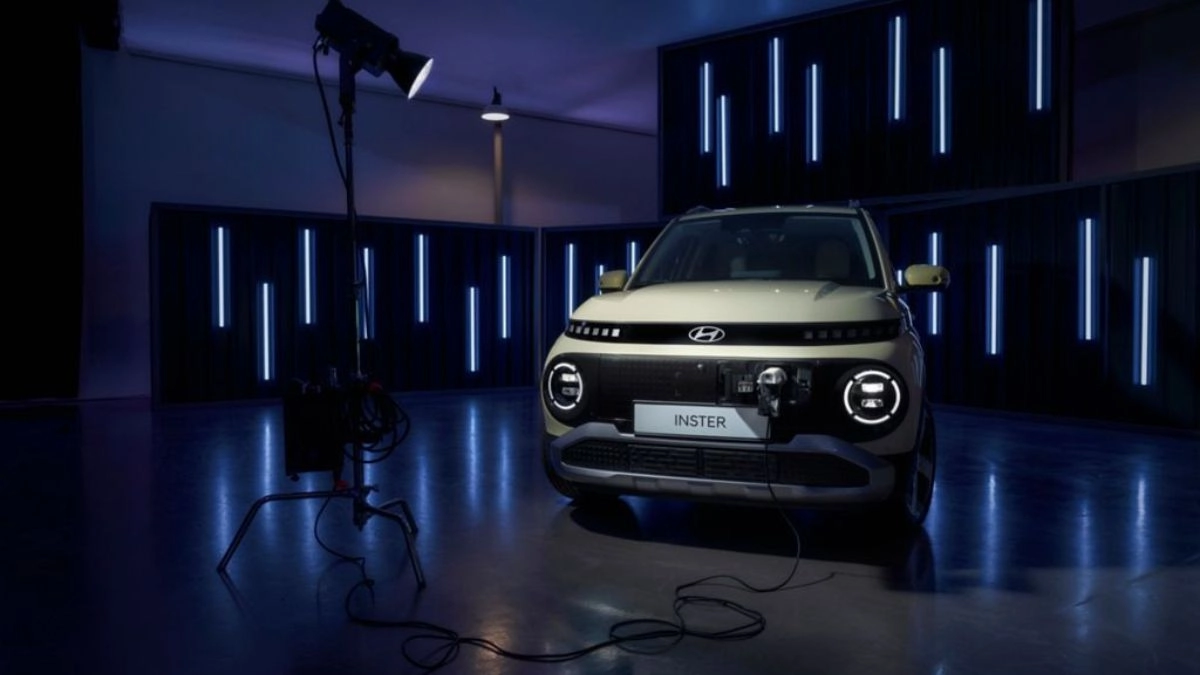

Hyundai's forecasts for 2026 are far removed from jingoistic rhetoric and instead focus on delivering a reasonable message. The business anticipates maintaining its global sales volume to levels that are comparable to those of the past year with a small improvement that would strengthen its position among the top manufacturers worldwide rather than take the lead in an aggressive expansion.
In 2026, Hyundai anticipates selling more than 4. 15 million cars globally, according to its quotes. This number is slightly higher than it was in 2025, the year that sold more than 4. 13 million products.
The balance is consistent in a market where increasing competition and a sluggish supply have caused some companies to lower their expectations.
The business itself acknowledges that the present circumstances are challenging. A situation where maintaining quantity is, in itself, a major accomplishment is brought on by geopolitical tensions, continual inflation in some markets, and an extremely heated cost war, especially in the electric vehicle sector.
the growing global market necessity
One of Hyundai's pillars for the year 2026 method is still to have a significant presence outside of South Korea. More than 3. 45 million vehicles will be sold internationally this year, according to the manufacturer, which is substantially higher than the more than 3. 42 million units sold in 2025.
This strategy addresses the need to balance the maturation of some traditional businesses with opportunities in areas where electricity is progressing at various rates.
Hyundai's international sales decreased slightly by 0. 3 % in 2025 from 2024, which is a contained decline given the pressure placed on new people and the global environment.
particularly Chinese companies with excellent deals.Hyundai believes that its broad design profile, which includes everything from hybrids to natural electric vehicles to efficient combustion engines, helps it better manage the demand fluctuations in each region.
South Korea serves as a stabilizing force.
Although progress is primarily sought after worldwide, the local market continues to contribute significantly to the group's security. Hyundai anticipates reaching 700, 000 North Korean filings by 2026, which is a figure that is only slightly below the 712, 954 products sold in 2025. Home sales increased by 1. 1 % year over year last year, helping to mitigate weakness seen in some foreign markets. Beyond size, Hyundai continues to use South Korea as a screening ground for new technologies, electric powertrains, and connection solutions that are later rolled out in other markets. Taxes, Fierce Competition, and Electrification: Hyundai's strategy emphasizes electricity, but it also represents one of the key areas of fierce competition. Ju-yung Chung, the company's CEO, openly acknowledged the difficulty of the latest industry landscape and stressed the value of corporate flexibility. Our greatest power may be our ability to continue to evolve while remaining near to our customers, the executive declared. " When circumstances become complex and competition is fierce, we will always be able to stay close to our customers. The rising price stress in different markets is just one more obstacle to this challenge. Hyundai is accelerating the translation of creation, changing its provide chain, and reviewing its operating structure to reduce its impact. In order to gain agility and respond to market changes more quickly, the company has even begun an inner transformation that has affected both its leadership style and its work processes. The growth forecasts for 2026 from Hyundai show a reasonable trend, which is in line with an economy that appears to have entered a phase of consolidation following years of rapid expansion. The company is focused on strengthening its profitability, protecting margins, and making the transition to electric mobility rather than pursuing optimistic volume increases. They help it better manage regional require swings.
South Korea serves as a stabilizing force.
Although progress is primarily sought after worldwide, the local market continues to contribute significantly to the group's security. Hyundai anticipates reaching 700, 000 North Korean filings by 2026, which is a figure that is only slightly below the 712, 954 products sold in 2025. Home sales increased by 1. 1 % year over year last year, helping to mitigate weakness seen in some foreign markets. Beyond size, Hyundai continues to use South Korea as a screening ground for new technologies, electric powertrains, and connection solutions that are later rolled out in other markets. Taxes, Fierce Competition, and Electrification: Hyundai's strategy emphasizes electricity, but it also represents one of the key areas of fierce competition. Ju-yung Chung, the company's CEO, openly acknowledged the difficulty of the latest industry landscape and stressed the value of corporate flexibility. Our greatest power may be our ability to continue to evolve while remaining near to our customers, the executive declared. " When circumstances become complex and competition is fierce, we will always be able to stay close to our customers. The rising price stress in different markets is just one more obstacle to this challenge. Hyundai is accelerating the translation of creation, changing its provide chain, and reviewing its operating structure to reduce its impact. In order to gain agility and respond to market changes more quickly, the company has even begun an inner transformation that has affected both its leadership style and its work processes. The growth forecasts for 2026 from Hyundai show a reasonable trend, which is in line with an economy that appears to have entered a phase of consolidation following years of rapid expansion. The company is focused on strengthening its profitability, protecting margins, and making the transition to electric mobility rather than pursuing optimistic volume increases. They help it better manage regional require swings.
South Korea serves as a stabilizing force.
Although progress is primarily sought after worldwide, the local market continues to contribute significantly to the group's balance. Hyundai anticipates reaching 700, 000 North Korean filings by 2026, which is a figure that is only slightly below the 712, 954 products sold in 2025. Home sales increased by 1. 1 % year over year last year, helping to mitigate weakness seen in some international markets. Beyond size, Hyundai continues to use South Korea as a screening ground for new technologies, electric powertrains, and connection solutions that are later rolled out in other markets. Tariffs, Fierce Competition, and Electrification: Hyundai's strategy emphasizes electricity, but it also represents one of the key areas of fierce competition. Ju-yung Chung, the company's CEO, openly acknowledged the difficulty of the latest industry landscape and stressed the value of corporate flexibility. Our greatest power may be our ability to continue to evolve while remaining near to our customers, the executive declared. " When circumstances become difficult and competition is fierce, we will always be able to stay close to our customers. The rising price pressure in different markets is just one more obstacle to this challenge. Hyundai is accelerating the translation of creation, changing its provide chain, and reviewing its operating structure to reduce its impact. In order to gain athleticism and respond to market changes more quickly, the company has even begun an inner transformation that has affected both its leadership style and its work processes. The growth forecasts for 2026 from Hyundai show a reasonable trend, which is in line with an economy that appears to have entered a phase of consolidation following years of fast expansion. The company is focused on strengthening its profitability, protecting margins, and making the transition to electric mobility rather than pursuing idealistic volume increases. This achievement made up for the failure seen in some global markets. Beyond level, Hyundai continues to use South Korea as a screening ground for new technologies, electric propulsion systems, and connection solutions that are later developed for different markets. Tariffs, Fierce Competition, and Electrification: Hyundai's strategy emphasizes electricity, but it also represents one of the key areas of fierce competition. Ju-yung Chung, the company's CEO, openly acknowledged the difficulty of the latest industry landscape and stressed the value of corporate flexibility. Our greatest power may be our ability to continue to progress while staying near to our clients, he said," when circumstances become difficult and competition is fierce. " The rising price stress in different markets is just one more obstacle to this challenge. Hyundai is accelerating the translation of creation, changing its provide chain, and reviewing its operating structure to reduce its impact. The organization has even begun an inner change that will affect both its management style and work processes in an effort to become more adaptable and adapt to market changes more quickly. The growth forecasts for 2026 from Hyundai show a reasonable trend, which is in line with an economy that appears to have entered a consolidation phase after years of fast expansion. The company is focused on strengthening its profitability, protecting margins, and making the transition to electric mobility rather than pursuing optimistic volume increases. This achievement made up for the weakness seen in some global industry. Beyond volume, Hyundai continues to use South Korea as a screening ground for new technologies, electric propulsion systems, and connection solutions that are later developed for different markets. Tariffs, Fierce Competition, and Electrification: Hyundai's strategy emphasizes electricity, but it also represents one of the key areas of fierce competition. Ju-yung Chung, the company's CEO, openly acknowledged the difficulty of the latest industry landscape and stressed the value of corporate flexibility. Our greatest power may be our ability to continue to progress while staying near to our clients, he said," when circumstances become difficult and competition is fierce. " The rising price stress in different markets is just one more obstacle to this challenge. Hyundai is accelerating the translation of creation, changing its provide chain, and reviewing its operating structure to reduce its impact. The organization has even begun an inner transformation that will affect both its leadership style and work processes in an effort to become more adaptable and adapt to market changes more quickly. The growth forecasts for 2026 from Hyundai show a reasonable trend, which is in line with an economy that appears to have entered a consolidation phase after years of fast expansion. The company is focused on strengthening its profitability, protecting margins, and making the transition to electric mobility rather than pursuing optimistic volume increases. Hyundai is changing its supply chain, changing its administrative structure, and accelerating the localisation of production. The organization has even begun an inner change that will affect both its management style and work processes in an effort to become more adaptable and adapt to market changes more quickly. The growth forecasts for 2026 from Hyundai show a reasonable trend, which is in line with an economy that appears to have entered a consolidation phase after years of fast expansion. The company is focused on strengthening its profitability, protecting margins, and making the transition to electric mobility rather than pursuing idealistic volume increases. Hyundai is changing its supply chain, changing its administrative structure, and accelerating the localisation of production. The organization has even begun an inner change that will affect both its leadership style and work processes in an effort to become more adaptable and adapt to market changes more quickly. The growth forecasts for 2026 from Hyundai show a reasonable trend, which is in line with an economy that appears to have entered a consolidation phase after years of fast expansion. The company is focused on strengthening its profitability, protecting margins, and making the transition to electric mobility rather than pursuing idealistic volume increases.