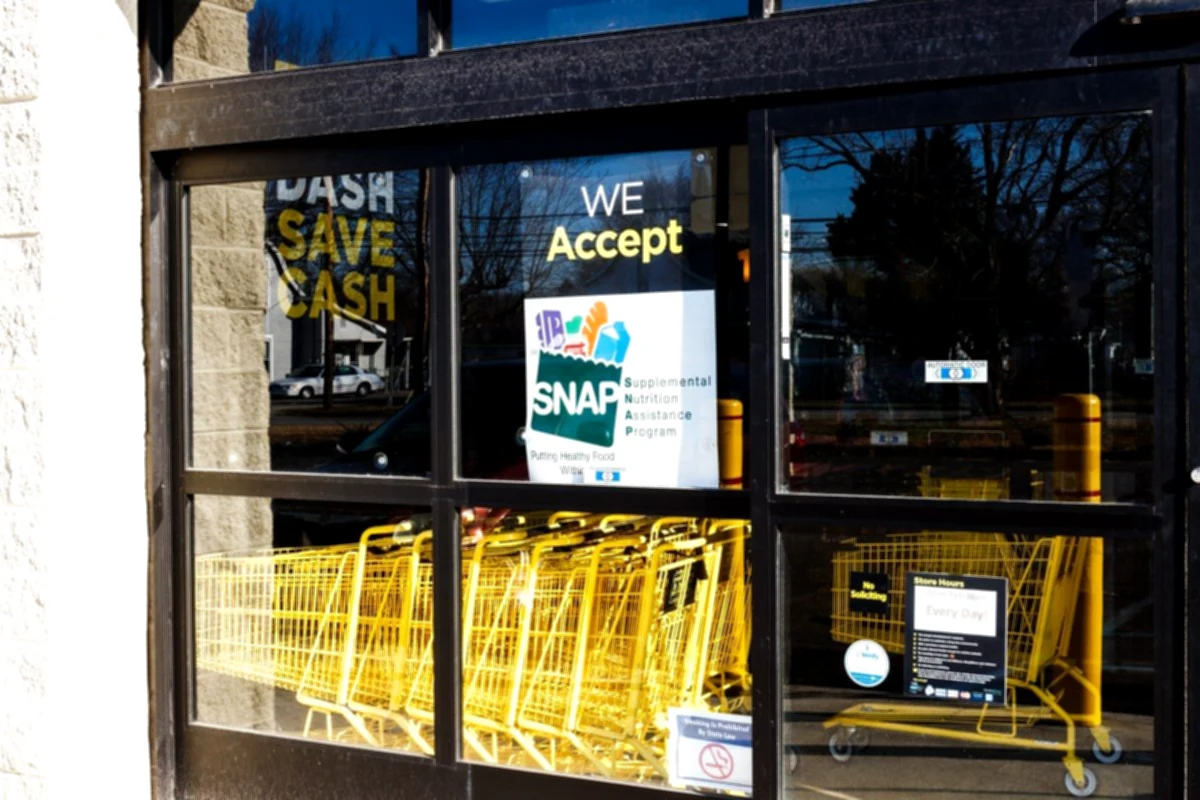

Economic aid such as the Supplementary Nutritional Assistance Program (SNAP) covers millions of households in the United States, especially those with low incomes, providing monthly assistance for food purchase in order to ensure food security among the most vulnerable families.
However, in the last 12 months, there has been a 13% drop in the number of people applying for these social benefits and the reason for some specialist lies in that, as the provisions of President Donald Trump’s “Big Beautiful Bill” bill with strict labor and income requirements are implemented, among others, many households fail to meet the requirements, falling out of the program.
Many families in the United States choose to enroll in these social programs, as inflation hits their pockets and the labor market adjusts to a high unemployment rate, their budgets are increasingly limited to buying and paying for basic goods, especially food and public services, so subscribing to federal assistance helps them to sort out the unstable economic situation.
So far, it is unknown how many people have lost their benefits due to the new and restrictive application rules, but it is known that, following the changes, many federal agencies have collapsed. For example, in the case of Arizona, according to data from the Department of Agriculture, the decline was 50% in the last year; falls of up to 20% were also recorded in entities such as Florida, Georgia or Louisiana.
Federal data suggests that, in the case of SNAP, one of the largest programs, which covered more than 40 million beneficiaries, the figure has decreased to 36 million.
In this regard, Brett Bezio, a spokesman for the Arizona Department of Economic Security, commented that “the implementation of the changes required by the federal government has caused an unprecedented volume of calls and administrative obstacles, including additional verification requirements, creating real barriers for applicants,” he told CBS.
For her part, social protection policy analyst at the defense group Invest in Louisiana, Tia Fields, expressed that “the loss of profits is mostly due to administrative procedures and not to the failure to meet labor requirements.”
However, Rachel Sheffield, a researcher at the conservative Heritage Foundation and part of the group of advocates for social system reform, notes that if there are people who are stopping to receive social assistance because they are working and progressing, “that would be a step forward.”
Unlike Sheffield, for Fields of Invest in Louisiana, falling applications for social assistance programs could have larger consequences, such as loss of profit in children’s households; although until now food banks are replacing in some entities assistance, it will not be enough to cover demand.
In this regard, Carolyn Vega, policy analyst for the defense group Share Our Strength, commented: “We know that schools can’t cover this need. We know that food banks cannot cover this need. We are very concerned because we know that no other organization or program can replicate the magnitude and success of SNAP,” he said.