
Fear generated by the hardening of the Trump administration’s migratory riots not only reduced the mobility of Chicago’s Latin communities and its suburbs: it also hit consumption, as a new study from the University of Illinois Chicago (UIC) noted.
According to the analysis, it is estimated that Cook County stopped recording around $1.260 million in store and restaurant activity during the period of increased pressure from federal authorities.
The report, titled Hunkering Down: The Hidden Economic Cost of Federal Immigration Enforcement in Cook County, IL, was presented on Tuesday by the UIC’s Great Cities Institute, when a year has passed since the start of the “Operation Midway Blitz,” the migration offensive that the Trump Administration launched on September 8, 2025 in Chicago and other locations in Illinois.
The researchers found that the impact went beyond traditionally Mexican neighborhoods, such as Pilsen and La Villita. The reduction in displacements from communities with a high concentration of residents born in Latin America ended up affecting from different areas of the county.
“UIC estimates that Cook County retail and restaurant have lost roughly $1.26 billion in commercial activity and about $107 million in tax revenue since ICE enforcement increased last year.”https://t.co/JN3Q1Joxoh
“Latin people are workers, consumers, homeowners, business owners and taxpayers,” explained José Miguel Acosta Córdova, associate researcher at the UIC Institute for Research on Race and Public Policy and one of the authors of the study.
“Our work and our economic activity are part of what makes the Chicago regional economy work. So, when those normal patterns of movement and economic activity are altered, the effects do not remain confined to a neighborhood or a population,” he added.
The data shows the extent of this change of behavior. Matthew Wilson, co-author of the report, explained that travel from areas with high presence of Latin American-born people to shops from other parts of the county decreased by around 9%, while restaurant visits fell by about 10%. The researchers also found no evidence that that consumption had simply moved to other establishments.
According to the study, the fall in retail trade in Cook County suburbs was approximately twice as high as that recorded within the city.
The research also estimates that the decline in business activity accounted for about $107 million in tax revenue that ceased to be generated, a consequence that widened the impact of raids from families and small to local public finances.
One of the central conclusions of the study is that the presence of federal agents modified activities such as buying food or medicines, charging gasoline, going to the bank or eating at a restaurant.
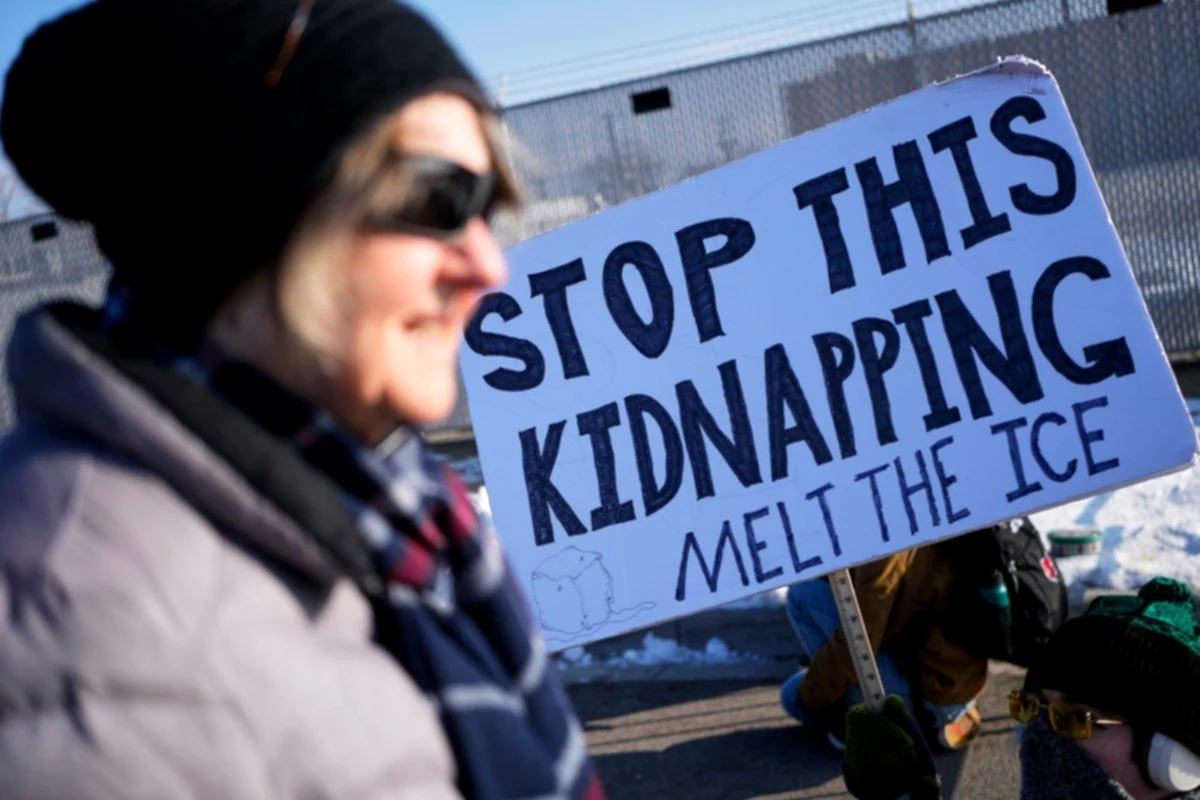
In addition, the acts of the agents provoked protests, demands and clashes with residents. One of the most serious episodes occurred on September 12, 2025, when an ICE agent shot and killed the 38-year-old Mexican Silverio Villegas González during an arrest attempt at Franklin Park.
Despite this, the researchers point out that their analysis does not intend to calculate all the economic or human effects of the shootings. Their conclusion is more concrete: when a significant part of the population stops going out, buying and consuming out of fear of migration operations, the impact ends up reaching and local governments beyond the communities directly subjected to the raids.