
Five Peruvian prisons have been declared a state of emergency.
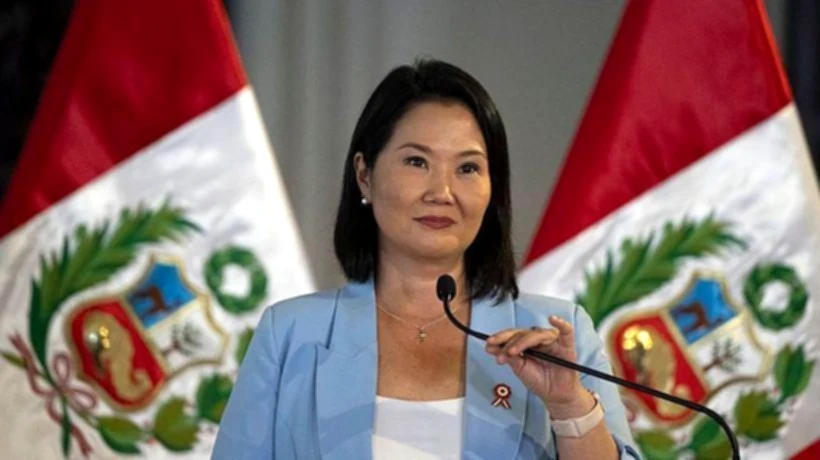
The decision adopted by President Keiko Fujimori is part of “the comprehensive strategy to strengthen citizens’ security,” read in a statement released on Saturday by the country’s presidency.
According to Supreme Decree No. 128-2026-PCM, issued on September 5, during the next 60 days, the police, along with the armed forces, will be able to deploy “permanent operatives” to guarantee the security of the prison establishments “up to a radius of 200 meters from their external boundaries”.
The procedures will aim at preventing the entry of weapons and other objects, as well as allowing for "intelligence actions, in order to prevent leaks, alteration of order and criminal activities in prison establishments", in accordance with the provisions of article 4 of the decree.
And, to facilitate these actions, the constitutional rights to freedom of transit and assembly, as well as to personal freedom and security of “the persons who enter or transit the penitentiary establishment and the outer perimeter surrounding the penitentiary establishment, up to a radius of 200 meters” will be suspended, it is added in the executive resolution.
“The first goal is to have a perimetric siege where not only the staff of the INPE (National Penitentiary Institute), the police, but also the armed forces can do control tasks,” Justice Minister Ernesto Álvarez told TV channel Canal N.
The Ombudsman, for its part, assured that it will watch that the extraordinary measures guarantee “the full validity of fundamental rights.”
The five prisons included in the measure were not chosen by chance.
It is the penalties of Challapalca (Tacna), Cochamarca (Pasco), Trujillo Varones (Liberty), Miguel Castro Castro and Ancón I, these two latter located in Lima, in which around 50% of the detainees that host are “heads and commands of criminal organizations”, so these prison centres constitute “a scenario of high danger and require priority state attention and the reinforcement of security measures, surveillance and control”, read in the decree.
Authorities have admitted that these premises have become scenarios for “directing illegal activities, including extortion, snatching and drug trafficking” outside prisons “using unauthorized telecommunication equipment”, as well as in places where frequent riots, riots and escapes are recorded.
One of the objectives of the declaration of emergency will be to leave the gangs uncommunicated with the outside world, through “confiscation of SIM cards (chips) telephone, phones”, read in article 4 of the government resolution.
Minister Álvarez also announced that the police and military patrols will also have the purpose of removing the telecommunications antennas installed in the areas adjacent to these centers, said Minister Álvarez.
Also, the strengthening of security will include the airspace, read in the decree.
“The National Penitentiary Institute will maintain the administration and internal custody of the prisons,” the government said in a statement, making it clear that the emergency decree does not imply the militarization of the prisons and guaranteed that the extraordinary measures will be in line with the American Convention on Human Rights.
However, he also recognized that the Peruvian prison system is collapsing, since, on the one hand, it presents a overpopulation of 156% and, on the other hand, a staff deficit of around 45%.
Crime has become one of the main concerns of Peruvians. According to data from the Security Barometer, a survey carried out by Ipsos, 38% of Peruvians say they limit their exits to certain hours of the day.
The number of homicides in the country increased from 1,000 in 2018 to 2,600 in 2025, while reports of extortion increased in the same period from 3,200 to 26,500.
Between January and June this year, 1,267 homicides were recorded according to the National Police and in the first weeks of Fujimori's rule, around 134 deaths were, that is, more than five every day.
Taking over as president in late July, Fujimori promised to implement a hard-handed policy against crime, drug trafficking and organized crime, activities that, in many cases, are directed from prison centres.
In 2025, the Ministry of Economy calculated that insecurity cost the national economy about $5 billion annually, about 1.7% of GDP.