

Five key decisions that organize the second season of Fallout
What to watch in Fallout's second season: pacing, characters, and world as keys to understanding where the series is headed
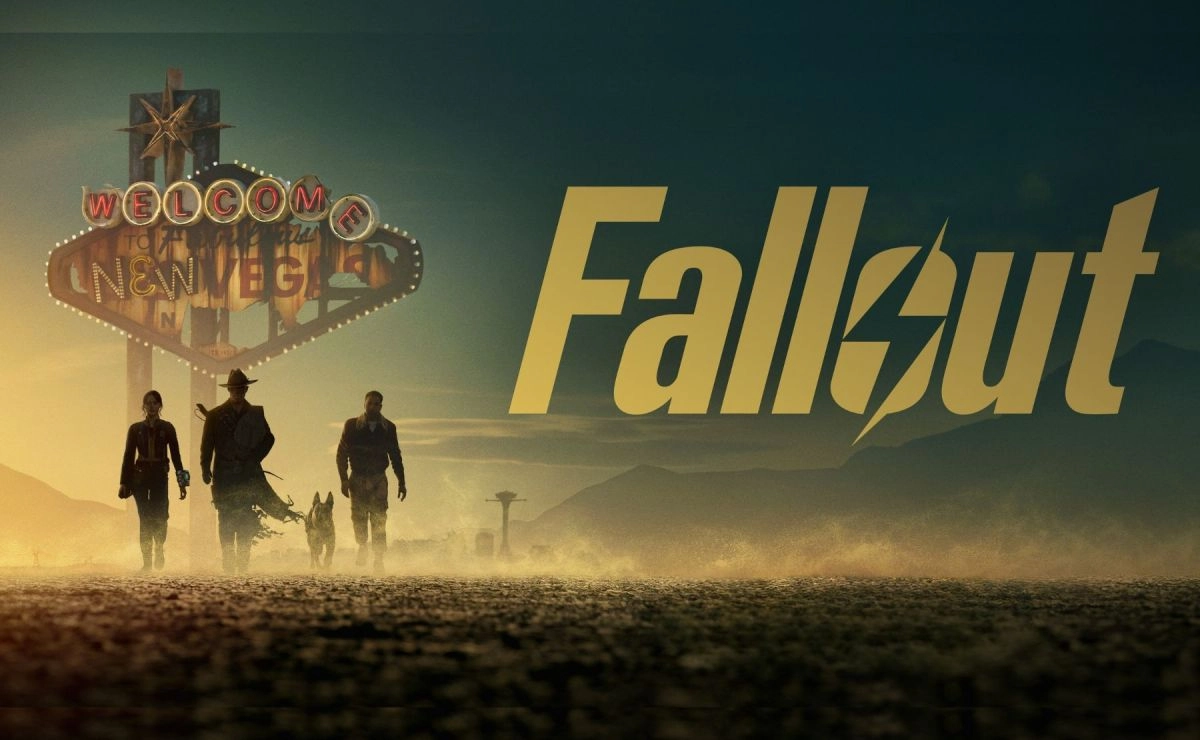

Sao Paulo, Brazil - During the panel at CCXP25, Walton Goggins spoke about Cooper Howard discovering that his wife was the main architect of the end of the world. The statement immediately reshaped the character's relationship with his past. Everything experienced before the bombs took on a different density, permeated by information that could no longer be integrated without friction. From that point on, Cooper's personal history was marked by a persistent instability. This kind of pressure runs through the second season of Fallout. The characters move forward carrying uncomfortable knowledge, past decisions that remain active, and a world that responds with greater complexity each time someone tries to advance without taking responsibility. The series works from this place: an already established universe, a viewer who knows the rules, and a narrative that can delve deeper without rushing. This text addresses five writing decisions that organize this movement. 1. Rhythm as a way of inhabiting time. The second season modifies its relationship with time in a way that is familiar to those who know the franchise. The Fallout video games always allowed players to stop, explore without an immediate objective, linger in a space because something in that environment demanded attention. This possibility of lingering is part of the game's language and its way of building a world. The series finds its equivalent. The episodes prioritize accumulation. The scenes unfold, leaving elements unresolved. Emotional information shifts from one episode to the next without immediate resolution. Aaron Moten described it with a precise image: Fallout as a concert. The first season introduced the instruments and established the score. The second works with variations, modulations, and silences that don't interrupt the experience. This approach is evident in scenes that linger in discomfort. The characters hesitate, and the narrative stays with them at that point. The environment retains its hostility, integrated as a constant condition.The tension is sustained throughout and doesn't dissipate at the end of a sequence. The result is a distinct experience of engagement. In this second season of the Amazon Prime series, the viewer registers gestures, contradictions, and subtle shifts. The series remains action-packed and spectacle-driven, but organized according to a logic of attrition that reconfigures how the progression is perceived. 2. Characters Written Through Accumulation: Lucy, Maximus, and the Ghoul continue. The decisions they made remain in effect even as the setting changes. This continuity seeps into their bodies, their silences, and the way they occupy space. Lucy tries to uphold the ethical code she learned in the Vaults, the "Golden Rule" that governs her relationships with others. The journey with the Ghoul intensifies the friction. She sees justice as a system that responds, as a chain of responsibility. He acts from a place of immediate effectiveness. That distance shapes the journey and gradually alters Lucy. Ella Purnell puts it clearly: “There’s a part of her that breaks.” The transformation isn’t expressed as a specific loss, but as an alteration of her way of being in the world. Lucy continues to observe from a place of care, but that care becomes a demanding experience in constant contact with an environment that rewards toughness. Maximus comes from a different emotional background. The Brotherhood of Steel offered him structure, meaning, and protection. This season, that structure begins to fray. The decisions he makes confront him with the logic that shaped him. Aaron Moten sums it up in a phrase that transcends the character: “Trying to understand what’s happening around us and asking ourselves if we can change anything from within.” Every choice leaves remnants: uneasy loyalties, lingering doubts, gestures that no longer quite fit. Maximus recovers a part of himself that had been relegated, and that return brings with it concrete political risks. The Ghoul operates on a different timescale. Two hundred years of life alter any calculation. Actions are measured against an extended horizon. Goggins describes his relationship with Lucy as an unexpected journey. Along that path, Cooper Howard emerges in involuntary gestures that disrupt the Ghoul's coherence. These moments don't soften the character. They introduce an instability that the series observes without resolving. 3. New Vegas as a Moral Genealogy The arrival in New Vegas triggers a conversation that overflows the series. For those who played Fallout: New Vegas, the city represents a turning point in the franchise: a moral ecosystem without clear resolution, traversed by conflicting factions and decisions with branching consequences. The series takes up that legacy, treating it as an active problem.New Vegas appears crisscrossed by forces that defy synthesis. The arrival of Robert House (with Justin Theroux joining the franchise) and his technocratic control. The New California Republic and its bureaucratic expansion. The Brotherhood and its monopoly on knowledge, which evolves almost to cult-like levels. Caesar's Legion and its systematic violence. Lucy and her quest for justice. The Ghoul advancing without a defined horizon. The question that articulates this clash remains open: who decides how the world is rebuilt after the collapse? The narrative presents positions and exposes the costs associated with each. Geneva Robertson-Dworet, the showrunner of the series, summarizes it directly: "There is enormous moral complexity." In New Vegas, alliances become fragile, tactical decisions acquire ethical weight, and moving forward means relinquishing previous certainties. The city functions as a space where ambiguity is sustained without being diluted. Empathy as a Costly Capacity
Lucy is maintain a certain level of compassion because she was raised in a setting that allowed it. Outside of that framework, the" Golden Rule" organizes daily life in the Vaults, meaning that one must risk taking risks and exposing themselves in a place that no one else is aware of.
The series takes into account the cost of this approach. Although Lucy maintains her perspective, caring turns into a demanding endeavor. It requires conscious choices and sacrifices with repercussions to maintain it.
Maximus sees compassion as a probability that arises. Something that has been relegated within the Brotherhood and comes back in contact with Lucy. Moten makes it clear that" Lucy represents a generosity that means anything to him. " This research is used in real life and has effects within a structure that favors control and obedience. The Ghoul experiences it as a debris. A mirror that emerges after two decades of violent formation. Living with Lucy exposes a form of knowledge that disintegrates in spontaneous gestures, obstructing the reasoning that has sustained him for years. The participants ' social economy dictates how the line operates; aiding results in tangible costs. Empathy is distributed in an uneven way, depending on history, position, and ability to take risks. 5. Material as a Form of Thought The production's natural choices reconfigure the experience. scale-built replicas, true sets, and practical wilderness. These options alter how the body and the atmosphere interact. Legacy Effects created the Deathclaw to size. Three feet of appearance are run by puppeteering teams. The enormous radscorpions are also present. Ella Purnell evoked the moment with admiration. The real awe that Walton Goggins displayed on screen is evident because of his genuinely unanticipated encounter with one of those creatures. The risk is ominous. The wounds are accessible from the crime. Experienced as a viable room, the Wasteland. The manufacturing went back to California. Goggins compared the benefits of working from home and the site's effect on career. Moten recalled having crew that, for example, may arrive home each day. Details are included in this context, which include more visual experiences than in the first season, as well as specific costumes, useful props, walkable sets, and more realistic props. The mise-en-scene is organized by subjectivity. Themes are based on actual things. The earth occupies room and leaves scars. The Wasteland is important because it exists, because it conditions, and because it has a significant impact on those who traverse it, according to this visual choice. a visual system. The second time of Fallout is built around these choices: a steady pace, characters who were created from a location of accumulation, New Vegas as an effective spiritual legacy, pricey empathy, and a world made of the visible. The others are put under pressure by each component.
The line maintains the moral complexity without cloaking it off for fans of video games. It offers a world that resists simplicity for those who are arriving for the first time. Eight regular episodes of Fallout will be available on Amazon Prime Video through February 4, 2026, beginning on December 17th. The Ghoul asks Lucy on the way to New Vegas," You want to understand why the universe ended? " It all began with a second person. Another view of the season is left empty: the collapse as a result of decisions, incentives, and silences. Nothing in the Wasteland occurs immediately. Over time, all is built.
This news has been tken from authentic news syndicates and agencies and only the wordings has been changed keeping the menaing intact. We have not done personal research yet and do not guarantee the complete genuinity and request you to verify from other sources too.