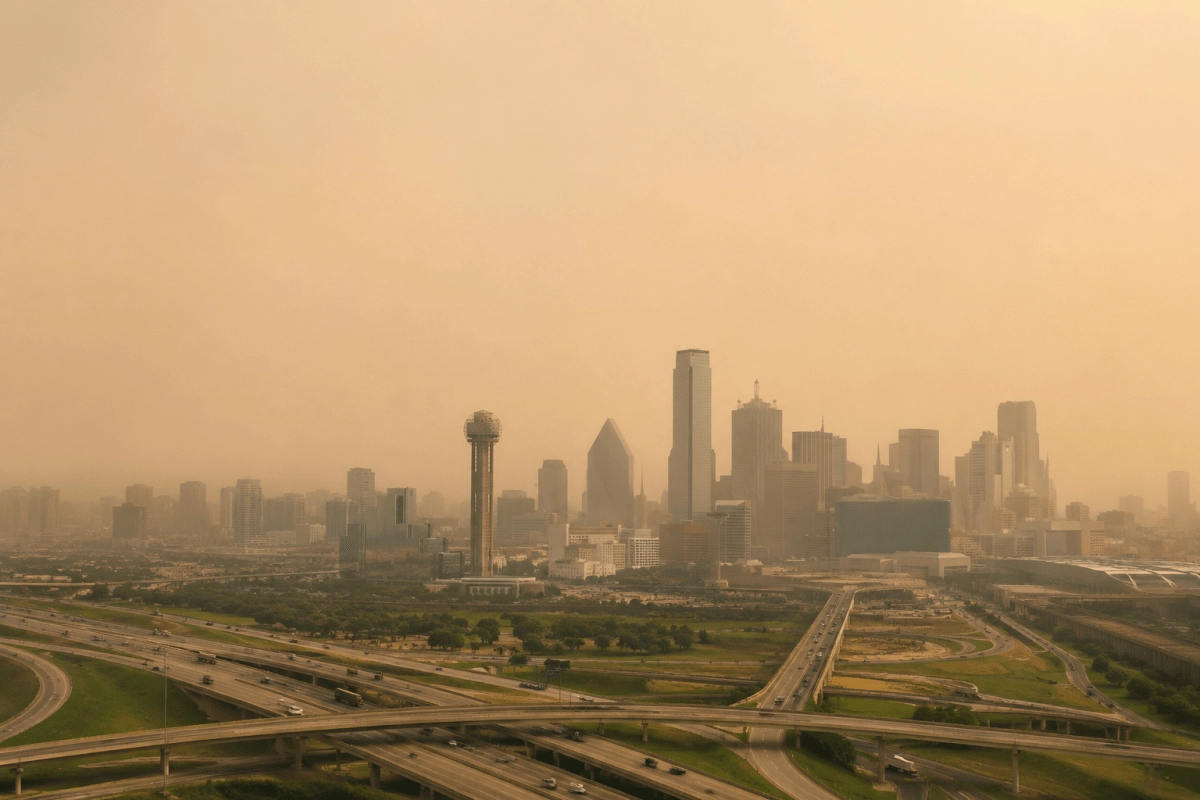

North Texas will have hazy skies this week due to the arrival of a new cloud of dust from the Sahara, a phenomenon that travels thousands of miles from Africa and that each summer can reach the Caribbean, the Gulf of Mexico and several areas of the southern United States.
In the Dallas-Fort Worth area, dust became more noticeable Monday and Tuesday, driven by southerly winds from the Gulf. The most visible effect will be a type of dry haze in the sky, more intense sunsets and a temporary reduction in air quality.
What to expect in Dallas-Fort Worth
According to local weather reports, the Saharan dust will arrive accompanied by high temperatures, with maximum temperatures above 90 °F and some values ​​close to triple digits. Although the dust is not expected to cause a significant increase in temperature, it can worsen the sensation of heavy air and cause respiratory discomfort in sensitive people.
The Texas Commission on Environmental Quality anticipated that fine particles associated with Saharan dust will tend to weaken and disperse during the week, although slight concentrations could remain in several areas of the state. For Dallas-Fort Worth, the fine particle index could be in the “moderate” range.
Who should be more careful
Most people will not have major symptoms. But experts recommend caution for those with asthma, COPD, severe allergies, heart disease, older adults, young children and people who work or exercise outdoors.
The reason is that dust can contain very small particles that can irritate the eyes, nose, throat and lungs. In people with pre-existing respiratory conditions, exposure may cause cough, congestion, difficulty breathing, or worsening symptoms.
What to do to protect yourself?
During hazy times, limit intense outdoor activities, close windows if the air feels stuffy, and use air conditioning with a clean filter when possible.
Those with respiratory illnesses should follow their usual medical plan, have their inhalers on hand if they use them, and check the air quality index before going outside.
A phenomenon that also leaves striking skies
Saharan dust not only brings concern. It can also produce more reddish or orange sunrises and sunsets, because the suspended particles scatter sunlight differently.
Even so, for those who have respiratory problems, the main recommendation is not to be guided only by the appearance of the sky. If there is visible haze and the air feels heavy, it is best to reduce the exposure.