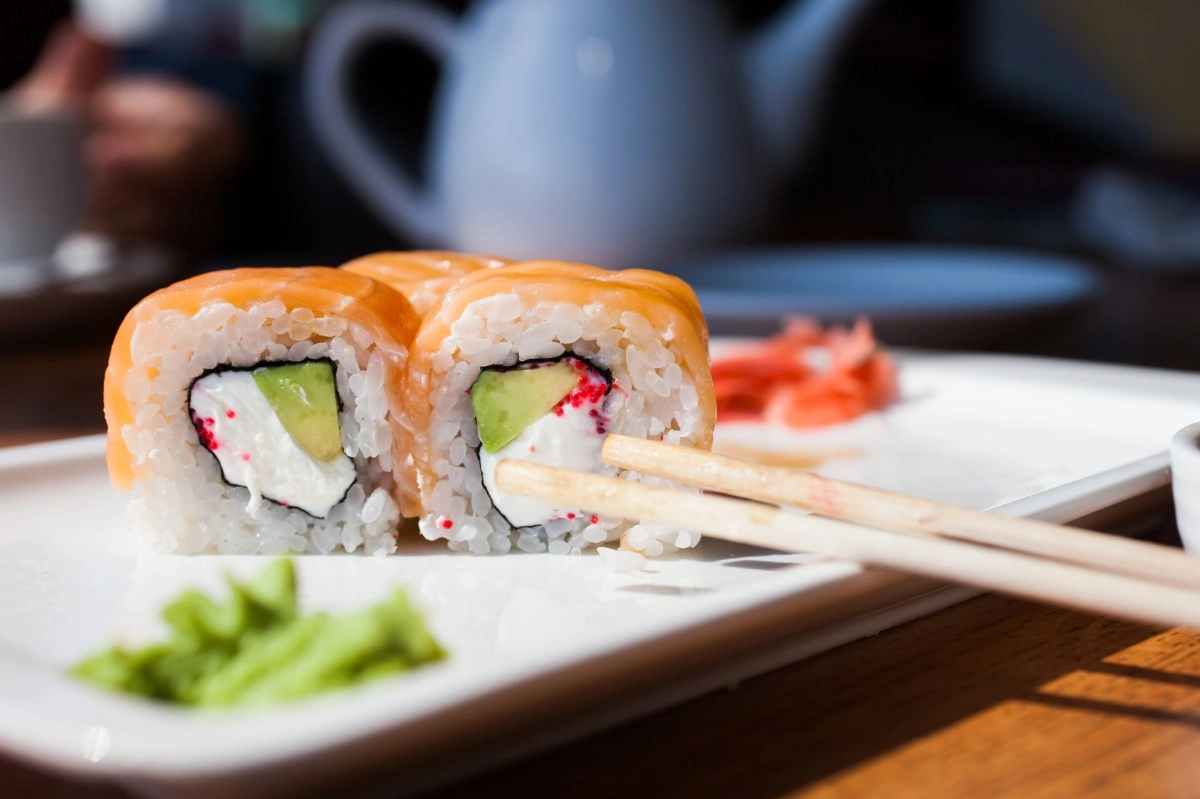

Although it is an exotic food that has gained impressive popularity in Latin America and the United States, sushi is also a delicate food, especially when there are leftover portions.
Unlike other foods, many of its ingredients are fresh or raw, so incorrect or inadequate storage can encourage the growth of bacteria and increase the risk of food poisoning.
If some pieces remain on the plate after a meal, their storage has two keys to preserving their quality: time and temperature.
Read also: Alert for frozen blueberries sold in the US: E. coli outbreak investigated
What is the correct method to store leftover sushi?
Adrienne Seitz, a registered dietitian and certified nutritionist who practices as a dietitian and chef in Sarasota, Florida, recommends not leaving sushi at room temperature for more than two hours.
Ideally, place the pieces in an airtight container or carefully wrap them with plastic wrap to limit contact with air and prevent the rice from drying out. They should then be immediately stored in the refrigerator at a temperature of 4°C or lower.
If the sushi contains raw fish or seafood, such as salmon, tuna or sashimi, it is recommended to consume it within a maximum period of one or two days. On the other hand, rolls prepared with cooked ingredients, such as cooked shrimp or vegetables, may last a little longer, although it is always preferable to eat them as soon as possible to maintain their flavor and texture.
Raw ingredients require special care
Raw fish and shellfish are especially sensitive because they can encourage the development of microorganisms if they remain out of refrigeration for too long. For that reason, it is never a good idea to leave leftovers on the table while the meeting ends or wait several hours before putting them away.
It is also important to maintain the cold chain. If the sushi was transported for a long time without refrigeration, it is wisest not to save leftovers for another day.
Likewise, before consuming refrigerated sushi it is worth checking its appearance and smell. A strong, sour, or ammonia-like aroma is a sign that it should be discarded. The same goes if the fish looks slimy, sticky or too soft.
Rice also offers clues. If it has lost moisture, has mold stains or gives off a strange odor, it should not be consumed.