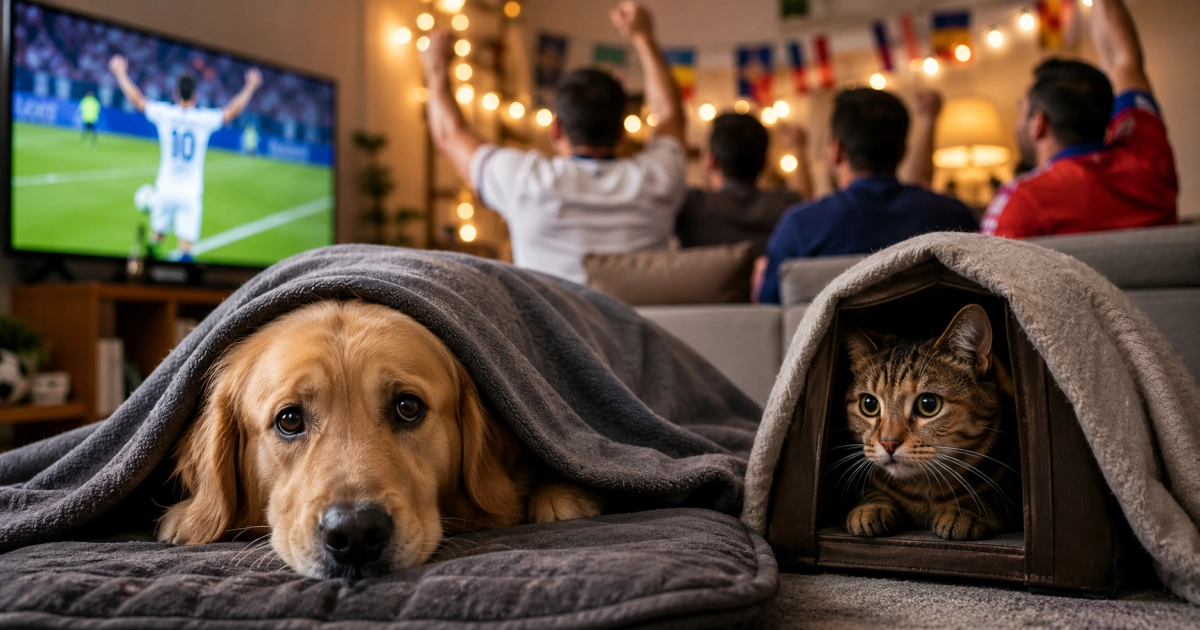

The World Cup is characterized by family meetings that can culminate in a gathering, shouted objectives, hugs, jumps, and broadcast conversations. However, the weather can be a bit less enjoyable for dogs.
Cats and dogs don't realize that a purpose cry is a celebration. For them, a sudden sound, such as loud neighbors at home, honking horns on the street, or lights can seem like a threat. Some conceal. Others tremble, sigh, bark, bark, flee, or freeze.
So, it is also a good idea to make the animals if the World Cup is being watched closely at home. Instead of preventing the animal from being sucked into the noise, the goal is to stop the celebrations.
Make a house available before the game even begins.
Anticipation is the simplest way to calculate. A quiet place away from the television, lecturers, and the gathering place is suggested before the meeting.
That area is house their beds, blankets, products, and, in the case of animals, their litter box. A part, opened provider, box, or corner where the animal is already at ease can also be used. The key is to ensure that you don't practice it as a punishment but as a protection.
Do not pressure the dog to come out if it chooses to cover. Anxiety can be increased by pulling her out of the bed, picking her up, or taking her to the living space to "get used to it. "
Where can I see World Cup games for free in Dallas: large screens and a Latin feel
Near windows, balconies, and doors.
The sound sometimes comes from outside the home during matches. In some neighborhoods, honking, songs, shouting from various apartments, or even fireworks may be playing.
That is why it is crucial to shut the windows, doors, and terraces before the activity. Even if a scared dog tries to run away within a few seconds, it might not.
It is wise to alert customers to be cautious when entering or leaving if there are any. Prevention is essential in apartments with a balcony and homes with a patio: a sturdy scare may cause the animal to act unintended.
Reduce noise's effect
While you can't always control a mother's eagerness for a game, you can cut down on the pet's noise. Opening the curtains, lowering the TV's level a little, avoiding loud speakers, and playing sweet songs in another room can be helpful.
White sound or a low-volume radio is occasionally drown up louder sounds. The goal is not to completely separate the animal, but to loosen unanticipated changes.
Additionally, it assists in keeping a particular program. Even if the animal has left, it should be treated as much as possible if it eats, sleep, or goes for a move at a normal time.
demonstrates your pet's fear.
Each dog reacts in a different way. A dog may breathe, tremble, bark, seek frequent contact, hide, or move. A cat does walk under the bed, stow its food in its mouth, reduced its ears, hide its tail, stop eating, or come across as irate.
It is not wise to contest them in both instances. Anxiety is hardly defiance. The condition only gets worse when the dog is scared, and yelling at it or chasing it.
It is best to speak to him calmly, allow him to roam freely, and let him be where he wants to be. Some animals prefer being by themselves, while some prefer solitude. You must acknowledge that distinction.
As you can see, he is 30 years old and a world record for being the rabbit that defies the passage of time.
Be cautious about the meals at conferences.
Events typically bring leftover food, wine, sauces, chocolates, vertebrae, or left food on the table. That could present a new danger for pets.
Keep unsafe foods, beverages, and containers out of the reach of children. Even if the dog has a particular diet or frequently has digestive issues, customers may be instructed not to give them food that is "out of affection. "
When to consult the veterinarian
If the fear is very intense, if the pet hurts itself trying to escape, if it stops eating for many hours or if each game turns into a crisis, it is advisable to consult the veterinarian.
Some animals with marked anxiety may need a specific plan. There are management strategies, pheromones, gradual training and, in certain cases, medication indicated by a professional. No sedatives or human medications should be given without veterinary supervision.