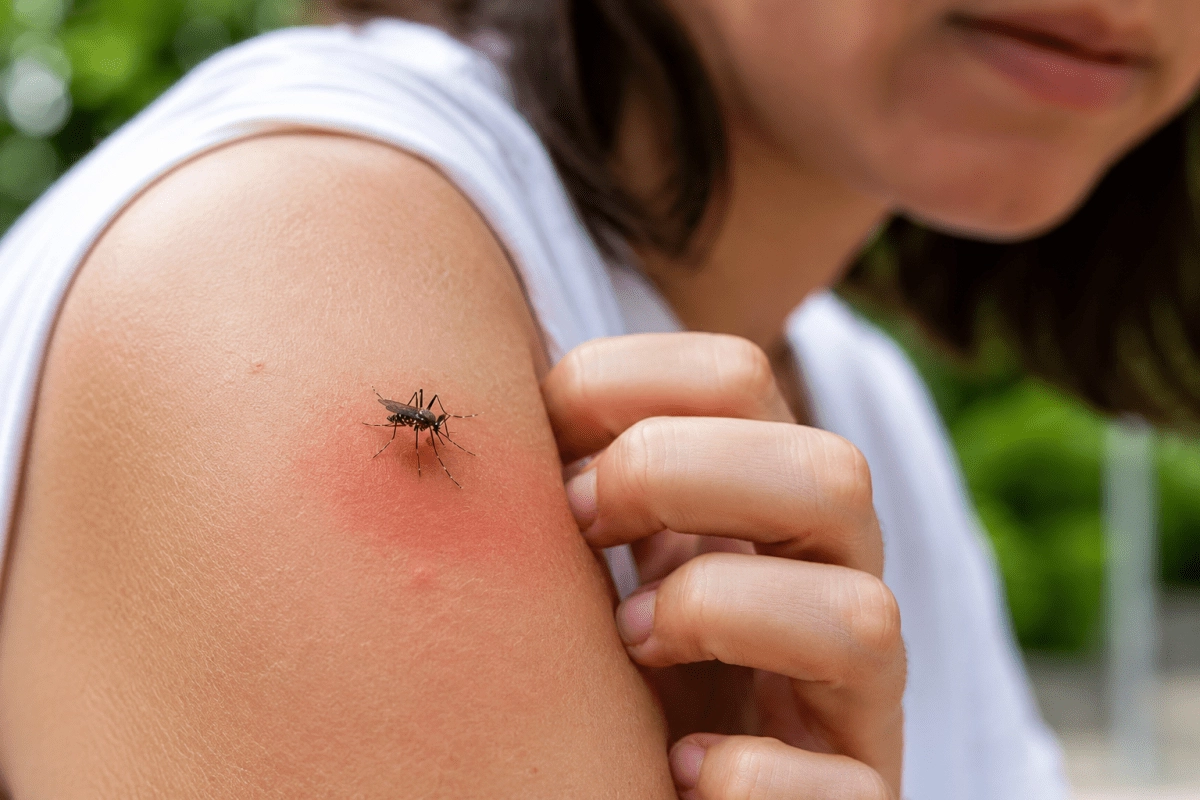

Some people can spend an entire afternoon outdoors without a single bite, while others end up covered in hives in a matter of minutes. The explanation does not have to do with the so-called “sweet blood”, a widespread myth, but with a combination of biological factors that make some people much more attractive to mosquitoes.
Scientists have been studying this phenomenon for years and today know that these insects use a kind of “chemical map” to find their victims. They detect the carbon dioxide that we exhale, the heat given off by our body and substances present in sweat and on the surface of the skin.
A study published in the journal Cell found that the composition of certain fatty compounds in the skin can turn some people into true “mosquito magnets,” a characteristic that can even remain stable for years.
The smell of the skin influences more than you imagine
Each person has a unique combination of bacteria and chemicals on their skin, known as the skin microbiota. This mixture produces odors that are imperceptible to humans, but very easy to detect for mosquitoes.
The researchers observed that people with higher levels of certain carboxylic acids in their skin received many more bites than others. These compounds are part of the sebum that the body naturally produces and vary from one person to another.
Carbon dioxide is one of the main clues
Every time we breathe we release carbon dioxide (COâ‚‚). Mosquitoes can detect it from several meters away and use it to get closer to a potential victim.
For this reason, adults tend to be bitten more than young children, and those who are physically active or breathe more intensely may also attract more mosquitoes for a time.
You can see: CDC urges the population to prevent mosquito bites: this is the reason
Body heat also counts
After locating a person using COâ‚‚, mosquitoes use body heat to find where they are going to bite.
Fever, exercise, pregnancy, or simply spending time in the sun can increase skin temperature and encourage bites.
Does blood group influence?
Some studies suggest that people with blood group O could be bitten more than those with groups A or B. However, the evidence is inconclusive and specialists believe that body odor and COâ‚‚ play a much more important role.
Can clothes make a difference?
Yes. Mosquitoes find better those who wear dark clothing, especially black, navy blue or red. Light colors reflect more light and are usually less attractive to these insects.
How to reduce bites
Although you cannot change the body's natural chemistry, you can reduce the risk. The Centers for Disease Control and Prevention (CDC) recommends:
These measures are especially important in summer, when mosquito populations increase and also the risk of diseases transmitted by these insects, such as West Nile virus in the United States.
Remember: it's not a matter of luck. If you feel like mosquitoes always choose you, it's probably not an impression. Science shows that some people emit a combination of chemical signals that make them more attractive to these insects.
The good news is that, although you cannot change this predisposition, you can significantly reduce bites with simple protective measures.