Sunbeds are associated with an increased risk of melanoma and damage to cutaneous DNA
Users of tanning beds have twice as many mutations compared to individuals of the same age with no history of artificial tanning
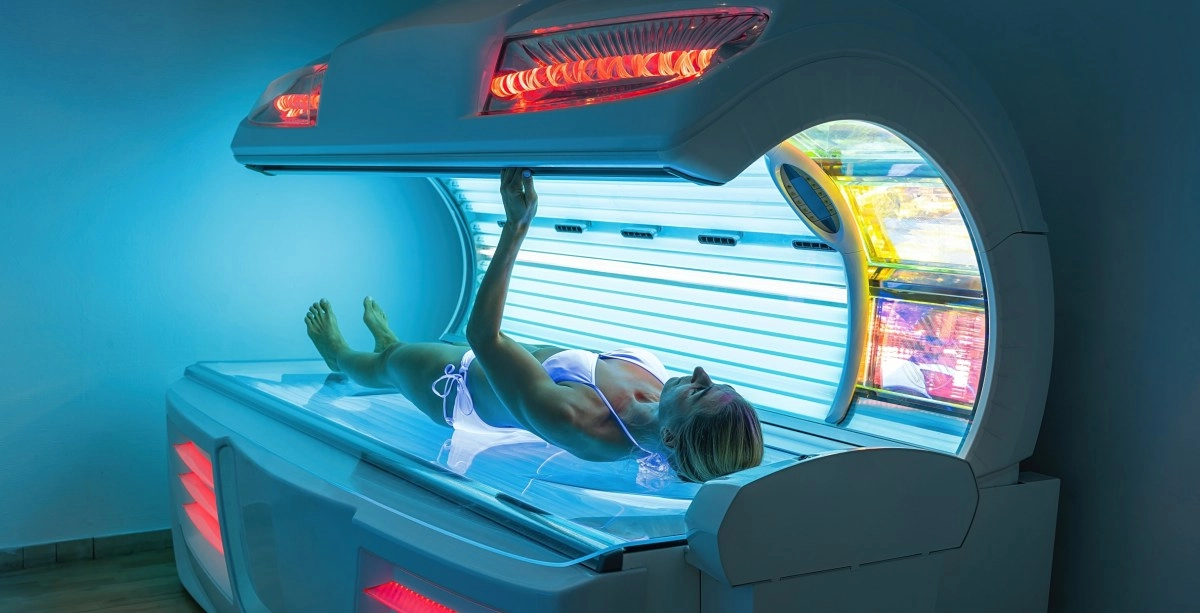
A new study published in Science Advances reveals that the use of tanning beds is associated with an increased risk, almost three times higher, of developing melanoma. This research emphasizes the seriousness of exposure to artificial ultraviolet (UV) radiation, especially among young users. The results show that users of tanning beds have twice as many mutations compared to individuals of the same age with no history of artificial tanning. Young people, in particular, have more mutations than those twice their age, according to the EFE news agency. The study examined the medical records of more than 3,000 users of tanning beds and an equivalent sample of people with no history of artificial tanning. Skin samples from 26 donors were analyzed, and 182 different cells were identified. The analysis of the data, once adjusted for age, sex, history of sunburns, and family history, revealed that the use of tanning beds was “associated with a 2.85-fold increase in the risk of melanoma,” Northwestern University (USA), one of the institutions involved in the research, stated in a press release. Health Implications and Recommendations: The researchers conclude that limiting exposure to artificial UV radiation is essential. Hunter Shain, co-author of the study, emphasizes that preventing skin mutations should be a priority and underscores the need for clear information about the risks of tanning beds. “We can't reverse a mutation once it occurs, so it's essential to limit the number” that accumulates, and “one of the simplest ways to do that is to avoid exposure to artificial UV radiation,” said Shain, of the University of California. Based on the findings, potential users of tanning beds are advised to seriously consider the health implications. Prevention remains the best strategy for reducing the risk of melanoma and other skin mutations.
Impact according to skin type
The use of tanning beds increases the risk of all types of skin cancer (basal cell, squamous cell, and melanoma) in any skin type, but the absolute risk is clearly higher in fair skin that burns easily.
Tanning beds emit UVA and UVB radiation in amounts similar to or even greater than those of the midday sun, causing direct damage to the DNA of skin cells and accelerating skin aging. This radiation has been classified in the highest cancer risk category (“carcinogen to humans”) by the IARC and is associated with an increased risk of melanoma and other skin cancers.
Population studies show that those who use tanning beds have about a 70–75% higher risk of melanoma than those who never use them, with even greater risks with devices that emit primarily UVA radiation.
A dose-response relationship is also observed: the greater the number of sessions per year and the younger the age at which use begins (adolescence/young adulthood), the greater the risk of basal cell carcinoma, squamous cell carcinoma, and melanoma. Skin types and sensitivity. The Fitzpatrick scale classifies skin from type I (very fair, always burns, never tans) to type VI (very dark, never burns). Type I–II skin burns easily and is very sensitive to UV radiation, so the relative and absolute risk of sunbed-induced cancer is especially high; type III–VI skin has more melanin and burns less, but still suffers internal cell damage and can develop cancer and pigmentation disorders. In fair-skinned individuals (Fitzpatrick I–II), the combination of easy burning, reduced repair capacity, and a history of burns greatly increases the likelihood of melanoma and other cancers with any intense artificial exposure such as sunbeds. In darker skin tones (III–VI), rapid tanning can give a false sense of safety: the relative risk also increases with the use of tanning beds, although the total number of cases is lower, and tumors are often detected later, worsening the prognosis.
Key Recommendations
Artificial Tanning Alternatives
Safer alternatives to artificial UV tanning, such as tanning beds or booths, exist that avoid risks such as skin cancer and premature aging.
Self-tanners. Self-tanners in cream, spray, or lotion form contain dihydroxyacetone (DHA), which dyes the top layer of skin without UV radiation, offering a natural effect that lasts up to 10 days. They are safe for long-term use, non-toxic, and do not disrupt natural melanin.
Professional sprays. Salon spray treatments apply DHA- or sugarcane-based solutions evenly and in a customized way, lasting up to two weeks without UV exposure. It is recommended to wear mouth, eye, and nose protection during application.
Other safe options:
You may also be interested in:
This news has been tken from authentic news syndicates and agencies and only the wordings has been changed keeping the menaing intact. We have not done personal research yet and do not guarantee the complete genuinity and request you to verify from other sources too.