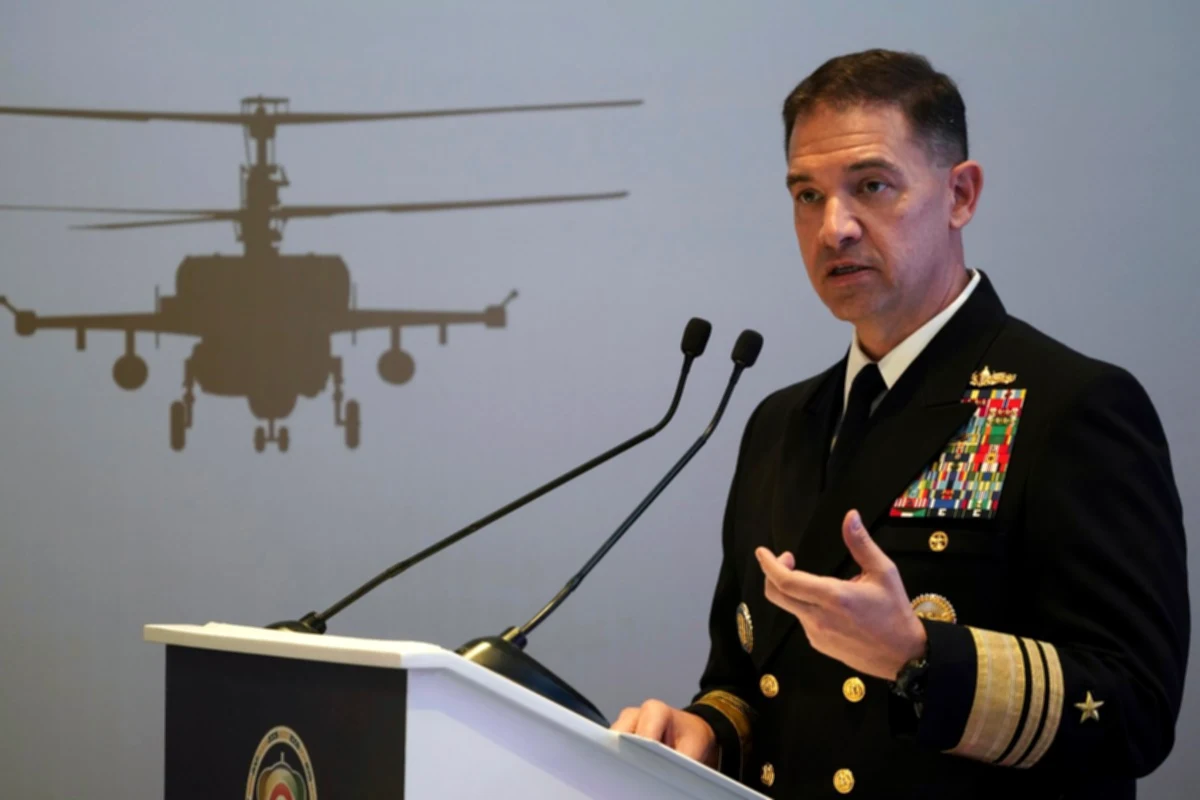

Admiral Brad Cooper, head of the US Central Command (CENTCOM), visited the USS Abraham Lincoln, as questions mount in Washington about the living conditions, mental health and extended deployment of the approximately 5,000 sailors and Marines who remain aboard the aircraft carrier. The visit occurred after family members of military personnel and media reports noted alleged problems aboard the ship, including attempts by some sailors to jump overboard and poor conditions in living and feeding areas.
The Lincoln has been deployed in the Middle East for more than 260 days and participates in US operations related to the war against Iran. Initially, the crew hoped to return to port in May, but the mission was extended. CENTCOM reported that Cooper visited the aircraft carrier as part of a 10-day tour of the region, which also included Bahrain, Iraq, Israel, Jordan, Saudi Arabia and the United Arab Emirates.
“This deployment will go down in history as one of the most intense and momentous of the modern era,” Cooper said in a statement. The command noted that the Lincoln strike group conducted thousands of combat sorties as part of Operation Epic Fury, in addition to participating in regional security missions and the US naval blockade against Iran.
Lawmakers demand answers about crew health
The aircraft carrier situation has prompted calls from Democratic lawmakers for additional information from the Pentagon and Navy.
Sen. Ruben Gallego, D-Ariz., joined Sen. Richard Blumenthal of Connecticut in calling for an official, bipartisan visit to the ship. Other lawmakers sent a letter to Acting Secretary of the Navy Hung Cao asking for details about the military's physical and psychological conditions.
Cao announced that the Lincoln will soon return to San Diego as part of a planned rotation and will be replaced by the USS George Washington. The official has rejected the idea that reports on the conditions of the aircraft carrier adequately reflect the situation of the military.
According to Cao, a small number of mental health-related cases were treated and there were no deaths. He also maintained that those responsible adjusted the feeding when there were supply problems and restricted some calls to family members due to the level of operational threat.
President Donald Trump and Defense Secretary Pete Hegseth have denied that there is an increase in suicide attempts on board and have questioned reports about the ship's conditions.
Former military chief believes the truth is “somewhere in between”
Retired Admiral Mike Mullen, who led the Joint Chiefs of Staff from 2007 to 2011, said Sunday that he is “very concerned” about the versions about the Lincoln, although he considered that the reality could be found between the different versions. “I think the truth is probably somewhere in the middle,” Mullen said during an interview on ABC News’ “This Week.”
Mullen attributed part of the difficulties to the lengthy deployment and lack of secure U.S. facilities in the region. He noted that attacks on bases in Bahrain, Kuwait and the United Arab Emirates limited options for crews to rest on the ground. “You basically end up staying offshore,” he explained.
The former military chief also questioned whether the United States has enough aircraft carriers to sustain prolonged deployments of this type. He recalled that during his service he defended having a larger fleet and maintained that the Navy needs “more” aircraft carriers if the government intends to use them in this way.
As the Lincoln prepares to return to San Diego, attention remains focused on the conditions its service members faced during one of the longest and most demanding deployments in recent years.