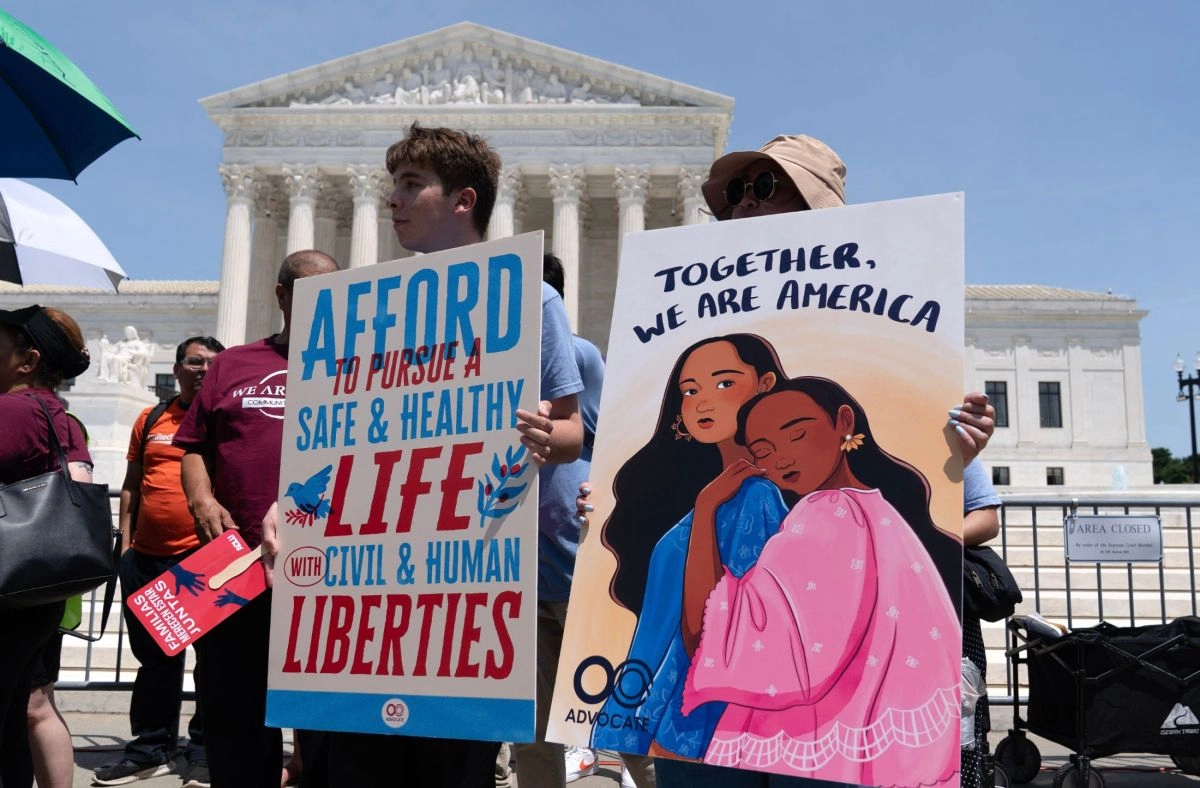

President Donald Trump suffered a setback in his plans to eliminate birthright citizenship for babies born in the United States to undocumented parents by executive order after the Supreme Court ruled against him in a 6-3 vote.
The highest court thus ratified the Fourteenth Amendment to the Constitution, which guarantees that “all persons born or naturalized in the United States and subject to its jurisdiction are citizens of the United States and of the state in which they reside.”
Chief Justice John Roberts wrote for the majority that "citizenship, then as now, was the right to have rights: to participate freely in our political community. The framers of the Fourteenth Amendment expanded that promise to 'every person born free in this land.' Today we keep that promise."
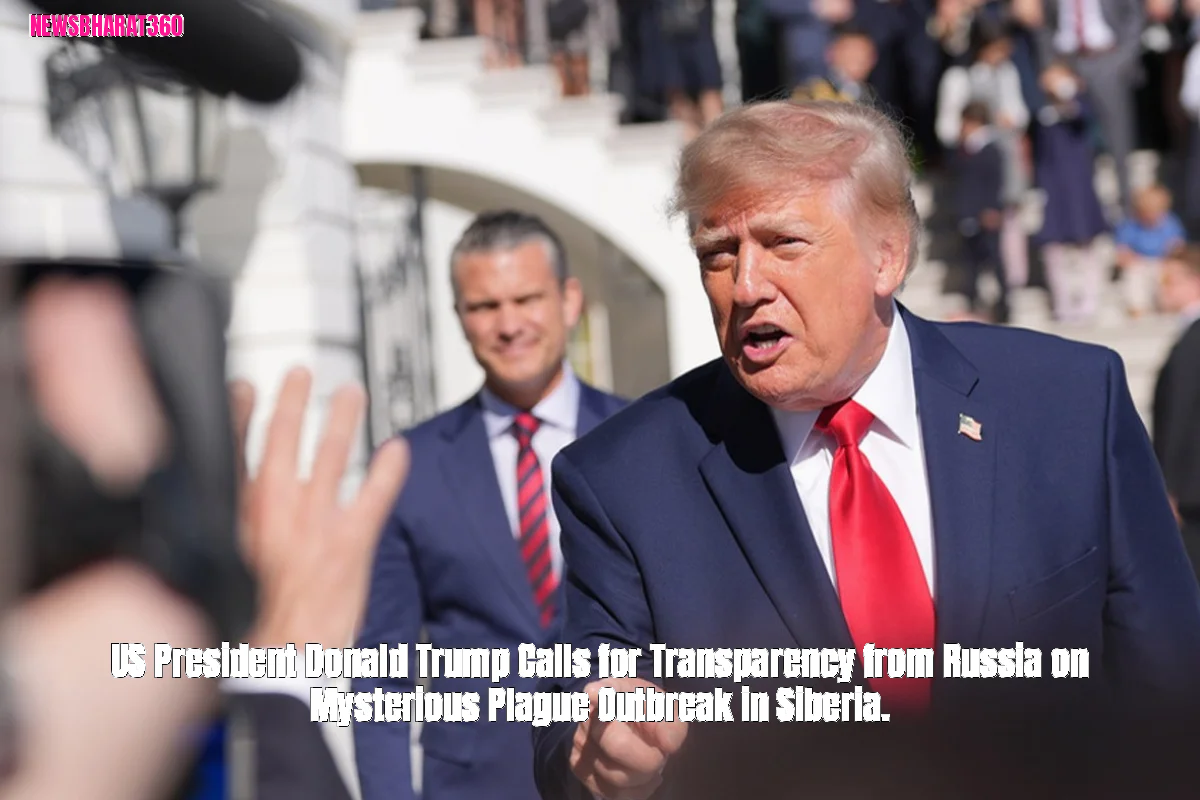
Trump vowed to continue trying to eliminate birthright citizenship through legislation. But from saying to doing there is a long way.
Experts and academics agree on how difficult it is to pass a constitutional amendment. It requires a two-thirds vote of the Senate and the Lower House, and then has to be ratified by three-quarters of the state legislatures. And in the case of citizenship by birth, so far, the consensus is to maintain it.
The ruling was applauded by a coalition of organizations defending civil rights and immigrants, La Opinión reported.
The groups “celebrated the ruling, believing it protects a constitutional principle that for more than 150 years has defined who is an American citizen.”
“In addition to recognizing the judicial resolution, several groups took the opportunity to warn that President Donald Trump's attempt to restrict this right should not be forgotten,” the newspaper reported.
“Every immigrant in our country should remember what Donald Trump tried to do,” said Neera Tanden, president and CEO of the Center for American Progress (CAP).
This was one of the most anticipated rulings of this year due to the enormous legal, legal and humanitarian implications that eliminating birthright citizenship would have at the stroke of a pen, although experts agreed that the chances of Trump prevailing were minimal.
Despite this setback, the Supreme Court has given Trump victories that affect millions of immigrants, such as, for example, the cancellation of TPS for Haitians and Syrians, which has the potential to impact the 1.3 million beneficiaries of the program from 17 countries. Trump canceled protections for 13 of those countries.
His strategy is to delegalize immigrants to leave them vulnerable to detention and deportation as part of his promise to carry out the largest mass deportation in the history of the United States. With that objective as a goal, there has been an uptick in the number of arrests throughout the country.
ICE detained 10,000 immigrants in 5 days, The New York Times reported
“The American newspaper reported that the increase in arrests is due to instructions issued by ICE management for agents to significantly increase their operations and concentrate more resources on the location and capture of people subject to deportation proceedings,” reported La Opinión.
The idea is to make 2,000 arrests daily, according to the agency. “Data from the Times indicates that the operations have allowed arrests in offices where immigrants go to their appointments with immigration authorities, at traffic stops, and on the street,” La Opinión indicated.
“The Americans for Immigrant Justice reports that the majority of immigrant arrests occur in states where ICE has 287(g) collaboration agreements with local and state police, including Alabama, South Carolina, Georgia, Kentucky, Arkansas, Florida, Oklahoma, Texas, among others,” the article added.
An ICE spokesperson stated that as of June 24, “ICE has deported more than 948,000 immigrants, but has detained more than 981,000 undocumented people.” “During the first year of the Trump presidency, more than 3 million undocumented immigrants left the United States due to the Trump administration's policies against illegal immigration, including approximately 2.2 million voluntary deportations,” the spokesperson said, although many of these figures cannot be corroborated.
There are Venezuelan deportees despite the two earthquakes that devastated that country
Democratic Congressman from Texas, Joaquín Castro, condemned DHS's attempts to continue deporting Venezuelans despite the fact that that nation is still in the midst of rescuing survivors and recovering bodies from the rubble.
La Opinión reported that Castro condemned the agency's actions to proceed with the deportation of immigrants detained at the Dilley facility in Texas.
"They woke them up in the middle of the night and sent them to Arizona on their way to Venezuela. It is unthinkable to send children and families who have not committed any crime to a country plunged into chaos by a natural disaster," Castro wrote.
“Finally, the families were returned to Dilley, but they fear being deported at any moment,” added La Opinión.
"Last week, 146 men, women and children were deported to their homes in Venezuela hours before the earthquakes; many of them are suspected of having died. These actions are cruel and un-American. I call on the Trump administration to stop all deportations to Venezuela and close the Dilley mobile prison," Castro said.
Venezuela is one of the countries affected by the cancellation of TPS ordered by Trump and after the two deadly earthquakes, there is a call to extend the program that grants work permits and protection from deportation to immigrants who are already in the United States and whose countries cannot receive them due to wars, political instability or natural disasters.
The US marks 250 years of its independence amid an anti-immigrant climate
“The Coalition for the Human Rights of Immigrants (CHIRLA) called to strengthen democracy through the defense of the rights of immigrants, citizenship by birth and access to asylum, considering that the country is going through a decisive moment for its future,” reported La Opinión.
“Through a statement signed by its executive director, Angélica Salas, the organization highlighted that the commemoration should not only serve to celebrate the founding of the nation, but also to recognize the generations of people who have contributed to building it, especially immigrant communities,” the newspaper added.
Quote of the week:
"The court's decision reaffirms a fundamental promise of America: If you are born here, you are a citizen. A president cannot change the Constitution by executive order. Our brave clients and our legal team join the millions of people across the country who have raised their voices in defense of one of our most precious rights. The constitutional guarantee of birthright citizenship remains strong," said Cecillia Wang, national legal director of the ACLU, who argued the birthright citizenship case before the Supreme Court.