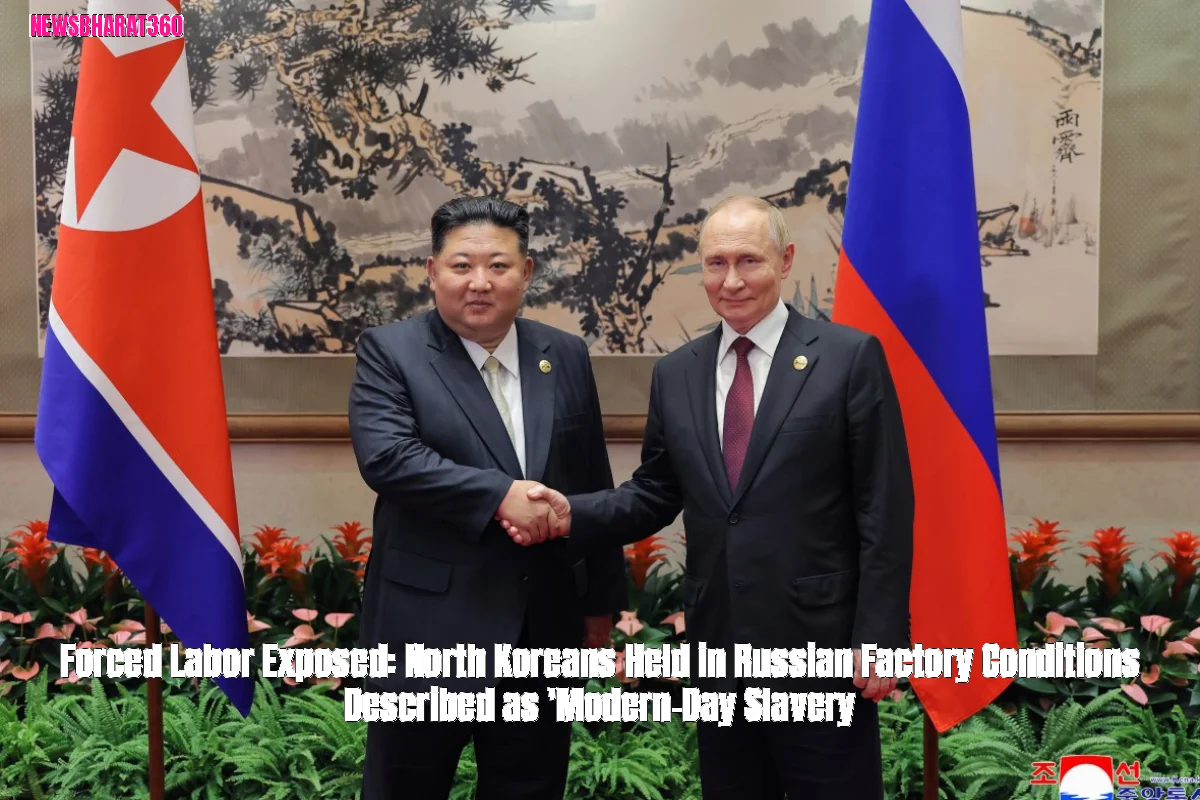

A report released on 14 October 2026 by the Center for Strategic and International Studies and the George W. Bush Institute has identified up to 12,000 North Korean workers in a Russian drone factory as victims of severe human rights abuses and human trafficking.
A recent document has examined the involvement of Russia, North Korea, China, and Iran in the expansion of unmanned aerial vehicle (UAV) production at the Yelabuga plant in Tatarstan.
Russia's ongoing conflict in Ukraine has resulted in a significant influx of drones, with Moscow receiving over 5,500 units per month. Meanwhile, China has emerged as a major beneficiary, supplying Ukraine's adversary with critical dual-use components, such as batteries, internal electronic parts, engines, and navigation systems.
Russia has reportedly enhanced its domestic unmanned aerial vehicle capabilities through the development of the Geran variant, following the receipt of Shahed drones from Iran.
North Korea allegedly retains up to 90 percent of workers' wages, generating significant revenue for the country.
Dan Pinkston, a professor of international relations at the University of Troy, notes that the geographical location of the four countries in question renders an international ban impractical.
Russia and North Korea have been found to be in non-compliance with UN Security Council Resolution 2397, adopted in December 2017. This resolution mandates that all UN member states repatriate North Korean workers within a two-year timeframe.
A recently obtained document alleges that the North Korean government is engaging in the practice of forced labor, whereby citizens are being sent to work in other countries under agreements between states. The regime reportedly maintains control over its citizens' ability to leave the country and retains a significant portion of their wages, effectively exploiting them as a workforce.
North Korea's treatment of its citizens would be tantamount to enslavement, with the regime allegedly exploiting its own people for its own gain, according to Song Young-Chae, a member of the World Coalition to Stop Genocide in North Korea.
The situation in Yelabuga is dire, and it is not an isolated incident. According to Song, there are also construction workers in occupied Ukrainian territories, North Koreans in makeshift camps, and tens of thousands of soldiers who have been deployed to fight and potentially lose their lives on the Ukrainian front.
North Korean nationals are forcibly sent to Russia, where they are subjected to inhumane working conditions and denied basic freedoms. Upon arrival, they are permitted to retain only a small portion of their earnings, effectively rendering them indentured servants.
The key challenge, according to him, lies in developing an effective strategy to combat human trafficking.
Russia and China, as permanent members of the UN Security Council, are in a unique position to facilitate the transportation of workers across their shared border, unimpeded by external intervention. However, despite their obligations to uphold UN resolutions on the matter, the two countries appear to be disregarding these commitments, leaving limited avenues for action.
A human rights organization led by Song has launched an initiative to form a global alliance of nations and organizations committed to worker protection, despite expressing cautious optimism about the endeavor's prospects.
Pinkston expresses concern over the potential rise of a dominant force that threatens to undermine the post-World War II framework for upholding the rule of law and protecting human rights.
The individual firmly believes that the arms produced in Yelabuga will play a significant role in realizing these objectives.
The UN Security Council's resolutions on North Korean labor, arms proliferation, and the sale of dual-use technologies are largely being disregarded, effectively rendering the UN sanctions regime ineffective.
Both Russia and Ukraine have gained valuable insights into the modern battlefield as a result of their ongoing conflict, according to Pinkston, who notes that drone technology has been a pivotal advancement in this regard.
North Korea has been closely monitoring the advancements in drone technology, with officials observing the recent march and adapting these capabilities for their own military purposes. This development poses significant concerns for the South Korean Armed Forces, which must also contend with a new generation of drones from the North, further complicating their defensive strategies.
A joint report has called on the US State Department to take action to prevent the dispatch of North Korean workers to Russia and the spread of weapons. The report recommends that the US collaborate with other nations to dismantle human trafficking networks and impose sanctions on those responsible.
The organization is calling on the United Nations to conduct a multilateral investigation into the Yelabuga complex, with the aim of documenting and verifying the reported abuses that have occurred.
The report suggests intensifying pressure on foreign businesses operating within the Yelabuga Special Economic Zone to relocate. Specifically, it is known that multiple European companies and at least one American firm have a presence in the area.
(Vt and CP)
To ensure uninterrupted access to our news content, we recommend that you designate Deutsche Welle as your preferred news source on Google. To do so, please visit our website and check the box or click the DW.com button to prioritize our verified news in your Google preferences.