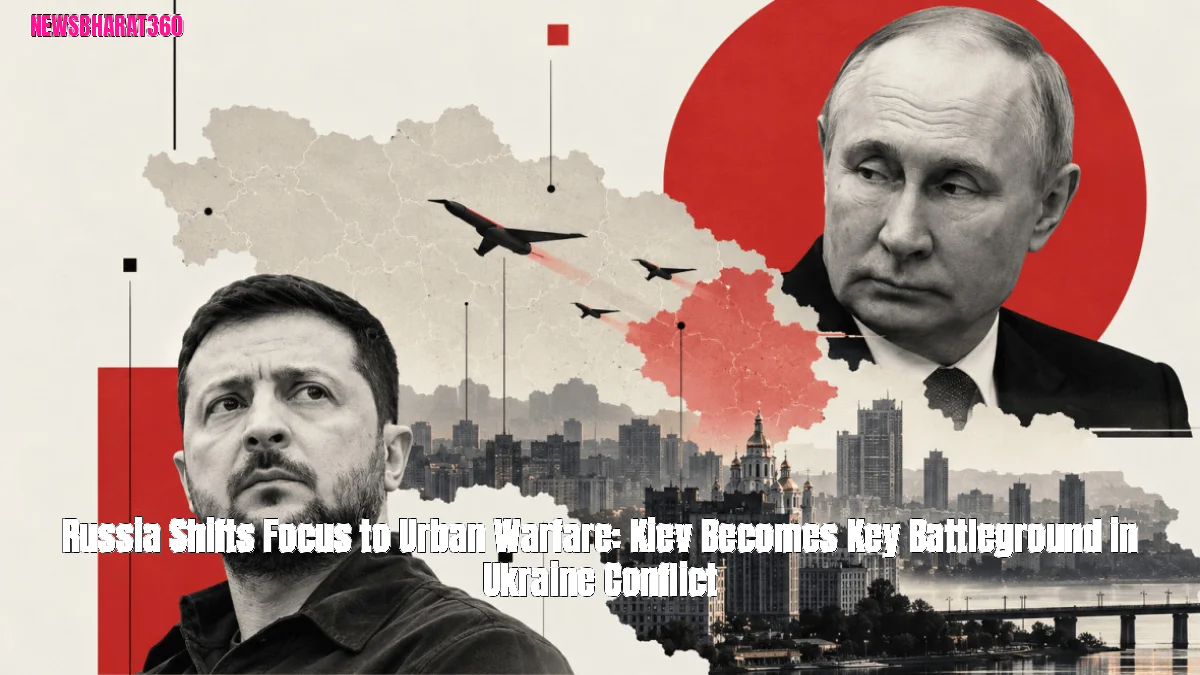

Ukrainian soldiers stationed at the front lines are now reversing their usual practice, with many contacting their families in Kiev to inquire about their safety, a stark contrast to the typical scenario where family members would be reaching out to confirm their loved ones' well-being.
Kyiv is increasingly being viewed as a city situated at the forefront of the conflict, according to Peter Dickinson, a local resident who has shared his perspective with the BBC World Service.
The situation has escalated to a point where it poses a significant threat, potentially surpassing the dangers faced by cities directly located in conflict zones.
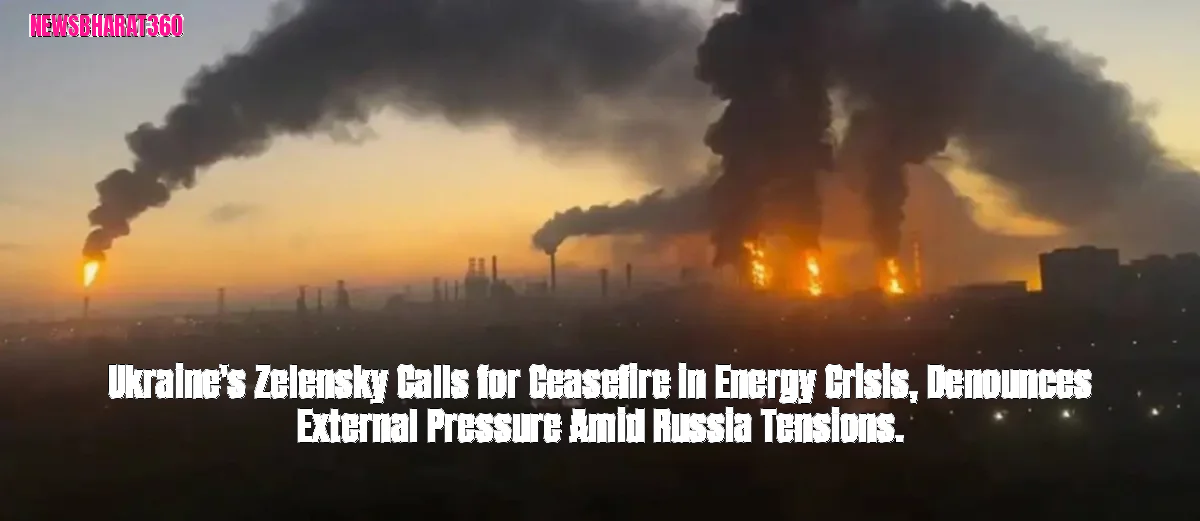
Russia has significantly escalated its aerial assault on Ukrainian cities, particularly targeting the capital, with a surge in missile and drone strikes against civilian infrastructure, including educational institutions, healthcare facilities, hotels, data storage facilities, public transportation, and critical transportation infrastructure.
On September 30, a drone attack resulted in damage to two commercial establishments located near Kyiv. The following day, a drone struck a school building in the Solomianskyi district of Kyiv, with another drone targeting a business center in the Odessa region.
A Russian unmanned aerial vehicle crashed into the premises of a school and kindergarten in the Bucha district, located in the Kyiv region, on October 8.
The Russian Defense Ministry asserts that the targeted civilian structures were utilized for the production or storage of weapons, and that their military operations are focused exclusively on military and defense industry installations.
Ukrainian Parliament Human Rights Commissioner Dmytro Lubinets reported that between January and August, Russian attacks resulted in 15,280 civilian casualties, representing a 55% increase in civilian casualties compared to the same period in the previous year.
Ukrainian President Volodymyr Zelensky reported that a recent Russian attack resulted in the deaths of at least 25 people, including children.
The ongoing conflict in Ukraine has been marked by recurring aerial attacks on its cities since Russia's large-scale invasion began under the leadership of President Vladimir Putin in 2022.
Professor Phillips O'Brien of the University of St Andrews characterized the situation as an intensification rather than a shift.
The recent uptick in attacks on Kiev has a distinct characteristic, according to Dickinson, editor of the Atlantic Council's Ukraine Alert blog, as the city has experienced a sustained period of bombardment day and night.
The situation poses a significant threat to life and has far-reaching consequences, including the disruption of educational institutions and a pervasive sense of uncertainty that persists indefinitely.
The escalation of conflict in Ukraine is evident in the targeted destruction of bridges spanning the Dnieper River, a crucial waterway that bisects the country's capital, serving as a vital lifeline for the city.
The capital's central business district and government institutions are predominantly located on the right bank of the river, driving a significant portion of the city's economic activity. In contrast, the left bank is primarily residential, with a high volume of daily commuters traveling between the two areas via bridges that support both subway and road traffic.
Russian drone attacks on critical infrastructure are likely intended to disrupt operations rather than cause catastrophic damage, as the drones may not possess sufficient power to destroy large structures such as bridges. The timing of these attacks also provides insight into their objectives.
The group's actions are notable for their timing, as they deliberately carry out their attacks during peak hours, despite having the option to do so at a time that would minimize the risk of harm to human life.
The recent attacks cannot be rationalized as unintended consequences or as targets of legitimate military operations.
Ukrainian President Volodymyr Zelensky stated that Russia's inability to occupy Ukraine has led to a shift in tactics, with the country now engaging in large-scale attacks and massacres. In addition to targeting critical infrastructure, Russia aims to disrupt essential services, including internet and mobile phone networks, as well as vital institutions such as hospitals, nurseries, schools, and universities, ultimately forcing civilians to abandon their cities.
According to intelligence and sources with close ties to Putin, it is alleged that in early September, the Russian leader expressed a sentiment that the existing norms and conventions no longer apply.
Ukrainian President Zelensky reportedly believes that Russian President Putin's intentions are to render Ukraine uninhabitable for civilians, particularly as winter draws near.
In a region where temperatures frequently plummet to as low as -20°C, the disconnection of nuclear power plants from the power grid poses a significant threat to the availability of essential services such as heating and water in urban areas.
Ukrainian government officials are facing intense diplomatic pressure, with the aim of securing a deal that aligns with Russia's interests.
Ukrainian cities, particularly Kiev, are expected to be the primary focus of an impending attack. However, it is also anticipated that other major cities, including Odessa, Leopolis, Dnipro, and Kharkov, may be targeted, as the aggressors appear to prioritize striking civilian populations whenever feasible.
Russian forces are reportedly seeking to undermine the morale of Ukrainian civilians by encouraging them to evacuate their cities, a move that could have significant psychological and social implications for the population.
The government's inability to safeguard its citizens has led to a perception of powerlessness, the official stated, also suggesting that Russia is optimistic that Ukraine will be more inclined to surrender due to the current circumstances.
Ukrainian Foreign Minister Andrii Sybiha stated that Russia is employing a deliberate strategy to target areas where civilians typically congregate, with the goal of inflicting maximum damage, spreading fear, and exerting pressure on Ukrainian society.
In addition to the primary objective, there is a secondary goal that also warrants consideration.
Dickinson emphasized that a country's ability to manufacture and produce essential defense equipment is contingent upon the availability of its workforce.
The government's financial stability is heavily reliant on the presence of operational businesses, which contribute significantly to its revenue through tax payments.
Ukraine incurs approximately $45 million in losses every hour that anti-aircraft warnings necessitate the closure of its airspace, as stated by Oleksandr Kravchenko, the country's Minister of Economy and Environment.
Economic activity would be severely disrupted if individuals were confined to a bunker.
Ukraine is facing a pressing need for additional financial support from its international partners.
Russia's escalation of attacks is attributed in part to its ability to do so, according to Dickinson.
Ukraine's Patriot air defense systems are facing a critical shortage of ammunition, leaving the country with limited capabilities to counter ballistic missile threats, which the systems are uniquely equipped to address.
The United States is the primary producer of these items in substantial quantities, and a significant portion of the stockpiles has been utilized by the US and its allies in the Middle East in the conflict against Iran.
Ukrainian military analyst Oleksandr Kovalenko notes that the enemy has not decreased production of any missile type and has not depleted its stockpiles.
Russia has been employing a recently introduced class of jet-powered drones since mid-August, posing a significant challenge for Ukraine's military capabilities.
Drones operating at elevated altitudes and equipped with advanced navigation systems have significantly enhanced their evasion capabilities, making them more challenging to intercept compared to their helicopter-powered counterparts.
According to Ukrainian Air Force spokesman Yuriy Ihnat, Russia launched a significant drone assault against Ukraine in August, deploying a total of 2,850 unmanned aerial vehicles.
Eric Schmidt, a former Google director and major foreign investor in Ukraine's defense industry, acknowledges that his team underestimated the pace at which Russia would deploy advanced drones.
Russian officials have successfully guided a drone to the central window of the SBU headquarters, highlighting the capabilities of such systems.
Ukrainian President Volodymyr Zelensky reported that the effectiveness of intercepting jet-propelled drones has been approximately 50-55%, with instances reaching up to 60% due to the efforts of Ukrainian aviation.
Ukraine is developing new strategies to counter the ongoing missile attacks, with reports indicating progress in this area. However, Russia's relentless barrage of missiles poses a significant challenge, with even a high success rate of intercepting 80% of incoming missiles still allowing a substantial number to breach Ukraine's defenses nightly.
Ukraine's ability to counter the current threat is likely to take at least a month or two, according to a realistic assessment.
Schmidt noted that at least five Ukrainian companies have created solutions and are currently conducting testing.
According to Dickinson, the ongoing conflict has been characterized by a technological arms race from its inception, with neither side able to gain a significant upper hand. The challenge of developing and utilizing advanced technology extends beyond its creation, requiring the ability to manufacture it on a large scale and equip individuals with the necessary skills to effectively employ it.
Russia's military efforts against civilians have been linked to a corresponding lack of strategic gains on the battlefield.
Moscow's initial expectations of a swift conflict have been upended, with Russian forces now engaged in a prolonged battle for control of villages situated mere kilometers from the site of the February 2022 invasion. Russian military bloggers have expressed frustration with the situation, describing it as chaotic and inescapable. The conflict has resulted in a significant loss of life, with Dickinson noting that a substantial number of casualties occur daily.
A retired Australian general and expert from the Center for Strategic and International Studies, the Lowy Institute, and the Institute of Modern Warfare at the U.S. Military Academy has stated that Russian President Putin appears to be attempting to convey a sense of Russia's advancement.
According to O'Brien, Russia's reluctance to progress and its struggling economy have led to a focus on airstrikes as a means of exerting pressure. However, he notes that this approach does not reflect a comprehensive strategy reliant on the inherent advantages of war.
Russian President Vladimir Putin will take all necessary measures to achieve victory in the conflict, according to O'Brien, with two key limitations. Putin is unlikely to resort to nuclear warfare, given China's opposition as a close ally, and he also does not anticipate employing chemical or biological weapons against an entire city.
Families in Kyiv are currently weighing their options, with no large-scale exodus having occurred to date; however, they are contemplating potential relocation ahead of the winter season.
North Dakota State Representative Rick Dickinson characterizes the actions as terroristic, citing their intent to create a state of unease among the public.
The original article was written in English and translated using an artificial intelligence tool. Prior to publication, a BBC reporter reviewed the translated text to ensure its accuracy.