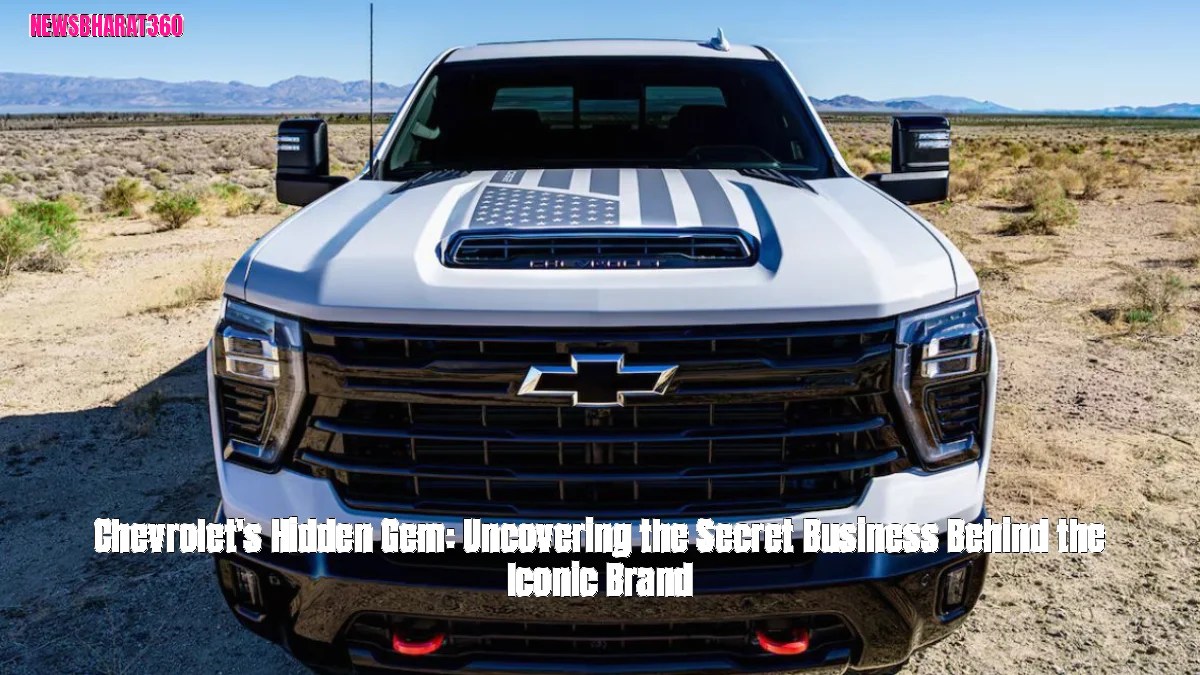

General Motors, the parent company of Chevrolet, has a lesser-known operation that extends beyond the automotive industry. In addition to producing vehicles, the company also contributes to U.S. defense-related projects, utilizing a significant portion of its industrial capacity.
Subaru has unveiled its latest addition to the Forester lineup, the 2027 Forester Wilderness Hybrid, a highly anticipated model that combines the brand's renowned all-wheel-drive capabilities with a more environmentally friendly hybrid powertrain. The new Forester Wilderness Hybrid is set to hit the market in 2027, offering a unique blend of off-road prowess and eco-friendliness.
General Motors Defense, a division of General Motors, focuses on creating solutions for military purposes. Its work encompasses specialized mobility, engineering, and the production of components for defense-related equipment.
The 2027 Nissan Rogue Hybrid is set to feature a powerful engine, producing 225 horsepower, and is expected to deliver fuel efficiency of up to 38 miles per gallon.
Lockheed Martin's industrial experience is linked to the development of PAC-3 MSE interceptors, which are utilized by the Patriot system to counter air-based threats.
General Motors is not the primary manufacturer of the complete Interceptors, but rather contributes to their production by providing key structural components and chassis that safeguard the electronic systems within these vehicles.
The company can utilize its established expertise in the automotive sector to manufacture the products, drawing on techniques such as precision casting and hard metal machining.
General Motors has a significant advantage in manufacturing large quantities of parts, leveraging its well-established facilities and standardized processes that adhere to rigorous quality control measures.
The technology's flexibility can be particularly advantageous in defense applications, where scaling up production of critical components can pose significant logistical hurdles.
General Motors' involvement in the sector is not a new development, as the American automotive industry played a significant role during World War II. During this period, several manufacturers, including those from the automotive industry, shifted their production lines to manufacture vehicles, engines, and other military equipment for the armed forces.
General Motors is leveraging its industrial expertise in a non-automotive sector, enabling the company to capitalize on its engineering and manufacturing capabilities in specialized projects without compromising its vehicle production.
As part of a larger business strategy, GM Defense is being integrated to leverage the company's advanced technology and operational expertise in other sectors.
Lockheed Martin is considering a significant investment in the United States, with plans to allocate between $8 trillion and $9 trillion to expand its domestic production capacity.
The potential disruption in the supply chain could create opportunities for emerging suppliers and large-scale manufacturers capable of producing complex components.