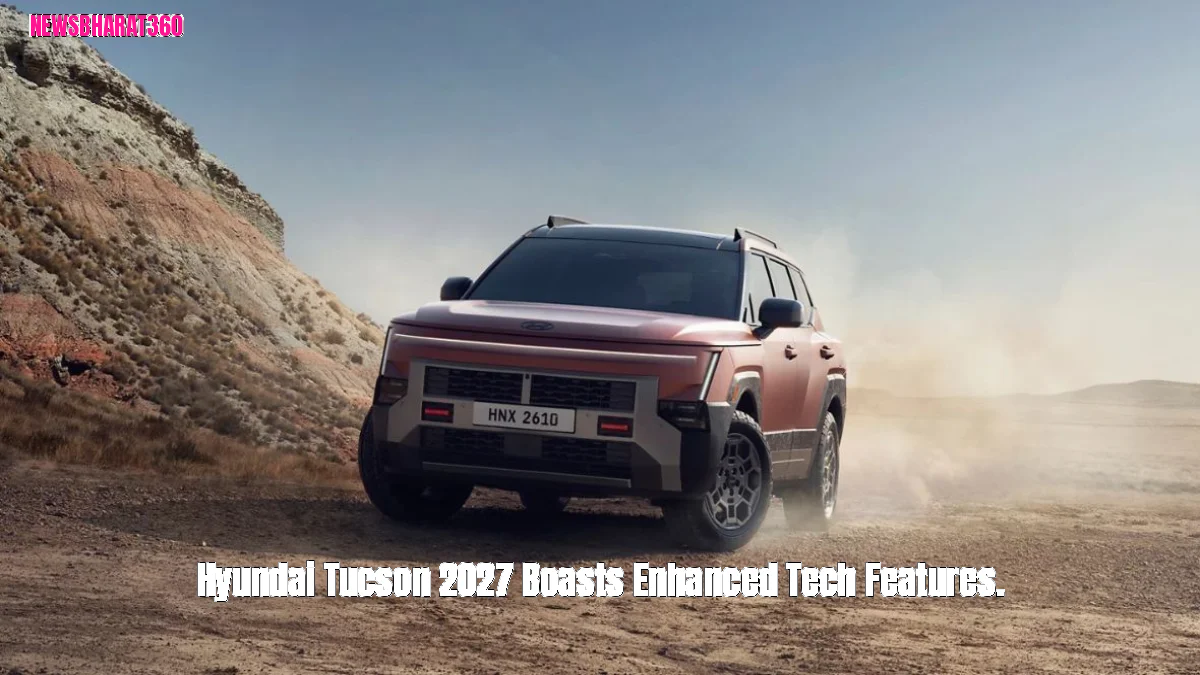

Hyundai has unveiled its revamped 2027 Tucson, a sport utility vehicle designed to compete in a more challenging market segment. The SUV's redesign encompasses not only aesthetic enhancements but also significant upgrades to its dimensions, digital features, and off-road performance capabilities.
General Motors has a business division that operates under the Chevrolet brand, but is rarely highlighted. This division, known as GM Defense, was previously known as General Motors Defense LLC and was established in 2017. The company's primary focus is on producing military vehicles and equipment for the US government. In 2019, GM Defense announced a $50 million contract with the US Army to produce a new family of vehicles, known as the Infantry Squad Vehicle. The contract is part of a larger effort to modernize the US military's fleet of vehicles.
The "Art of Steel" approach results in a more robust visual appearance, characterized by prominent beams and well-defined surfaces.
The annual cost of insuring a BMW can be substantial, often exceeding thousands of dollars.
The extended model measures 4,700 millimeters in length, 1,905 millimeters in width, and 1,685 millimeters in height.
Hyundai's advancements have led to increased accessibility, as the cabin doors can now be opened up to 83 degrees, a 10-degree improvement from the previous 73 degrees. Additionally, the company is introducing new color options that exhibit dynamic effects, with the hue and appearance changing in response to varying light conditions and viewing angles.
The exterior of the H-Edge system features prominent lighting, complemented by the Prism optical groups at the rear. The Micro Pixel Lighting system utilizes 25,600 individual LED pixels to create a wide range of dynamic patterns and animations.
The brand's interior design focuses on a more relaxed atmosphere, featuring sealed surfaces, ample storage, and tactile controls for certain features. The central display screen varies in size, measuring either 17 or 12.9 inches, depending on the specific model.
Pleos Connect, a cutting-edge platform built on Android Automotive OS, has introduced a significant innovation with Gleo AI, a conversational system that enables drivers to interact using natural language, eliminating the need to navigate through multiple menus.
The vehicle is equipped with several comfort-enhancing features, including an Ergo Motion seat with built-in lumbar massage and a Relaxation Comfort system. Additionally, passengers can stay connected and powered up with 15-watt wireless charging capabilities and enjoy a comfortable climate with three-zone air conditioning.
The Tucson hybrid model is expected to achieve fuel efficiency of up to 42 miles per gallon, with a 0 to 60 mph acceleration time of approximately 8.5 seconds. Additionally, a plug-in hybrid electric vehicle (PHEV) version of the Tucson will be available, featuring a 292 horsepower engine and an electric-only range of up to 81 kilometers, with support for a 7.2 kW onboard charger.
Hyundai has catered to drivers seeking a more capable SUV with off-road capabilities by incorporating the Smart Terrain Assist feature. This system assesses traction and slip conditions to optimize performance on challenging terrain. Additionally, a specialized control function enables drivers to maintain a steady speed between 2 and 25 kilometers per hour in difficult off-road situations.
The Tucson XRT PRO variant builds upon the concept, incorporating all-wheel drive, off-road tires, enhanced safety features, recovery hooks, and a 210 mm increased ground clearance for enhanced off-road capabilities.
The North American model has undergone enhancements, including an increase in trailer capacity, which now reaches 3,000 pounds, representing a 1,000-pound improvement over its previous capacity.
The latest vehicle security features include the Intelligent Speed Limit Assist, a sophisticated system that utilizes navigation data to enable advanced cruise control capabilities. This advanced cruise control can anticipate and adjust to various road conditions, including curves, roundabouts, intersections, and slopes.
The vehicle is equipped with advanced safety features, including the ability to monitor the driver's eye activity to identify potential drowsiness and alert the driver to the presence of children or pets in the rear seats.
The Tucson 2027 is scheduled to debut in South Korea by the end of 2026, with subsequent deliveries to North America, Europe, and other markets expected to take place in 2027. Pricing information for the model will be announced at the outset of sales.