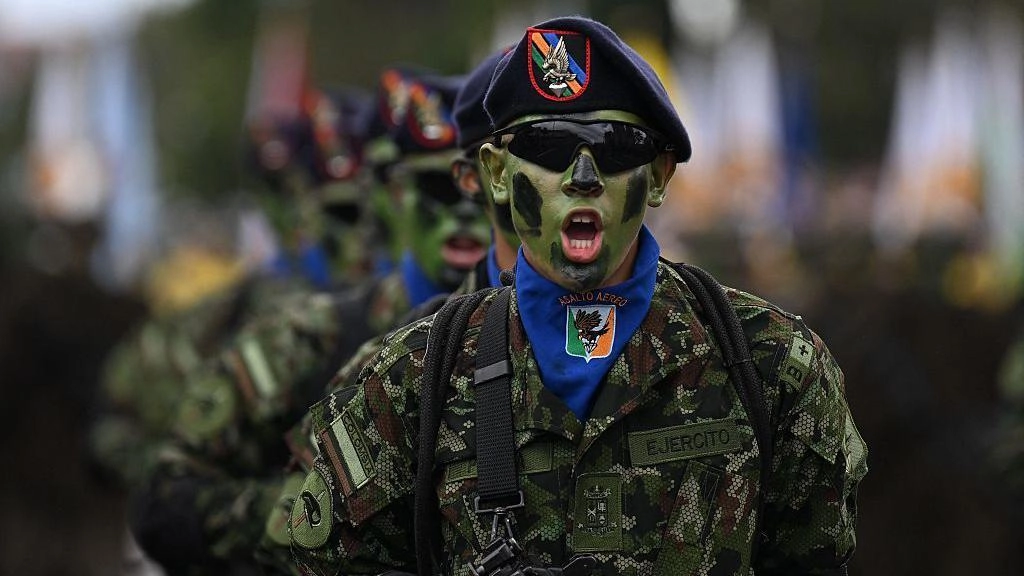

With the government promising negotiations with armed groups to achieve “total peace,” deadly bombings have intensified in recent months.
Analysts say it is a clear shift in the strategy of Colombian President Gustavo Petro to confront guerrillas that are growing in territorial power and number of fighters.
But the cost is high: 15 minors recruited by armed groups have died in various attacks since last August, according to the National Institute of Legal Medicine and Forensic Sciences.
Several were under 15 years old.
“No child or adolescent recruited by armed groups should be affected by military operations,” said the Ombudsman's Office after a recent attack in the department of Guaviare against FARC dissidents in which seven minors died.
Petro maintains that his operations respect International Humanitarian Law, “even regarding the treatment of child combatants,” and questioned a call by Iris Marin Ortiz, the Ombudsman, to suspend bombings of targets where minors may be present.
“If the bombings are suspended, the drug lords will recruit more children, because they will realize that this way they will be protected from greater military risks,” Petro said on the program X.
The president said he was unaware beforehand of the presence of minors in the targets bombed and asked for forgiveness: “The loss of minors is painful, and I will carry that sorrow on my conscience.”
The specter of child recruitment returns to Colombia just as, according to Gerson Arias, an analyst at the Ideas for Peace Foundation, the government is implementing a “carrot and stick” strategy against armed groups due to the lack of results in its fight for peace.
What is known about the deceased minors
According to the National Institute of Legal Medicine and Forensic Sciences, the last 15 deceased minors died in bombings in the departments of Amazonas, Guaviare, and Arauca.
These are areas with a presence of the FARC dissident group, the Central General Staff (EMC), and the structure led by alias “Ivan Mordisco,”which experts point to for evidence of child recruitment.
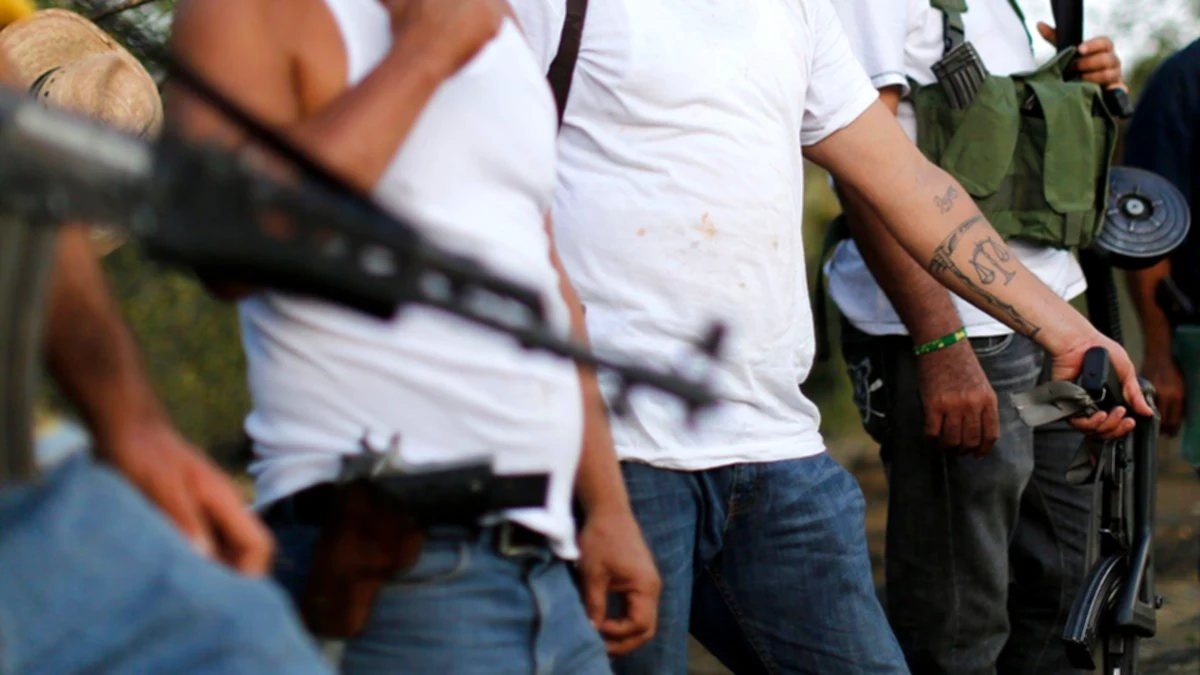
“Armed groups recruit children to reinforce their ranks in their wars for territorial control and have learned how to use them as security rings, exposing them and protecting themselves,” Colombian journalist and researcher Juanita Velez explains to BBC Mundo.
The practice has been carried out in Colombia for decades.
Many of the children come from vulnerable rural areas with little state presence and are forcibly recruited through coercion and threats against their families.“The groups exercise armed governance in territories where they force families to present their children to them in exchange for security and basic services,” Arias points out.
According to local press reports, among the recently deceased are victims who were only 12 years old, and the Institute of Legal Medicine identified both boys and girls among the bodies received.
In the attack in Guaviare on November 10, 19 guerrillas died, including seven minors, making it the deadliest bombing of Petro's government.
It was the operation that raised alarms in the Colombian press and in organizations such as the Ombudsman's Office and the UN regarding the conduct of the Colombian army.
Petro, who in the past criticized the deaths of children in bombings by other administrations, admitted that he has made decisions “at risk,” in response to the Ombudsman's demand that “the principle of humanity must prevail over war.”
Although the president claims not to have known beforehand about the presence of minors in the attacked areas, Velez wonders if there was “a failure in military intelligence.”
“There is too much evidence of recruited minors, especially in the EMC. It is quite likely that minors are falling and will continue to fall in these bombings. There is a contradiction between a president who said he would not use bombings and who now defends them despite the scandals,” Velez analyzes.
Petro's Radical Shift
Petro came to power in 2022 promising a “total peace” in which dialogue would prevail over a hardline approach.
But less than a year before the end of his term, his policies have not yielded the expected results, and armed groups have become more powerful.
When Petro appointed the military officer Pedro Sanchez, as Minister of Defense at the beginning of 2025, replacing lawyer Ivan Velazquez, already sparked speculation in various opinion circles about a change in the fight against the insurgency. He was the first military officer to hold that position in 34 years in Colombia. With the intensification of bombings, Petro's shift seems to be confirmed. The year 2025 is proving to be turbulent in the country.Security has become a central topic in the discussions leading up to the 2026 elections, with crises of violence in areas like Catatumbo and Cauca, coordinated attacks against the security forces, and the assassination of presidential pre-candidate Miguel Uribe Turbay. In this context, “the government is trying to change its policy, although it lacks strategic vision to regain legitimacy and territorial control,” says Jorge Mantilla, PhD in criminology from the University of Illinois at Chicago (USA). “These bombings are one of the most serious scandals regarding the lack of planning by the security forces. I see it as a desperate attempt by the government to show results that don't correspond to its 'total peace' strategy,” the expert adds. Velez also acknowledges the pressure exerted by the Donald Trump administration in the fight against drug trafficking in the region, which includes a vast military deployment in the Caribbean and attacks against suspected drug-trafficking vessels that have resulted in... Dozens of deaths.
“The Colombian government has denied it, but I feel they are under pressure to show results, because of the elections and the pressure from the US, that this is the administration that is fighting drug trafficking the hardest,” the journalist explains.
Several investigations point to the fact that the growth and strengthening of groups like the EMC is related to income from extortion, illegal mining, and drug trafficking.
“Carrot and stick”
Arias defines Petro's new strategy as “carrot and stick.”
On the one hand, he maintains the negotiation tables, but on the other, he attacks forcefully to pressure the insurgents and advance peace.
“The high number of bombings is a tacit admission that the previous approach didn't work,” Arias points out.
The expert questions whether this shift in security is compatible with the fact that More children are dying.
“We have to ask ourselves if these bombings correspond to the new tactics of armed groups and if there are no other alternatives. The political cost of the children killed is too high,” the expert analyzes.
In any case, he concludes that it doesn't seem that the government “has been strong enough in its arguments and demands to advance the negotiations on the recruitment of minors with armed groups.”
Since the pandemic, Mantilla says that some data indicate that forced recruitment may have increased by up to 1,200% and that the figures are underestimated.
Meanwhile, the Ombudsman's Office points to the EMC, a frequent target of army attacks, as the main recruiter identified.