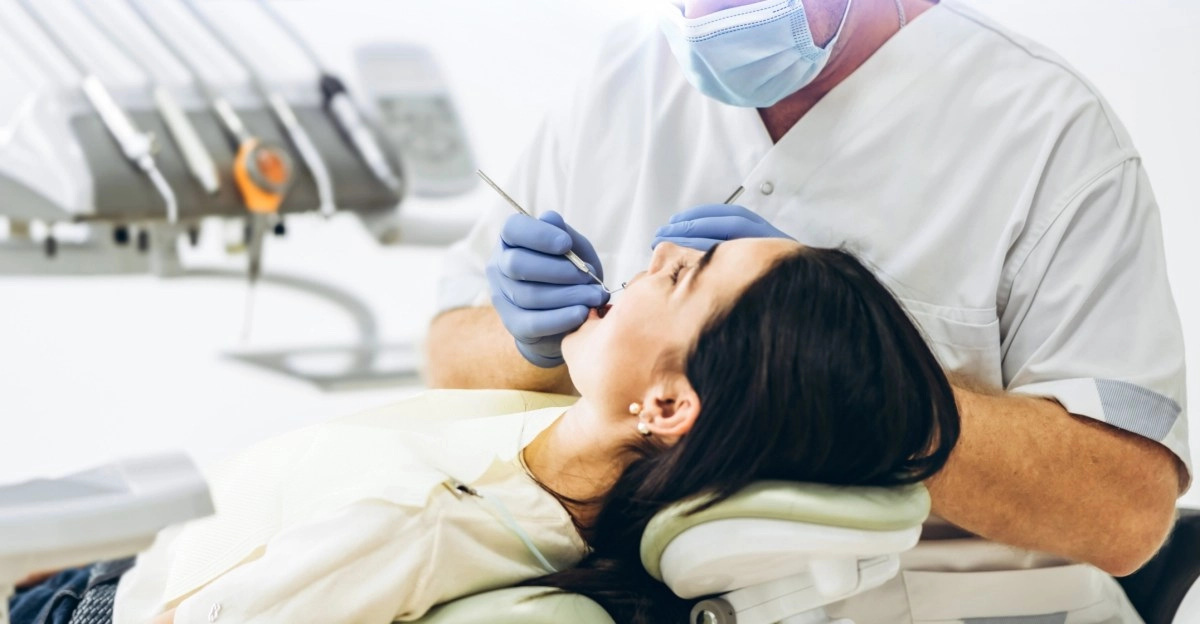

A report from the CareQuest Dental Health Institute, a nonprofit organization dedicated to oral health equity, records that among the most common reasons Americans seek dental care abroad are lack of insurance and the significantly lower cost of dental services compared to their country.
It notes that approximately 69 million adults in the US (about 26%) do not have dental insurance, and cost remains a major barrier to accessing care.
Data collected in seven major industrialized countries revealed that the US is the most expensive place to undergo common dental procedures, such as cleanings, extractions, fillings, crowns and root canals.
In the United States, a visit to the dentist can be as expensive as a minor surgical operation. A dental crown costs around $1,200 to $2,000, an implant can exceed $6,000, and a complete oral rehabilitation costs more than $70,000.
Dental tourism
The CareQuest Institute for Oral Health study is based on a nationally representative survey of 9,450 people last year, and its results confirm what many dentists and travel agencies have already been observing: going to the dentist outside the United States is no longer a rarity.
More than half of those surveyed – 58% – said they had traveled specifically to access lower-cost treatments. The difference in prices is not minor: a root canal treatment that in the US can cost up to $1,500 dollars out of pocket, in Mexico costs less than $350 dollars. A comparative study among seven industrialized countries found that the United States is the most expensive place to receive common dental procedures such as cleanings, extractions, fillings, crowns and root canals; the latter averages $838 in the US, compared to $542 in Canada and $436 in France.
What is striking, according to the report, is that the willingness to travel does not depend on income level or educational status. The study did not find significant differences depending on the educational level, employment status or income of the respondents, which suggests that the problem affects a good part of the American middle class, not just the most vulnerable sectors. Still, almost a quarter of those who traveled did not have dental insurance, and 9% cited lack of coverage as the direct reason for their trip.
An expanding market
The so-called “dental tourism” is not new, but its scale has changed. According to data cited by the Centers for Disease Control and Prevention (CDC), this is the most common form of medical tourism among United States residents, and in 2019, nearly half a million Americans were traveling abroad for this reason. Today the phenomenon moves multimillion-dollar figures: in 2023 the global dental tourism market was valued at $10.9 billion dollars, with projections to continue growing, and some industry estimates anticipate that it could exceed $65 billion dollars by 2033.
Mexico tops the list of preferred destinations for American patients, largely due to its geographical proximity. Border cities receive thousands of visitors each week who cross on foot or by car for a consultation, while destinations such as Thailand, Hungary, Costa Rica, Turkey and Colombia also attract those willing to combine treatment with a longer trip.