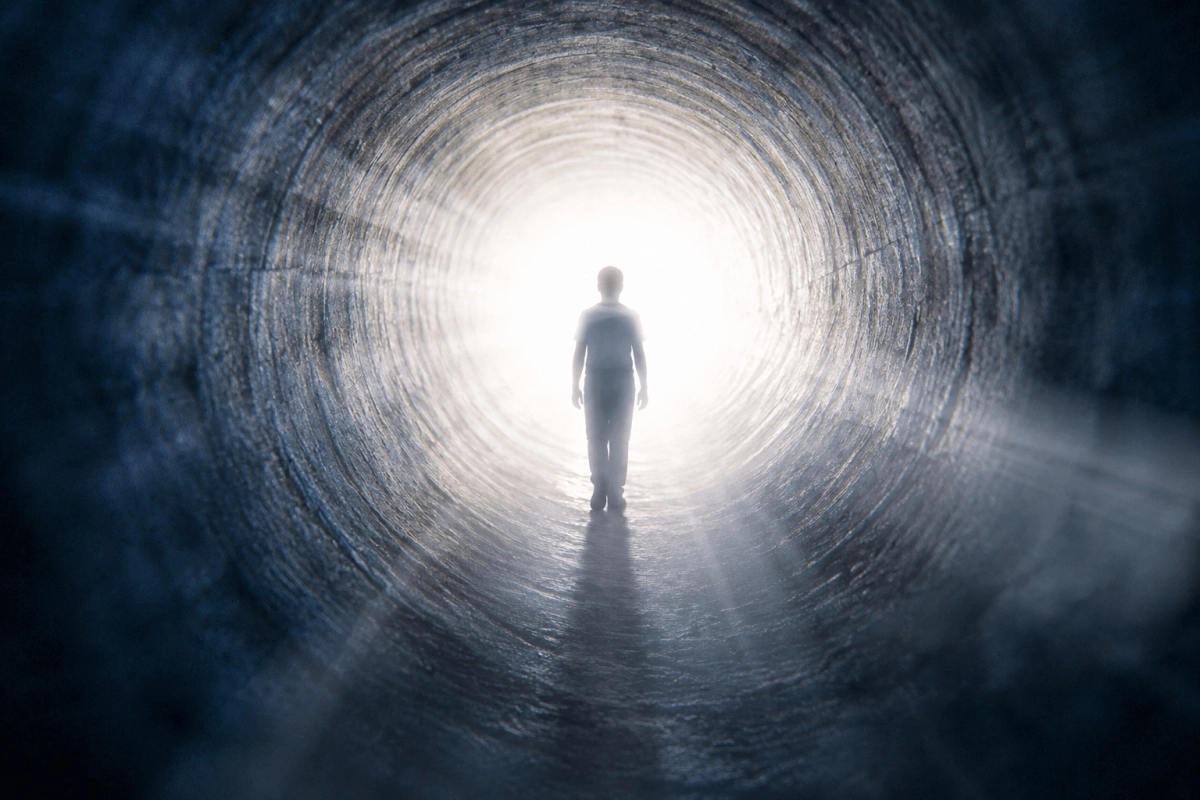

What happens in the last minutes of life? The question has always accompanied humanity, but in recent years it has ceased to be just a religious or philosophical topic and has also entered laboratories, hospitals and studies on consciousness and the mysteries of the brain.
The premiere of the documentary Final Hours: Is Death Really the End?, by EpochTV, once again brought to the fore the so-called near-death experiences, known in English as NDE, for near-death experiences. The production brings together testimonies from people who were clinically dead or on the verge of death and who claim to have had intense memories of that moment: seeing themselves from the outside, passing through a light, reviewing scenes from their life or experiencing a sensation of peace that is difficult to explain.
These stories are not new. What changed is the scientific interest in studying them. For years, near-death experiences were treated as personal anecdotes or spiritual phenomena. Today, researchers from different universities are trying to understand what happens in the brain during cardiac arrest, resuscitation, or extreme states in which consciousness seems to disappear.
Near-death experiences: the science behind the mystery
A scientific review published in 2024 on near-death experiences after cardiac arrest noted that the phenomenon remains poorly understood, but may occur in a significant proportion of survivors. Some prospective studies found that more than a third of resuscitated patients reported some type of near-death experience, although figures vary depending on the method, clinical status, and form of interview.
The testimonies usually share patterns: feeling of separation from the body, perception of an intense light, meeting deceased loved ones, reviewing one's own life, losing the fear of death and profound changes after recovery. For some people, the experience becomes transformative: they change priorities, relationships, spiritual beliefs, or the way they face daily life.
The scientific explanation, however, remains open. One hypothesis is that these experiences could be linked to brain processes under extreme stress: lack of oxygen, release of neurotransmitters, abnormal electrical activity, alterations in regions associated with body perception or memory mechanisms during resuscitation.
Another line of research, more controversial, suggests that certain stories challenge traditional models of how consciousness turns off.
A study led by NYU Langone researchers, known as AWARE-II, found that some patients resuscitated after cardiac arrest remembered lucid experiences and that, in certain cases, patterns of brain activity compatible with conscious processes were detected up to an hour after the resuscitation effort began. The authors did not present this as proof of life after death, but rather as evidence that death may be a more gradual and complex process than previously thought.
That point is key. Near-death experiences alone do not prove what happens after you die. But they do force us to review an idea that is too simple: that consciousness turns off instantly when the heart stops beating. Modern medicine already understands that death is not always a switch, but rather a biological transition that can have stages, especially when there are resuscitation maneuvers.
There is also a human dimension that hospitals are beginning to look at more closely. For many people, returning from a near-death experience can bring relief, meaning, and less fear of dying. But others may be confused, isolated or emotionally affected, especially if they feel that no one believes them or that they cannot talk about what they experienced without being judged.
For this reason, some specialists ask that the topic be approached with clinical seriousness: not as definitive proof of the afterlife, but not as a simple fantasy either. Listening to these stories can help better support survivors of cardiac arrests, critically ill patients, and people going through complex recoveries.
The mystery remains open. Science still cannot answer whether death is really the end of consciousness. What it does begin to show is that the last few minutes—or even the first few minutes after the heart stops—can be much more complex than previously thought.