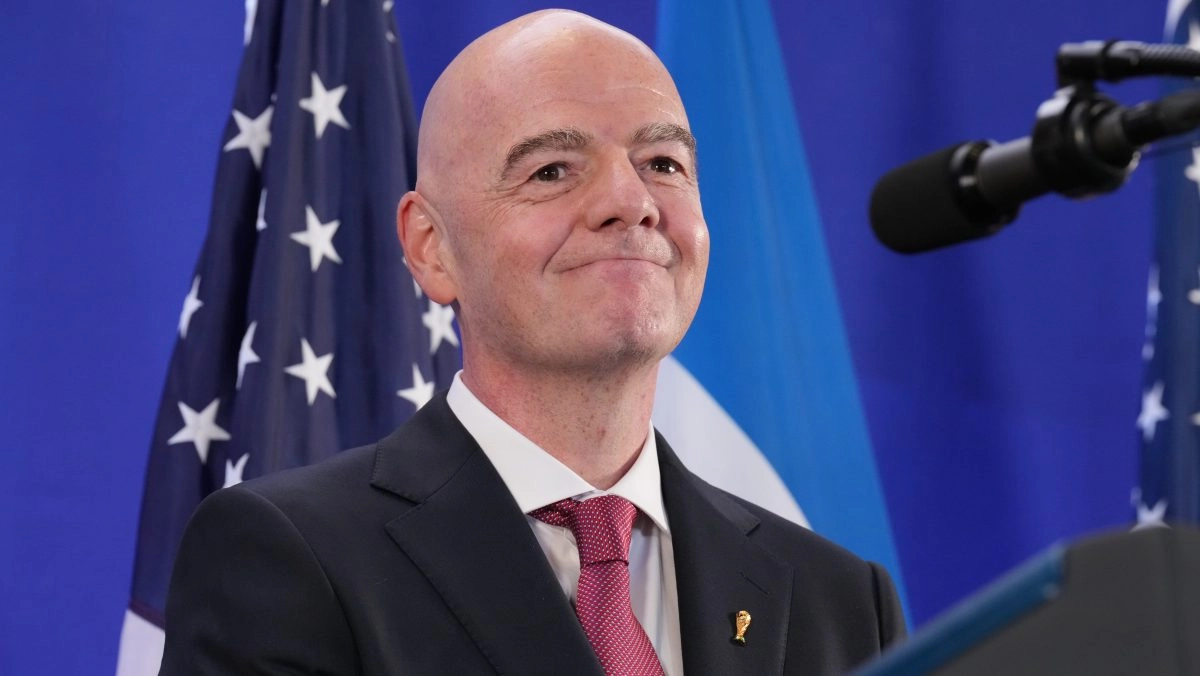

The shocks in the offices of Zurich are usually measured by the speed with which the world's federations recalculate their positions. What began as a technical proposal by Gianni Infantino to modify FIFA's commercial structure ended up unleashing a global political pulse.
In the center of the map, Mexican soccer operated under its own times, combining initial caution with the usual institutional discipline, even with a doubtful attitude that could only be explained by the great interests that move behind the scenes.
The origin of friction
The trigger was the project called “FIFA Forward Enterprise”. The proposal proposed a change in the organization's management: creating an external commercial subsidiary, open to private investment funds, to manage the commercial and audiovisual rights of national team tournaments.
The argument from the FIFA presidency pointed to greater fundraising to inject into developing federations, promising to raise traditional funds per cycle to 20 million dollars and activating the “FIFA Fast Forward” program with another additional 20 million. However, the lack of prior consensus set off alarms in the most consolidated markets.
The European wall and Infantino's withdrawal
Resistance soon took shape once the details of the plan became public. The leak of the document to the British press precipitated the actions; UEFA, supported by major federations such as the English, Swedish and Croatian, led the containment block, adding the rejection of the AFC and Concacaf.
At the same time, the global football players' union, FIFPRO, drastically raised the tone in its official position, pointing out that the plan constituted a "profound abuse of presidential power" and warning that the privatization of historic competitions represented an unsustainable institutional red line. The claim was direct: centralization of functions and risks in governance.
Given the warning of an institutional boycott in the Council, Infantino chose to withdraw the project from the agenda and issue a public clarification where he recognized flaws in the socialization of the plan, freezing the initiative to avoid an open break with the European bloc.
In an unusual exercise of contrition, FIFA admitted in its press release that it "made mistakes by not formally involving the Council and the federations in the process," adding that the management "should have been handled differently" after the leaks, opting for public apologies to calm the waters.
Waiting time in the local environment
While Concacaf joined the demands for a comprehensive review, the Mexican Football Federation distanced itself from the belligerence of its northern neighbors. When the details became known at the end of July, the leadership in Toluca opted for a calculated silence. In its first statement, the FMF avoided committing support or outright rejection.
The Mexican organization issued a statement with a neutral tone, limiting itself to informing that it would open a period of technical scrutiny at work tables. This hesitant posture showed that Mexico preferred to see how the burdens were accommodated at the international level before taking the step forward.
The rearrangement and the business factor towards 2030
The balance began to tip after a meeting of the FIFA executive committee in Morocco, where blocs from Africa and South America came out to stabilize the position of the presidency by defending Zurich's exclusive control over sporting calendars and regulations. With the most critical front resolved, the FMF concluded its analysis phase and changed course.
The second and definitive positioning of Mexican soccer was total alignment. Through a firm institutional stance, the Mexican federation justified its turn by formally stating that "football is the fundamental value and its best defense rests on institutional solidity and respect for governance."
Even key figures in the national environment, such as Mikel Arriola, ratified in complementary statements their unrestricted support for Infantino's leadership with a view to his re-election.
The shift responds to a reality of numbers and calendars. With the current television broadcasting rights contracts tied to traditional structures and their eyes focused on the long and lucrative process towards the 2030 World Cup, the Mexican leadership determined that opening a battle front with Zurich was counterproductive.
Thus, after weeks of hesitations and risk assessment, the FMF prioritized the stability of its future trade agreements and sealed its adherence to the official directive of the highest organization.
The horizon: A congress under the shadow of fracture
FIFA's strategic withdrawal does not mean that the storm has passed; It has only been postponed. If the behind-the-scenes negotiations fail to appease the spirits of the European bloc—which maintains active threats of a boycott, arguing that the withdrawal of the subsidiary is insufficient—and the soccer players' groups that demand structural reforms, the next FIFA Congress is emerging as a scene of high political tension.
If the bitterness over global financial control continues, what began as a technical dispute over a commercial subsidiary could escalate into an open referendum on Gianni Infantino's continuity as head of the organization.
For the FMF, the panorama is complex: having advanced its institutional support places it in a position of absolute loyalty to the current project, but in a board where votes and alliances move at dizzying speed, tying itself to a questioned leadership could force Mexican soccer to recalculate the political cost of its discipline if the helm of Zurich were to falter.