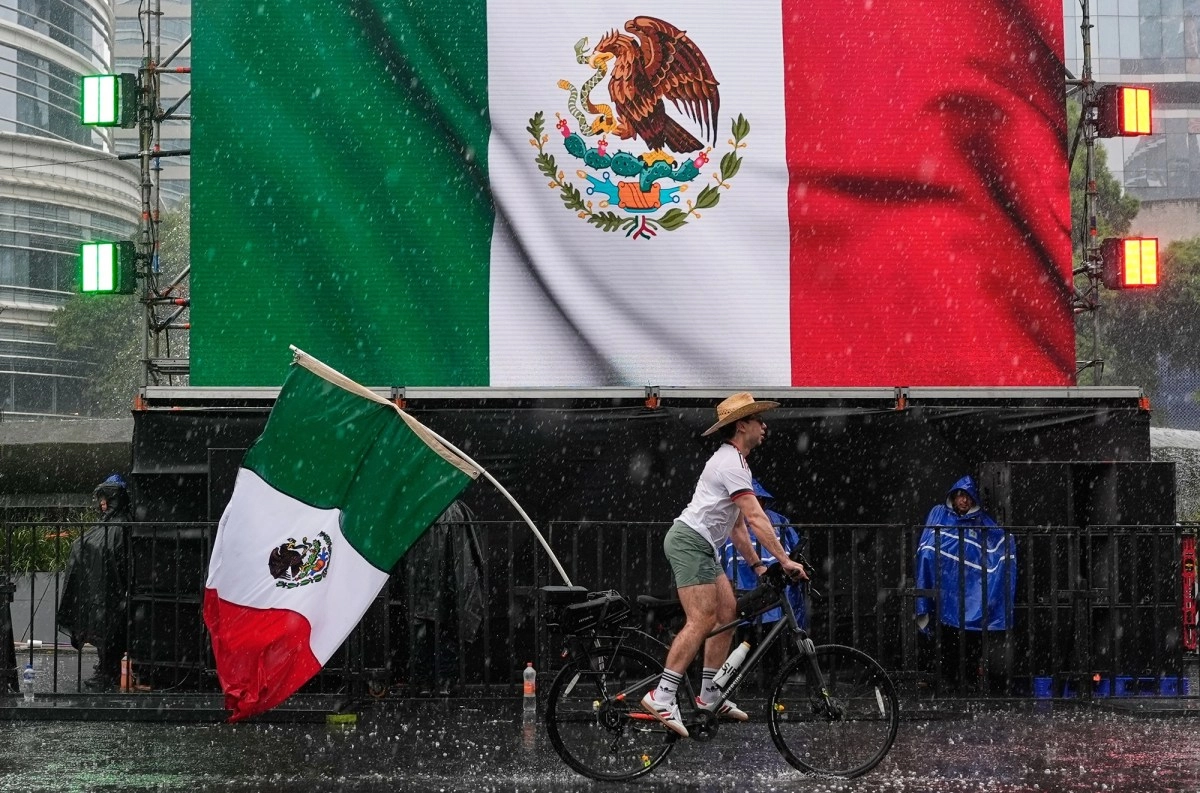

The World Cup adventure is over for Mexico, but the World Cup continues. While other teams continue to compete in the championship, our country once again encounters its own reality. It is precisely now, when the euphoria begins to dissipate, when it is worth asking what the World Cup really left behind and what it tells us about the Mexico that we are.
The answer goes far beyond football. Major sporting events function as mirrors of the societies that organize them. They not only exhibit logistical capacity or infrastructure; They also reveal power relations, political priorities and deep social contradictions. The FIFA World Cup showed a modern, efficient and hospitable Mexico. But it also allowed us to observe, behind the spectacle, a deeply unequal country.
Mexico organized a successful tournament. The stadiums worked, the host cities were up to par and the security system was extraordinary. The country demonstrated that it can coordinate a global scale event with high standards of efficiency. However, this capacity inevitably contrasts with the daily reality of millions of Mexicans. If it was possible to guarantee absolute security for tourists, sponsors, sports leaders and match attendees, why can't the same protection be offered to those who face extortion, displacement, theft or violence every day in much of the national territory?
The World Cup also highlighted another form of inequality: economic inequality. For a large part of the population, attending games was simply impossible. The party was reserved, to a large extent, for those who could pay for tickets, accommodations and services whose prices were out of reach of the majority. Soccer managed to unite the country emotionally for a few weeks, but that unity coexisted with a reality marked by deep social and economic differences.
FIFA usually presents itself as a sports organization. In reality, it coordinates one of the most powerful economic and media ecosystems on the planet. Governments, multinational corporations, digital platforms, television networks, sponsors, technology companies, security companies and tour operators converge around the tournament, functioning as a complex transnational network. The World Cup is not only a sporting competition; It is also a global platform for business, political influence and symbolic production.
As occurs in other strategic sectors of the world economy, this network has a deeply hierarchical structure. The central nodes concentrate decisions, commercial rights, technological platforms, media production and most of the profits. Host countries provide infrastructure, public resources, security and legitimacy. The actors change, but the logic recalls the old relationships between center and periphery described by the Latin American theory of dependency. Today, much of the economic power continues to be concentrated in corporations and institutions located in the large financial centers of the Anglo-Saxon and European world, while countries like Mexico assume a considerable part of the costs and risks of organizing the show.
For a few weeks, the national team achieved something that few institutions achieve: awaken a shared feeling of belonging. Millions of Mexicans celebrated the same goals, suffered the same defeats and wore the same colors. However, that emotional cohesion was as intense as it was ephemeral. After the game, the fractures that continue to define the country reappeared: political polarization, corruption, inequality, impunity and the growing territorial control exercised by criminal organizations in numerous regions of Mexico.
The team competed with dignity and left a positive image. But she was also eliminated before the decisive phases. There is a metaphor in this that is difficult to ignore. Mexico demonstrates an enormous capacity to organize, adapt and compete, but continues to face structural obstacles that limit its development. We know how to build stages of excellence for an international event; We are still not able to guarantee similar conditions for the daily lives of millions of citizens.
As the World Cup continues, Mexico once again looks inward. Sports enthusiasm once again gives way to news about homicides, disappearances, extortion, corruption and forced displacements. The debate also returns about insufficient economic growth, deficient public services and a State that, in large regions of the country, continues to dispute control of the territory with criminal actors. Reality, as always, ends up imposing itself on spectacle.
The true championship that Mexico has pending is not played on a soccer field. It is disputed every day in the construction of institutions capable of guaranteeing security and justice; en el combate efectivo contra la corrupción; in reducing the inequalities that fracture society; and in the country's capacity to strengthen its sovereignty in the face of the complex economic and political networks that organize global power. Only when Mexico manages to win that match will the country we show to the world during the World Cup stop being a carefully prepared exception and finally begin to look like the real Mexico.
The texts published in this section are the sole responsibility of the authors, so La Opinión does not assume responsibility for them.