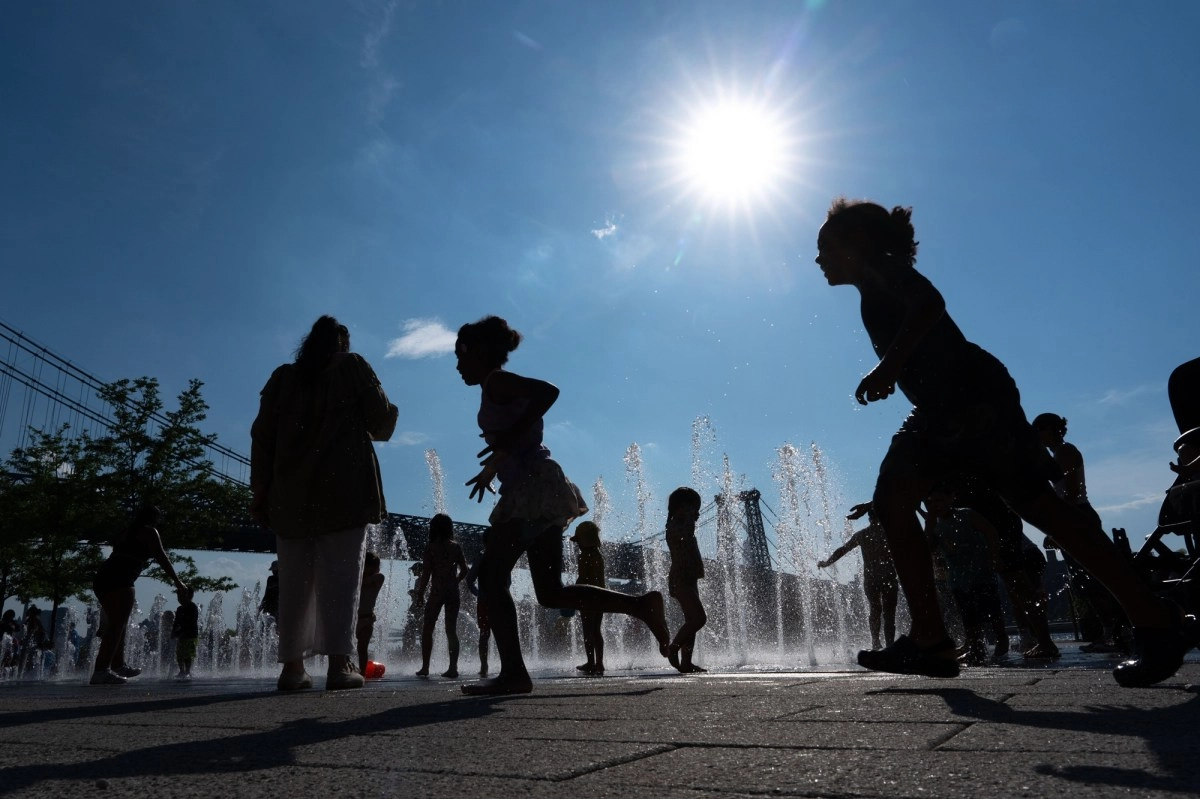

The air conditioning has been on since early morning.
You remind your children that they can't play outside today because it's too hot. You fill their water bottles before leaving the house and check the air quality before they go to training. A few weeks later the electricity bill arrives... and it is higher than last summer.
For millions of homes, this is already the new reality of summer.
As a mom, I know these decisions don't feel political. They feel personal. How do we protect our children when the air is unhealthy, the house gets too hot, and it costs more and more to keep it cool?
For many Latina mothers, especially those who are pregnant, these concerns carry even more weight. Extreme heat no longer just changes how we experience summer. It is also becoming a health problem that affects women, their babies and the entire family.
When the temperature rises, the risk also increases
Extreme heat doesn't just make the days more difficult. It can also worsen air quality.
According to the American Lung Association's State of the Air 2026 report, 44% of people in the United States live in places where air pollution reaches unhealthy levels.
Breathing that air can cause difficulty breathing, asthma attacks, irritation in the lungs and chest pain. Children, the elderly, pregnant women, those who work outdoors, and people with respiratory or heart diseases face the greatest risks.
As Dr. Juanita Mora, pulmonologist and spokesperson for the American Lung Association, explains, when temperatures increase, the risks also increase for those who already have respiratory problems, especially children and pregnant women.
In many Latino communities these risks are experienced every day.
Some people live near highways with constant truck traffic, airports or industrial areas where pollution is usually higher. Others work in construction, agriculture, garden maintenance or transportation, jobs where spending hours in the sun is part of the routine.
Imagine a pregnant woman who lives near a busy highway. During the summer you not only face higher temperatures; You are also breathing more polluted air while trying to protect your health and that of your baby.
For a child with asthma, a day with poor air quality may mean missing soccer practice or staying indoors instead of going outside to play.
The cost of staying safe
With summers getting hotter, air conditioning stopped being a luxury and became a health necessity.
This is especially true for pregnant women, children with respiratory problems, seniors with heart disease, and those who rely on medical equipment that runs on electricity.
But staying safe comes at a cost.
Every summer, thousands of families receive higher electricity bills and must make very difficult decisions.
Do we turn on the air conditioning or buy less food?
Do we pay the electricity or leave another bill for later?
For some families, these decisions may even result in power being cut off. No one should have to choose between protecting their family's health and keeping their finances afloat.
What starts as a heat wave ends up affecting the household budget.
Who decides how much we pay for electricity?
Many people know that their electricity bill increased. What few know is who authorized that increase or how they can participate before those decisions are made.
When an electric company wants to increase its rates, someone has to approve that request.
In many states, that responsibility falls to public utility commissions, government bodies that oversee electric companies, review rate increase proposals and decide which energy projects can be developed.
Although many people have never heard of these commissions, their decisions directly affect the pockets of millions of families.
They also influence whether you invest in cleaner energy or in projects that can increase pollution and raise electricity costs even further.
Electrical companies come to these meetings with lawyers and specialists.
Many times, the families who will pay those increases are not present.
That means decision makers primarily listen to one voice.
The good news is that communities can participate. Attending public hearings, submitting comments, asking questions, or working alongside community organizations are ways to make families' needs part of the conversation as well.
What you can do to protect your family
Although solving this problem requires public policy changes and long-term investments, there are measures that can help reduce risks during heat waves.
A problem that reaches the door of our house
We often talk about climate change thinking about national policies or international agreements.
But for many Latina mothers its effects are experienced in daily life.
It is the child who cannot go out to play because the air is contaminated.
It's the pregnant woman who lives near a highway and wonders if the air she breathes can affect her baby.
It is the person who works outdoors under increasingly extreme temperatures.
It is the electricity bill that leaves less money each month to cover other needs.
Every summer brings new temperature records. But behind those numbers are everyday decisions that millions of families face every day: protecting the health of their children, keeping the house cool without putting their budget at risk, and breathing clean air.
Understanding how extreme heat affects health and knowing who makes decisions about energy and air quality is a first step so more communities can prepare, participate, and protect their families.
(*) Liz Hurtado, Senior Manager of Community Participation and Alliances at EcoMadres.