Google launches Gemini 3 Flash: the fastest and cheapest AI that now rules in the Gemini app
The new Gemini 3 Flash model will be responsible for powering the searches you make from your Android phone from now on
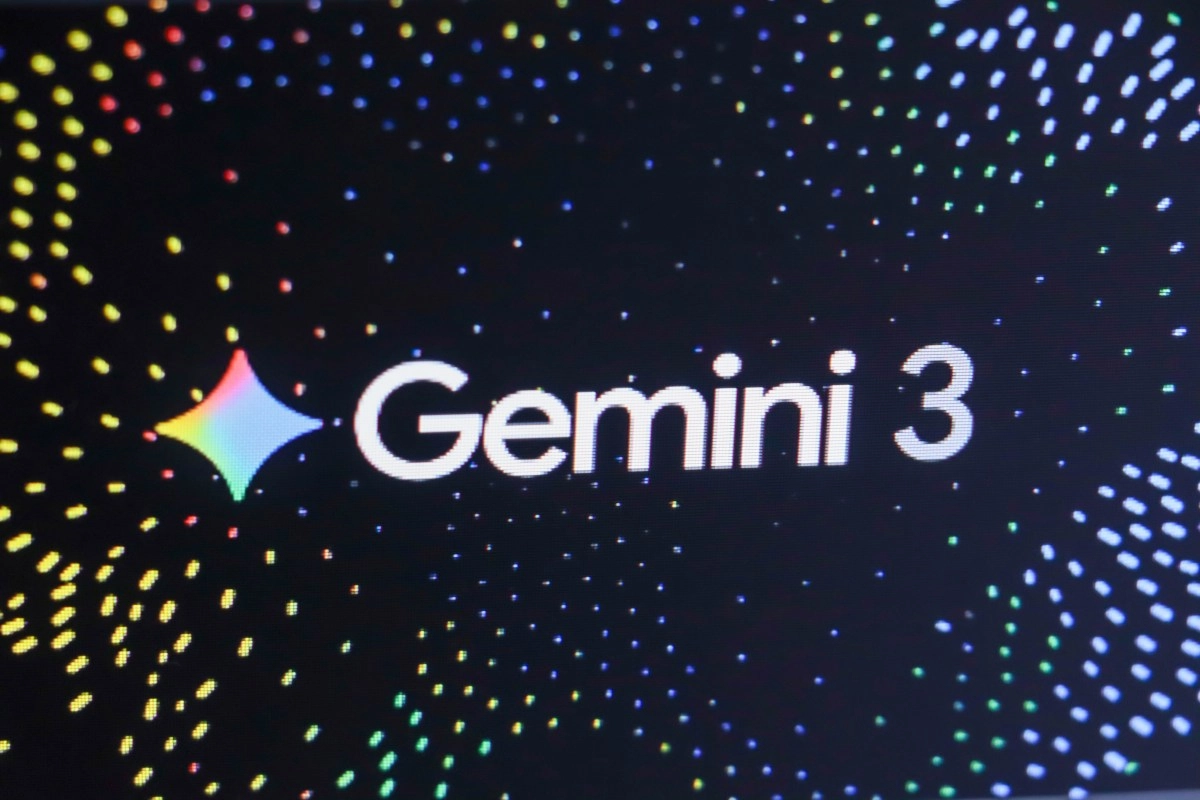
Google has made another move in the generative AI race: this Wednesday it launched Gemini 3 Flash, a new version that is faster and designed to be cheaper to use than its top-of-the-range model, and also made it the default model for the Gemini app and AI mode in the search. With this move, the company wants this model to be the "workhorse" that most users and businesses use in their daily lives.
What exactly is Gemini 3 Flash?
Gemini 3 Flash is the "fast and cheap" model built on the Gemini 3 family, presented by Google last month as its new generation of advanced AI models. It arrives as the direct successor to Gemini 2.5 Flash, but with a significant leap in performance: in several benchmarks, it approaches high-end models like Gemini 3 Pro and GPT-5.2, something unusual in models optimized for cost and speed. In the "Humanity's Last Exam" benchmark, designed to measure advanced knowledge across multiple domains, Gemini 3 Flash achieved 33.7% without using tools, compared to 37.5% for Gemini 3 Pro, 11% for Gemini 2.5 Flash, and 34.5% for GPT-5.2, showing how much it has closed the gap with leading models. In the MMMU-Pro test, focused on multimodal reasoning, the new model even outperformed all its rivals, scoring 81.2%, reinforcing the idea that it is not only “fast and cheap,” but also highly competitive in quality. Another key feature is its multimodal capability: Gemini 3 Flash is designed to understand and combine text, images, audio, and even video within the same conversation, without forcing the user to switch tools or models. This positions it as a versatile option for both everyday end-user tasks and more complex workflows for businesses and developers. Faster, cheaper, and with better results. Although Google markets it as a “fast and cheap” model, the price per token of Gemini 3 Flash is slightly higher than its predecessor, but the key lies in its overall performance.The cost is $0.50 per million tokens entering and $3 per million tokens leaving, compared to $0.30 and $2.50 per million tokens for Gemini 2.5 Flash, respectively. However, Google claims that the new model outperforms the old Gemini 2.5 Pro and is also three times faster, which is crucial for applications that require immediate responses or massive processing. The company also highlights that Gemini 3 Flash uses, on average, 30% fewer tokens for "thinking" tasks than 2.5 Pro, meaning that although the price per million tokens is slightly higher, the total cost of many tasks may end up being lower. In practical terms, this means that companies can process more requests at the same cost or reduce their bill while maintaining the same workload. Google describes Gemini 3 Flash as a "workhorse" model, designed to handle high-volume tasks: content generation, data analysis, information classification, summaries, internal assistants, and other functions where both cost and latency are critical. Thanks to its speed and performance approaching that of top-of-the-line models in several benchmarks, Flash is positioned as the ideal candidate to be the main engine for many AI-based products and services. In the competitive arena, the launch comes amidst intense competition with OpenAI, which recently released GPT-5.2 and a new image generation model, after an alleged internal "code red" was leaked, warning of a drop in ChatGPT traffic while Google's market share in AI consumption increased. Google's implicit message is clear: it can not only keep up, but it wants to set the pace with frequent releases and models optimized for different use cases.
What changes for users and developers
From now on, Gemini 3 Flash will be the default model running in the Gemini app worldwide, replacing Gemini 2.5 Flash as the standard option. Users will still be able to manually switch to Gemini 3 Pro from the model selector, especially for more demanding tasks like complex math problems or advanced programming, but the overall experience will be Flash-centric. Furthermore, this model will also become the foundation of AI mode in Google Search, greatly expanding its reach.
In everyday use, Google says Gemini 3 Flash is especially good at interpreting multimodal content and returning helpful answers from video, audio, images, or combinations of these formats. You can, for example, upload a short video of yourself playing pickleball and ask for tips,Draw a sketch for the model to try and guess what you're creating, or upload an audio recording to get automatically generated analyses or quizzes. It also promises more visual responses, with elements like tables and images where appropriate—key to improving comprehension and the mobile experience. Another interesting point is that the Gemini app will allow you to create app prototypes using only prompts, leveraging the model's reasoning and code generation capabilities. This aligns with Google's strategy of integrating Gemini into both consumer products and tools for developers and enterprise environments. On the enterprise side, companies like JetBrains, Figma, Cursor, Harvey, and Latitude are already using Gemini 3 Flash through Vertex AI and Gemini Enterprise, solidifying the model as a serious option for professional environments. For independent developers, the model will be available in preview via API and also within Antigravity, Google's new programming tool launched last month, designed to facilitate AI-assisted development. With over a trillion tokens processed daily on its API since the launch of Gemini 3, Google is making it clear that it doesn't intend to slow down in the race for generative AI. Making Gemini 3 Flash the default model for apps and search is a direct message to the market: the company wants this version to be the gateway to its AI ecosystem, combining speed, low costs, and performance that already rivals the major reference models.Making Gemini 3 Flash the default model for apps and search sends a direct message to the market: the company wants this version to be the gateway for mass adoption into its AI ecosystem, combining speed, low costs, and performance that already rivals major reference models.Making Gemini 3 Flash the default model for apps and search sends a direct message to the market: the company wants this version to be the gateway for mass adoption into its AI ecosystem, combining speed, low costs, and performance that already rivals major reference models.
This news has been tken from authentic news syndicates and agencies and only the wordings has been changed keeping the menaing intact. We have not done personal research yet and do not guarantee the complete genuinity and request you to verify from other sources too.