Sunrise:
Sunset:
°C
Follow Us

Asus surprises at CES 2026 with its new OLED gaming monitors with RGB stripe and improved image sharpness

Asus' new gaming monitors are designed to offer premium image quality and color fidelity
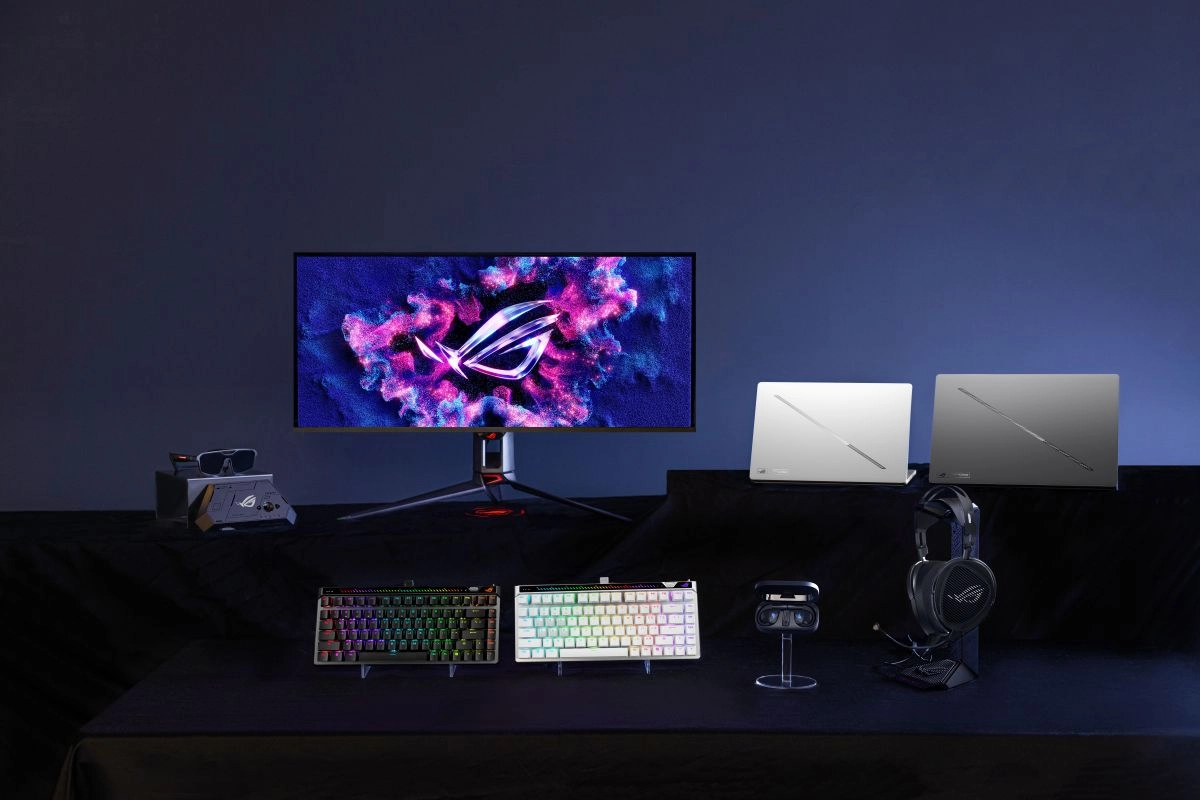
Asus surprises at CES 2026 with its new OLED gaming monitors with RGB stripe and improved image sharpness
Time to Read 4 Min

Asus got ahead of much of the competition and arrived at the Consumer Electronics Show (CES) 2026 in Las Vegas with one of the most striking announcements for the gaming world: its new OLED monitors with RGB stripe technology, Designed to offer more accurate colors, sharper text, and a much clearer gaming experience, even on everyday desktops.

For a trade show traditionally dominated by televisions, concept cars, and gadgets of all kinds, Asus focusing on solving very specific PC gaming problems (like the blurry text typical of some OLEDs) is quite a serious statement of intent.

Asus ushers in the new wave of OLED gaming monitors

At CES 2026, Asus was one of the first brands to reveal its hand with a new generation of ROG Swift and ROG Strix monitors equipped with next-generation OLED panels and a new RGB stripe subpixel design. This implementation abandons traditional Pentile or WOLED configurations with extra white subpixels and opts for a pure RGB structure in vertical lines to improve overall image clarity and, above all, text sharpness. The Taiwanese company is positioning this family as the direct answer to two common complaints about desktop OLEDs: "color fringing" (that strange colored border around the letters) and the feeling of slightly blurry text when working long hours in Windows, browsers, or productivity tools. Asus also boasts improved brightness levels, enhanced contrast, and more accurate color reproduction, targeting both competitive gamers and content creators who need highly precise colors on a single screen for everything. What is RGB stripe technology and why does it matter? The key to this new generation lies in the panel redesign: the red, green, and blue subpixels are aligned in vertical RGB stripes, instead of the typical alternating arrays seen in many classic OLEDs.This allows the font rendering engines of operating systems like Windows to better "understand" the panel's structure, resulting in cleaner text edges, less color haloing, and much more comfortable reading, even at short distances. Asus combines this layout with two types of advanced panels: QD-OLED and Tandem OLED with RGB Stripe Pixel, depending on the model. In the case of Tandem OLED, the white subpixels typical of WOLED are eliminated, and pure RGB emission in layers is used instead. This allows for greater color volume at high brightness levels, something that is quite noticeable in HDR scenes, neon lights, particle effects, and very bright skies in AAA games. The promise is simple but powerful: fewer compromises on clarity, text as legible as on a good IPS, and all the infinite contrast, deep blacks, and ridiculously low response times that are now expected of a modern OLED.

New ROG models with high refresh rate and dual mode

Among the line-up presented at CES, Asus highlighted at least three ROG Swift and Strix models equipped with this new RGB Stripe Pixel OLED technology, designed for different types of gamers. Among them is the ROG Swift OLED PG27UCWM, a 26.5–27 inch monitor with a Tandem RGB OLED panel that becomes a kind of “all-in-one” for competitive gaming, daily work, and content creation thanks to its combination of resolution, refresh rate, and color quality.

This model offers a Dual mode that allows switching between 4K at 240 Hz or Full HD at 480 Hz, accompanied by a 0.03 ms response time, ideal for competitive shooters where every millisecond counts.

Asus completes the family with ultrawide options like the ROG Swift OLED PG34WCDN and the ROG Strix OLED XG34WCDMS, both featuring 34-inch QD-OLED panels with RGB striping, designed for those seeking a more immersive experience with high refresh rates, deep blacks, and a wide field of view for racing games, RPGs, and simulators. In addition to sharpness and color, Asus integrates technologies like BlackShield, a film that enhances the perception of blacks and reinforces the panel's durability, reducing reflections and helping to protect the surface from minor scratches or wear from intensive use. All of this is accompanied by what is already expected in the ROG range: next-generation connectivity with DisplayPort 2.1, HDMI 2.1, USB-C with charging, and features like KVM for controlling multiple devices from the same keyboard and mouse set—something many streamers and creators will appreciate.

Overall, Asus is using CES 2026 not only to boast about being one of the first to showcase its gaming monitors of the year, but also to set a new benchmark in OLED desktop panels, establishing text clarity,Color fidelity and high refresh rates are equally important. If the goal was to conquer the desktops of both demanding gamers and creators who want a single screen for gaming, work, and editing, this bet on OLED with RGB stripes seems to be heading in that direction.

This news has been tken from authentic news syndicates and agencies and only the wordings has been changed keeping the menaing intact. We have not done personal research yet and do not guarantee the complete genuinity and request you to verify from other sources too.

Also Read This:


Share This:


About | Terms of use | Privacy Policy | Cookie Policy