

Scientists believe they found an abandoned Soviet module on the Moon
A small Soviet sphere touched the Moon in 1966 and changed the history of space exploration. Then it disappeared. Where is Luna 9?
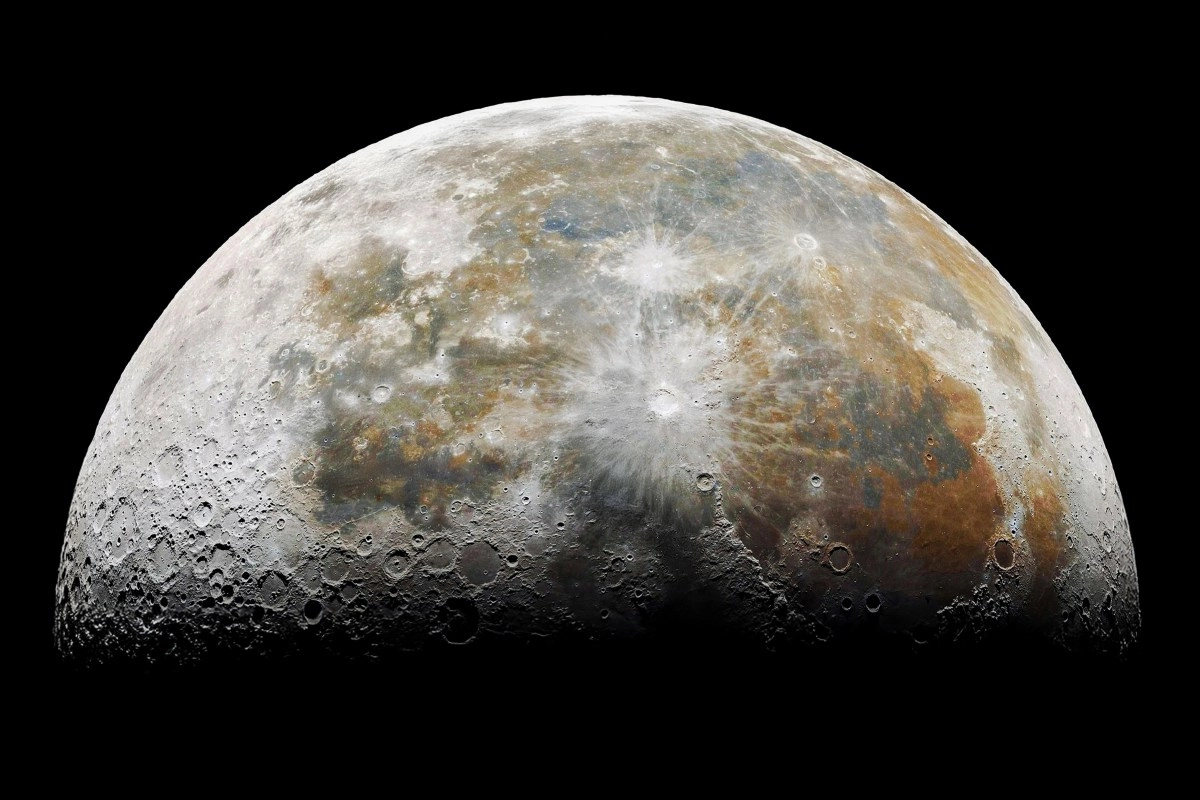

On February 3, 1966, at the height of the Cold War, a small Soviet sphere, about the size of a beach ball, landed on the lunar surface. After several impacts with the ground, the capsule finally stabilized by deploying four petal-shaped structures and began photographing the landscape. It was Luna 9, the first time a human-made object had achieved a soft landing on another celestial body. The images it transmitted—the first ever captured from the lunar surface—showed a rocky, rugged terrain in black and white, with stark contrasts. And they dispelled a widespread fear: that the lunar soil was "unsafe quicksand" in which any object would inevitably sink. Three days later, its batteries ran out. And since then, its exact location has remained uncertain. Now, almost six decades later, two independent teams believe they have found it. The problem: they point to different places.
Two teams, two locations
One of the possible sites was proposed by Vitaly Egorov, a Russian science communicator who has spent almost eight years analyzing available images in search of Luna 9.
His method was based on crowdsourcing: he asked his blog readers to review a swath about 100 kilometers wide in the images from NASA's Lunar Reconnaissance Orbiter (LROC), examining them pixel by pixel to identify possible signs of the lander.
According to him, the decisive breakthrough came when he compared the blurry horizon in the photographs sent by Luna 9 in 1966 with the virtual recreations available in the LROC QuickMap tool.
“One day, the landscape seemed familiar,” he told The New York Times. “I looked around and realized it was the same place Luna 9 had seen.” He declares himself “quite certain” of the match, although he acknowledges a margin of error of several meters. The obstacle is technical. Although the LROC camera can achieve resolutions of up to 0.25 meters per pixel,Confirming the presence of such a small object remains extremely difficult. As Mark Robinson, lead researcher for the camera, pointed out, “you can stare at an image and maybe it is that, but you can’t be sure.” Artificial intelligence in the search for the moon. The second proposal comes from a team at University College London. In a study published on January 21 in npj Space Exploration, researchers trained a machine learning algorithm they called “You-Only-Look-Once–Extraterrestrial Artifact” (YOLO-ETA), designed to identify potential artificial debris on the lunar surface. When applied to the area where Luna 9 is estimated to have landed, the system identified a set of possible artifacts near the coordinates 7.03° N, 64.33° W. According to the team, these indications meet several plausibility conditions—though they do not constitute confirmation: they appear consistently under different lighting conditions, their spatial arrangement is compatible with the predicted dispersal of the lander's components, and the terrain relief matches the horizon profile visible in historical photographs. “At a minimum, we have detected an unknown artifact,” co-author Lewis Pinault told The New York Times. “I am very optimistic and believe it could be Luna 9.”
Which is the correct location?
The problem is that the two proposed locations are several kilometers apart. The one indicated by the London team is closer to the coordinates that the Soviet Union published in the Pravda newspaper after the landing—about five kilometers, according to IFLScience—while Egorov's estimate is about 24 kilometers from that same point.
However, several specialists point out that the “official” Soviet coordinates could contain significant errors. In 1966, detailed knowledge of the lunar topography was still limited, making it difficult to accurately determine the spacecraft's exact position.
Even so, not everyone is convinced by either proposal. A landing site, explained planetary cartographer Philip Stooke of Western University to The New York Times, should show not only fragments of the module—composed of five elements—but also a more obvious mark on the surface, left by the thrusters during descent. “I’m not convinced that any of these places are really a good candidate for these things, but Egorov’s is better,” he said. Chandrayaan-2 could solve the mystery. The mystery could become clearer in the coming months. In March,The Indian orbiter Chandrayaan-2 is scheduled to photograph the area with a camera capable of achieving a resolution similar to that of the LROC, but under different observation conditions. According to Egorov, that should be enough to distinguish the module's silhouette: the central body would occupy approximately one pixel, and each of the four unfurled petals could appear as separate points. Beyond historical curiosity, locating Luna 9 also has scientific interest. As geochemist Alexander Basilevsky pointed out to Scientific American, the discovery would allow researchers to study how materials degrade after decades of direct exposure to the lunar environment. Meanwhile, the search continues. And perhaps the solution requires nothing extraordinary, but simply more patience and better technology. As the specialized journalist Anatoly Zak summarized to The New York Times, it will probably be enough to "put bigger and better cameras in orbit around the Moon" to clear up the doubt.
This news has been tken from authentic news syndicates and agencies and only the wordings has been changed keeping the menaing intact. We have not done personal research yet and do not guarantee the complete genuinity and request you to verify from other sources too.