What happens if you charge your cell phone with a more powerful charger?
Using a more powerful charger than recommended may seem harmless, but it has real effects on your battery
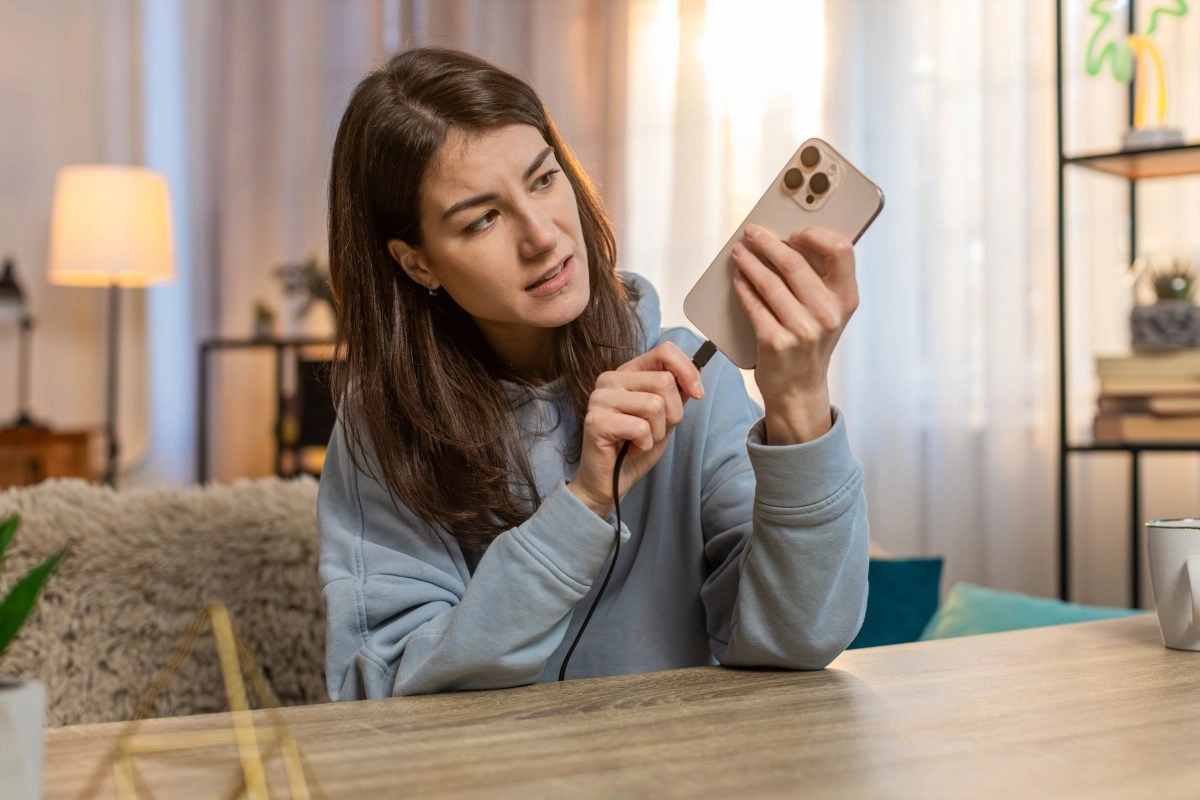
Plugging in a charger other than the original—or one more powerful than your phone accepts—is something millions of users do daily without a second thought. Whether you lost the original, borrowed a family member's, or simply wanted to charge faster, this practice is more common than you might think. But what's really happening inside your device when you do this?
Can charging with a higher wattage charger damage your phone?
Your device's charging capacity depends on the protocol your phone uses. Modern smartphones—especially those from 2018 onward—incorporate a charging controller chip integrated into the motherboard. This component acts as a "guardian" that negotiates power with the charger before allowing it to flow to the battery. If the charger offers more watts than the phone supports, the device will simply draw only what it can handle.
This negotiation process occurs through protocols such as USB Power Delivery (USB-PD), Qualcomm Quick Charge, or proprietary systems from brands like Apple, Samsung, or Xiaomi. When the charger and phone don't share the same protocol, the device automatically drops to a standard 5W charge, regardless of the adapter's wattage.
That said, the risk isn't zero. If you use a low-quality or uncertified charger, the situation changes drastically. Generic adapters of dubious origin may not respect voltage limits, which can lead to overheating, battery damage, and even, in extreme cases, fire hazards. Power isn't the enemy; poor quality is. In practice, this means that a 65W, 100W, or even 140W charger connected to an iPhone or a mid-range Galaxy won't "burn it out" if it's a certified adapter. The phone will charge at its maximum allowed speed and nothing more. The excess power simply won't be used. Fast charging and long-term battery health: what you should know. This is where the conversation becomes more nuanced.Even if your phone manages power well in the short term, constant fast charging does have cumulative effects on the health of your lithium-ion battery. It's not a myth: it's chemistry. Lithium batteries degrade with charge cycles and heat. Fast charging, by definition, generates more heat than a conventional 5W or 10W charge. Manufacturers like Apple and Google openly acknowledge this: the iPhone, for example, reduces the charging speed to 80% when it detects that the battery is hot, precisely to protect its lifespan. Studies conducted by Battery University, a widely cited technical reference in the industry, indicate that maintaining a battery charge consistently between 20% and 80% and avoiding excessive heat are two of the most important factors for extending its lifespan. Frequent fast charging can reduce battery capacity faster than slow charging, although the impact varies depending on the manufacturer and the quality of the device's thermal management system. Brands like OnePlus with its SUPERVOOC technology or Xiaomi with HyperCharge have invested in systems that distribute heat during charging to minimize degradation. But even with these solutions, physics imposes its limits: faster charging always means more heat, and more heat accelerates cell aging. The practical recommendation is very simple: use fast charging only when you need it, not as a permanent habit. If you have time, charging at a slower speed overnight is better for your battery's longevity. And if you're going to buy an alternative charger, always prioritize brands certified with USB-IF standards or equivalent. The extra power isn't the problem; a poor-quality adapter can be.Brands like OnePlus with its SUPERVOOC technology or Xiaomi with HyperCharge have invested in systems that distribute heat during charging to minimize degradation. But even with these solutions, physics imposes its limits: higher speeds always mean more heat, and more heat accelerates cell aging. The practical recommendation is very simple: use fast charging only when you need it, not as a permanent habit. If you have time, charging at a lower speed overnight is better for your battery's longevity. And if you're going to buy an alternative charger, always prioritize brands certified with USB-IF standards or equivalent. The extra power isn't the problem; a poor-quality adapter can be.Brands like OnePlus with its SUPERVOOC technology or Xiaomi with HyperCharge have invested in systems that distribute heat during charging to minimize degradation. But even with these solutions, physics imposes its limits: higher speeds always mean more heat, and more heat accelerates cell aging. The practical recommendation is very simple: use fast charging only when you need it, not as a permanent habit. If you have time, charging at a lower speed overnight is better for your battery's longevity. And if you're going to buy an alternative charger, always prioritize brands certified with USB-IF standards or equivalent. The extra power isn't the problem; a poor-quality adapter can be.
This news has been tken from authentic news syndicates and agencies and only the wordings has been changed keeping the menaing intact. We have not done personal research yet and do not guarantee the complete genuinity and request you to verify from other sources too.